Stock Analysis · DraftKings Inc (DKNG)
Overview
DraftKings Inc. is a digital sports entertainment and gaming company. Its main products are online sports betting (placing wagers on sports through mobile apps and websites) and online casino-style games (often called “iGaming”), alongside fantasy sports contests. The business is built around acquiring and retaining users, offering betting and gaming content, and managing risk (for example, balancing bets and setting odds) while operating within state-by-state regulations in the U.S.
In simple terms, DraftKings earns money when customers wager on sports or casino games and the company keeps a portion of what is wagered after paying out winners (often referred to as “hold” or “net gaming revenue,” depending on the product). It also generates revenue from other commercial arrangements tied to its platform (for example, certain fees and partner-related revenue items described in filings).
DraftKings’ revenue is primarily concentrated in online sportsbook and iGaming. In company filings, these activities are commonly reported within a single business segment, with revenue detail provided in the financial statements and notes.
Main sources of revenue (high-level):
- Online sportsbook (sports wagering)
- Online casino / iGaming (digital casino games where permitted)
- Fantasy sports and other (including certain platform-related revenue items described in filings)
How the business mix has been evolving: total revenue has increased meaningfully over recent years, while operating losses have narrowed sharply, reflecting a shift from heavy expansion spending toward more emphasis on efficiency and profitability.
From 2021 to 2025, total revenue rose from about $1.30B to about $6.05B. Over the same period, operating results improved from an operating loss of about -$1.52B (2021) to about -$15.8M (2025), and net income moved from about -$1.52B (2021) to about $3.7M (2025). This pattern is consistent with a company that spent heavily early on (especially on operating expenses such as sales/marketing and product development) and later reduced losses as revenue scaled.
Key Figures
| Metric | Value | Industry ⓘ |
|---|---|---|
| Date | May 04, 2026 | |
| Context | ||
| Sector | Consumer Cyclical | |
| Industry | Gambling | |
| Market Cap ⓘ | $11.40B | |
| Beta ⓘ | 1.67 | |
| Fundamental | ||
| P/E Ratio ⓘ | N/A | 32.91 |
| Profit Margin ⓘ | 0.06% | 5.85% |
| Revenue Growth ⓘ | 42.80% | 4.30% |
| Debt to Equity ⓘ | 306.31% | 190.53% |
| PEG ⓘ | 0.09 | |
| Free Cash Flow ⓘ | $612.38M | |
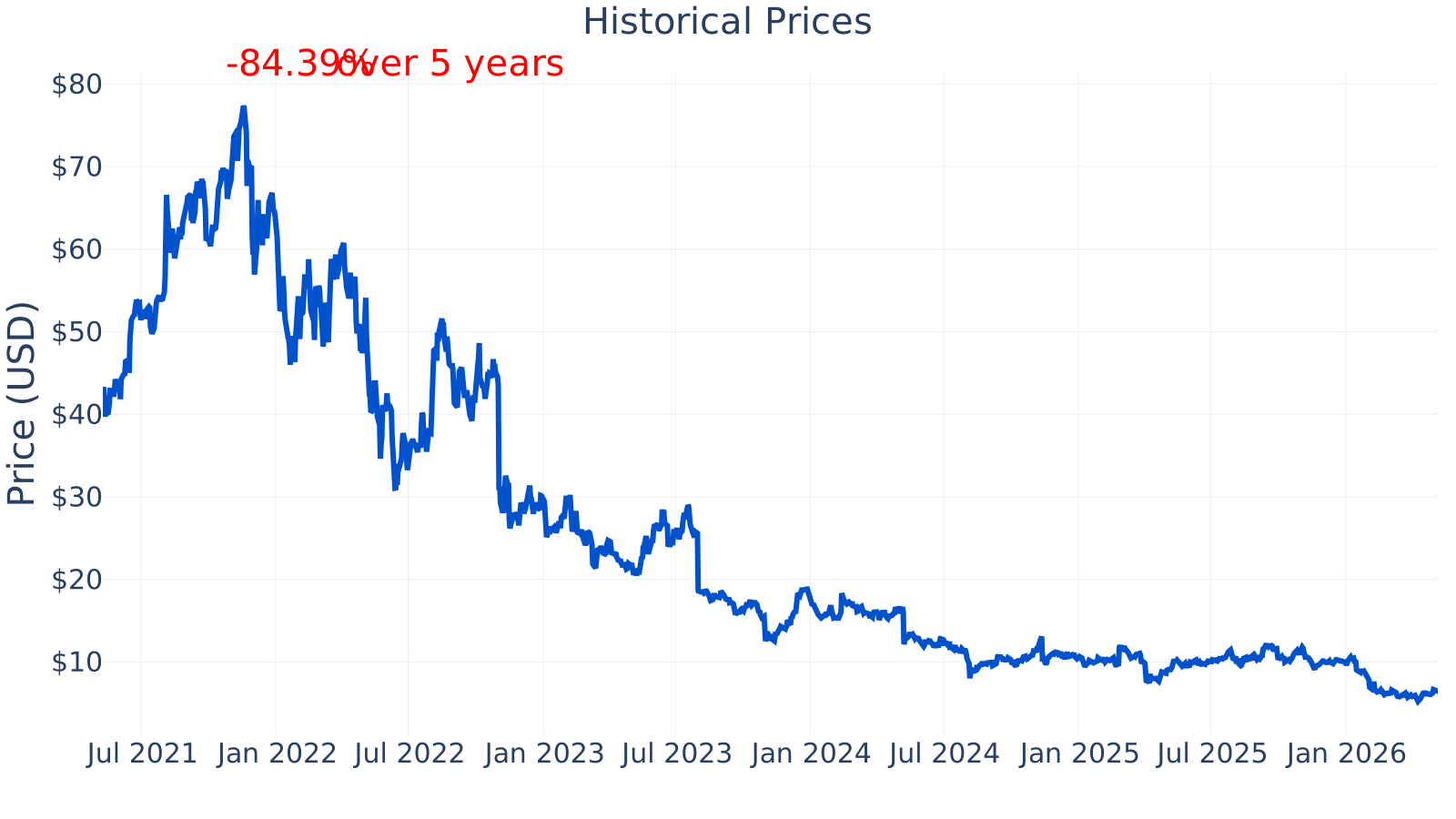
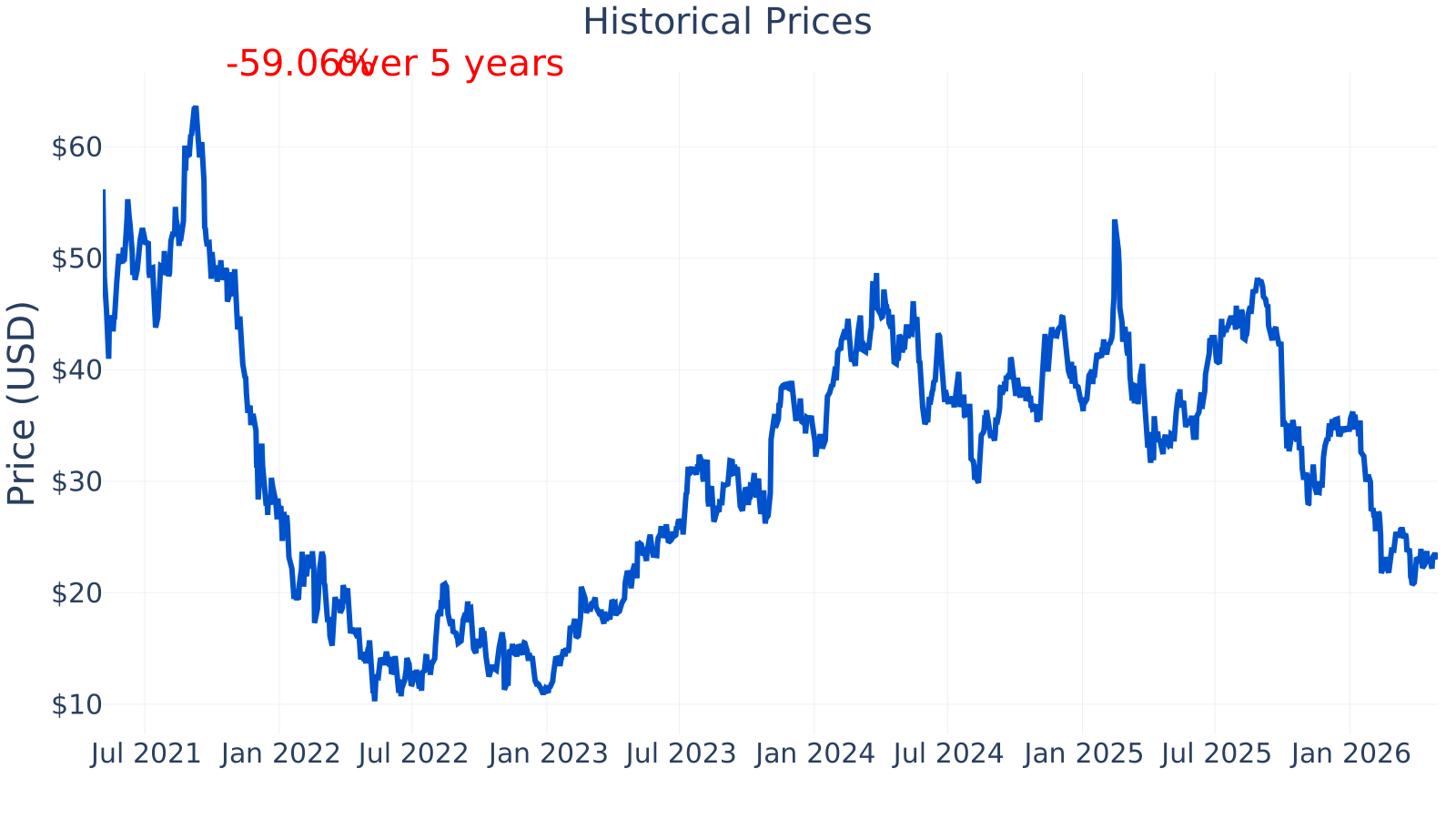
DraftKings’ market capitalization is about $11.4B, and the stock has shown elevated volatility (beta about 1.67, which is higher than the broad market). Profitability is currently very thin on a net basis: profit margin is about 0.06%, below the industry median (about 5.85%). At the same time, recent growth has been strong: revenue growth year-over-year is about 42.8%, well above the industry median (about 4.3%). Leverage is also notable: debt-to-equity is about 306%, above the industry median (about 191%). Free cash flow over the trailing twelve months is positive at about $612M.
Growth (High)
DraftKings operates in the U.S. online sports betting and iGaming space, which has expanded as more states legalize and regulate these activities. Because rules vary by state, growth is influenced by (1) new market openings, (2) product expansion within existing states (for example, adding iGaming where allowed), and (3) improving unit economics as marketing intensity normalizes and the customer base matures.
A key part of DraftKings’ long-term strategy is scale: building a large user base and using technology, data, and cross-selling (sportsbook users also playing casino games, where available) to increase revenue per customer over time. Another major lever is cost discipline. The company’s recent financial pattern—strong revenue growth paired with improving profits and cash generation—suggests a pivot from “grow at all costs” toward more sustainable operations.
Revenue growth has been uneven quarter-to-quarter, but often very high, with year-over-year growth ranging from the low double digits to substantially higher levels in multiple periods. The latest year-over-year revenue growth shown is about 42.8%, compared with an industry median near 4.3%, indicating DraftKings has been expanding materially faster than many peers in the same broad industry classification.
Free cash flow has improved significantly, moving from around -$825M (TTM as of 2022-03-31) to around -$580M (2023-03-31), turning slightly positive by 2024-03-31 (about $28M), and reaching about $330M by 2025-03-31. Positive free cash flow can matter because it indicates the business is generating cash after operating costs and investment needs, which can strengthen flexibility over time (though it can also fluctuate with working capital and timing effects).
Potential catalysts for continued growth generally include additional legalizations (new states allowing sportsbook and/or iGaming), product improvements that lift engagement, and further operating efficiency that converts revenue into more consistent earnings and cash generation. Because legalization and enforcement are political and regulatory processes, the timing of these catalysts is uncertain.
Risks (High)
DraftKings’ most important risk is regulatory: online sports betting and iGaming are governed state-by-state, and changes in tax rates, licensing requirements, allowable products, or advertising rules can materially affect results. Expansion into new jurisdictions also requires up-front investment and compliance work, and outcomes can differ from expectations.
Competition is intense. In U.S. online sports betting, DraftKings competes with other large, well-funded operators that also spend heavily on marketing, promotions, and product features to win customers. Competitive pressure can reduce margins through higher promotional costs or lower “hold,” and it can increase churn if users switch platforms based on offers or user experience.
Another core risk is profitability durability. While the company has recently approached break-even on a net basis, the business can be sensitive to promotional intensity, sports outcomes (which can affect sportsbook results in the short run), and ongoing technology and compliance spend. Reaching consistent profitability typically requires balancing growth with disciplined customer acquisition and retention costs.
Leverage has increased over time, with debt-to-equity rising to about 306% in the latest period shown. That is also above the industry median (about 191%). Higher leverage can amplify outcomes: it may help finance growth, but it can also reduce flexibility if conditions worsen (for example, if profitability weakens or capital becomes more expensive).
Profit margin has improved dramatically over the multi-year period shown, moving from deeply negative levels to approximately break-even, reaching about 0.06% most recently. Even with this improvement, the margin remains below the industry median (about 3.87% in the latest period shown). This gap highlights that, relative to many established gambling businesses, DraftKings is still in a transition phase where sustained profitability is not yet clearly established at higher levels.
Competitive positioning and advantages (descriptive): DraftKings benefits from brand recognition in U.S. online betting, a large user base, and a technology-driven platform that can support product iteration and personalization. These can be advantages, but they are not absolute barriers to entry because major competitors also have strong brands, capital, and technology. Leadership can vary by state and product category, and market share can shift based on promotions, partnerships, and user experience.
Main competitors: other large U.S. online betting operators (sportsbook and iGaming) and, in some cases, regional casinos and gaming companies with digital offerings. Competitive dynamics often depend on state-specific market structure and promotional intensity.
Valuation
For many companies, a commonly used valuation yardstick is the price-to-earnings (P/E) ratio. For DraftKings, the P/E values shown are largely not meaningful in the historical series displayed, which is typical when earnings are negative or near zero for extended periods. In such situations, P/E-based comparisons can be misleading because small changes in earnings can cause very large swings in the ratio or make it unusable.
Because P/E is not currently a stable anchor here, valuation discussions often rely more on a combination of factors: revenue scale and growth rate, the path toward sustained operating profitability, and cash generation. DraftKings shows a combination of rapid revenue growth and improving free cash flow, but also thin current net profitability and higher leverage. In practice, this means the market’s pricing tends to be sensitive to expectations about how much of the revenue base will convert into durable profits over time, and how competitive and regulatory pressures shape that outcome.
Conclusion
DraftKings is a scaled U.S. digital betting operator whose recent history shows strong revenue expansion and a substantial improvement in losses, reaching roughly break-even net income in the most recent year shown. The company also moved to positive free cash flow in the period displayed, which can be an important sign of improving business economics.
At the same time, the business carries high uncertainty factors that can matter over a long time horizon: regulation that changes state-by-state, heavy competition that can pressure promotions and margins, and a leverage profile that has increased to a relatively high level. Overall, the long-term outcome depends largely on whether DraftKings can sustain growth while translating scale into consistently higher profit margins and resilient cash generation under evolving regulatory and competitive conditions.
Sources:
- SEC EDGAR — DraftKings Inc. filings (Form 10-K, Form 10-Q)
- DraftKings Investor Relations — SEC filings and shareholder materials (company-hosted)
- Wikipedia — “DraftKings” (basic company background)
This article is for informational purposes only and does not constitute financial advice. Some content is AI-generated. See Disclaimer