Stock Analysis · DraftKings Inc (DKNG)
Overview
DraftKings Inc (DKNG) is a digital sports entertainment and gaming company. It operates online sports betting (placing wagers on sporting events), online casino-style games (often called “iGaming”), and related technology and media offerings. The company’s products are primarily app- and website-based, and it expands by entering new jurisdictions as laws and licensing allow.
DraftKings’ revenue is mainly generated from what customers wager and lose on its platforms (after paying winners), plus fees and other platform-related income. Based on how the company describes its business in its SEC filings, the main revenue drivers generally include:
- Online Sportsbook (sports betting revenue, including hold on wagers, minus promotions and credits as accounted for)
- iGaming (online casino games revenue in markets where permitted)
- Other / ancillary revenue (for example, certain platform, media, or partnership-related revenue streams described in filings)
DraftKings’ exact revenue mix by percentage can shift meaningfully over time depending on state launches, sports calendars, and iGaming availability, and the most reliable split is typically provided in its segment or disaggregated revenue disclosures in periodic reports.
Scale and profitability direction: DraftKings has been increasing revenue rapidly over recent years, while pushing operating losses down and reaching near break-even results more recently. This combination (growth plus improving cost structure) is central to how long-term performance is often evaluated for online betting platforms.
From 2021 to 2025, revenue increased substantially (about $1.30B to about $6.05B). Over the same period, operating results improved from a very large operating loss (about -$1.52B in 2021) to a much smaller operating loss (about -$15.8M in 2025), and net income moved from a large loss to roughly break-even (about $3.7M net income in 2025). Selling, general and administrative expense and product development spending remain significant, which is typical for customer-acquisition-heavy platforms.
Key Figures
| Metric | Value | Industry ⓘ |
|---|---|---|
| Date | Feb 16, 2026 | |
| Context | ||
| Sector | Consumer Cyclical | |
| Industry | Gambling | |
| Market Cap ⓘ | $10.83B | |
| Beta ⓘ | 1.65 | |
| Fundamental | ||
| P/E Ratio ⓘ | N/A | |
| Profit Margin ⓘ | 0.06% | 1.44% |
| Revenue Growth ⓘ | 42.80% | 17.30% |
| Debt to Equity ⓘ | 306.31% | 221.76% |
| PEG ⓘ | N/A | |
| Free Cash Flow ⓘ | $612.38M | |
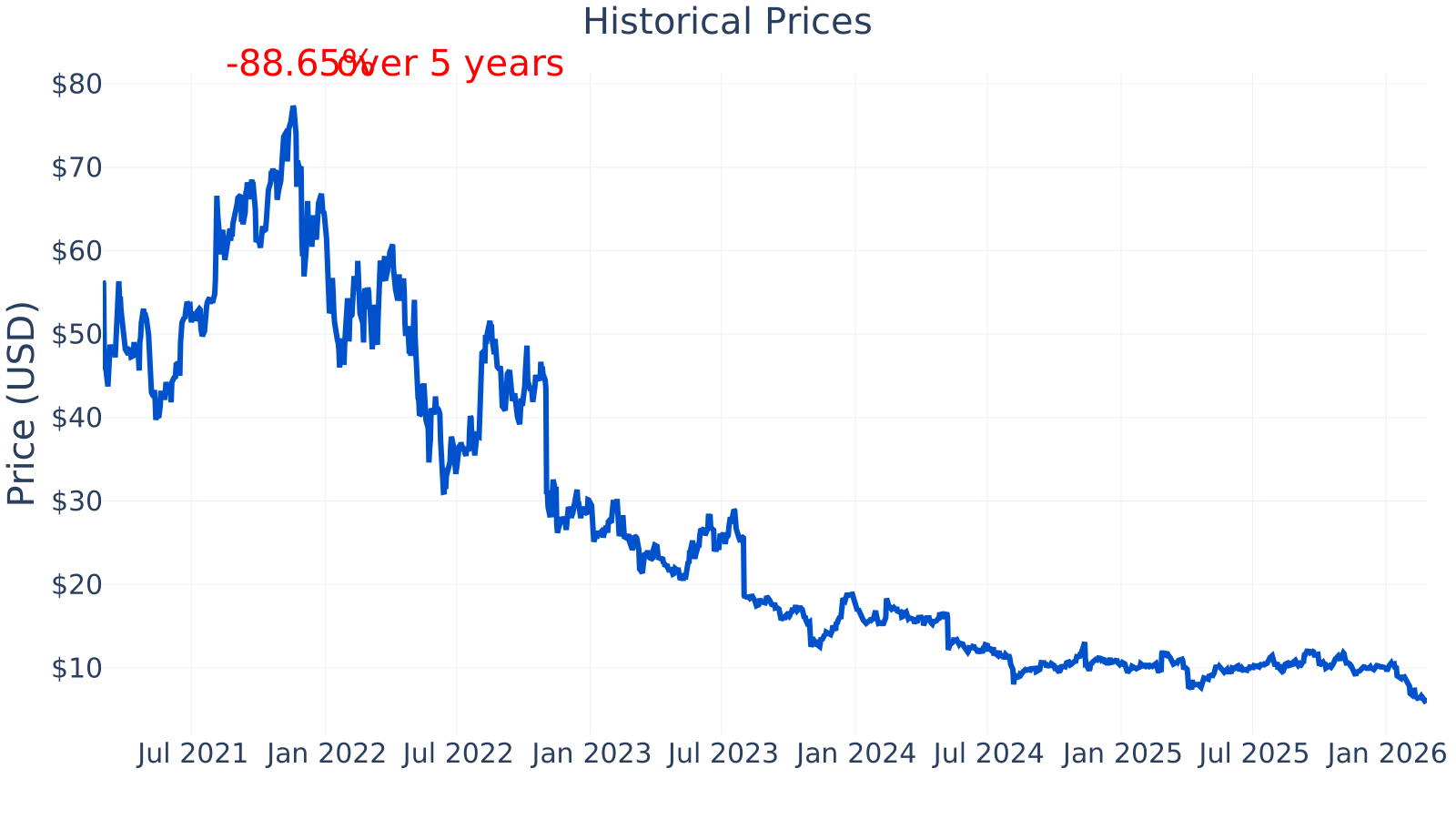
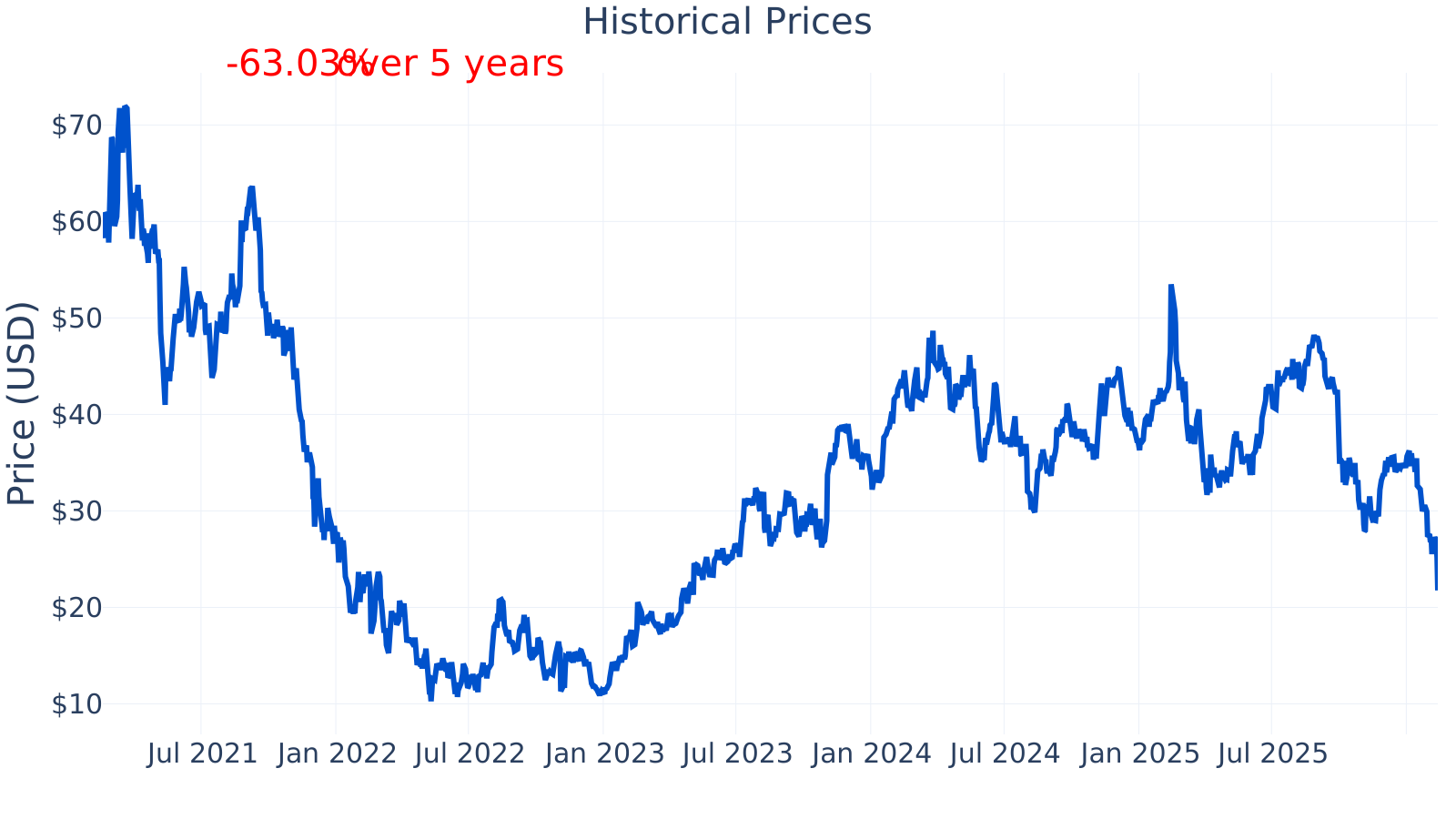
DraftKings’ market capitalization is about $10.8B. The stock’s beta of ~1.65 indicates it has tended to move more than the broader market (higher volatility). Profit margin is approximately 0.06%, which is near break-even and below the industry median shown (~1.45%). Revenue growth year-over-year is about 42.8%, above the industry median shown (~17.3%). Debt-to-equity is about 306%, higher than the industry median shown (~222%). Trailing twelve-month free cash flow is about $612M, reflecting a notable improvement versus earlier periods.
Growth (High)
DraftKings operates in an industry shaped by the continued legalization and regulation of online sports betting and iGaming across the United States. This is not a simple “one national market” business: it is built state-by-state (and potentially jurisdiction-by-jurisdiction), where licensing, tax rates, permitted product types, and marketing rules vary widely. That structure creates a long runway in some areas, while also making growth uneven and policy-dependent.
The company’s strategy is centered on expanding in legal markets, improving product features and in-app experience, and using marketing and promotions to acquire and retain customers—then attempting to translate scale into better unit economics (higher contribution margins, lower relative marketing intensity, and more efficient operations). Over time, a key question is whether customer lifetime value can remain higher than acquisition and retention costs as the market matures and competition stabilizes.
Year-over-year revenue growth has been strong but volatile, ranging from very high growth earlier in the period to more moderate quarters, and recently showing a re-acceleration (about 42.8% in the latest point shown). Relative to the industry median displayed (~17.3%), DraftKings is growing faster, which can be important in a scale-driven platform business—provided profitability continues to improve.
Free cash flow (trailing twelve months) shows a major shift from negative levels in 2021–2023 to positive territory by 2024 and further improvement by 2025 (about $612M on the latest metric table). For a business that historically relied on significant promotional and marketing investment, sustained positive free cash flow can become an important operational milestone—though it can still fluctuate with seasonality, promotional intensity, and working-capital movements.
Potential catalysts often discussed in the company’s filings and investor communications include additional jurisdiction openings, expansion of iGaming where permitted, improved monetization per user, and continued cost discipline that narrows the gap between gross profit and operating income.
Risks (High)
This article is for informational purposes only and does not constitute financial advice. Some content is AI-generated. See Disclaimer