Stock Analysis · DoubleVerify Holdings Inc (DV)
Overview
DoubleVerify Holdings Inc. (DV) provides software and data services that help advertisers and publishers check the quality of digital advertising. In plain terms, it aims to answer questions like: Was an ad actually seen by a real person? Was it shown in a suitable context? Did it appear where and how it was supposed to? These checks are especially important in online advertising because ads can be affected by fraud, low-quality placements, and measurement disagreements across platforms.
DoubleVerify generates revenue primarily by charging for access to its measurement and verification tools. Based on company disclosures in its SEC filings, revenue is generally tied to usage and/or subscriptions for its core products across channels such as display, video, social, and connected TV (streaming).
Main revenue sources (high-level, as reported in company filings):
- Media verification and measurement services sold to advertisers, agencies, platforms, and publishers (core business)
- Fraud and brand-suitability protection features bundled into verification offerings
- Performance and attention-related measurement modules that expand what clients can measure beyond basic “viewability”
Across 2021–2025, the company’s revenue increased materially (from about $333M in 2021 to about $748M in 2025), while it continued spending heavily on product development and customer acquisition.
From 2021 to 2025, total revenue rose from about $332.7M to $748.3M. Over the same period, gross profit also expanded (about $278.4M to $614.8M), while operating expenses grew as well—especially research and development (about $62.7M to $178.4M), reflecting ongoing investment in the product.
Key Figures
| Metric | Value | Industry ⓘ |
|---|---|---|
| Date | Mar 09, 2026 | |
| Context | ||
| Sector | Communication Services | |
| Industry | Advertising Agencies | |
| Market Cap ⓘ | $1.78B | |
| Beta ⓘ | 0.98 | |
| Fundamental | ||
| P/E Ratio ⓘ | 36.70 | 33.27 |
| Profit Margin ⓘ | 6.77% | 2.25% |
| Revenue Growth ⓘ | 7.90% | 6.90% |
| Debt to Equity ⓘ | 8.80% | 30.22% |
| PEG ⓘ | 0.72 | |
| Free Cash Flow ⓘ | $172.65M | |
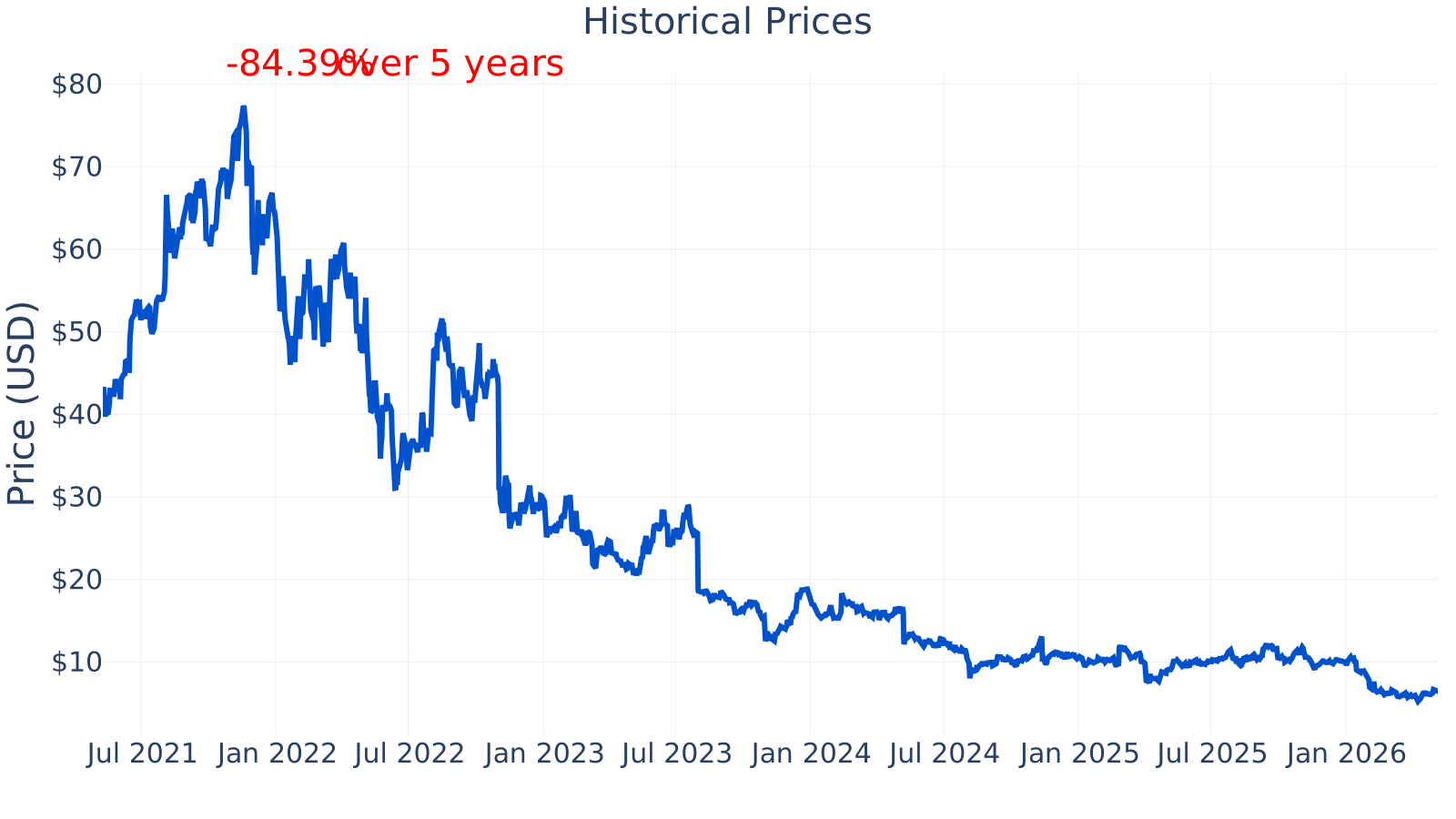
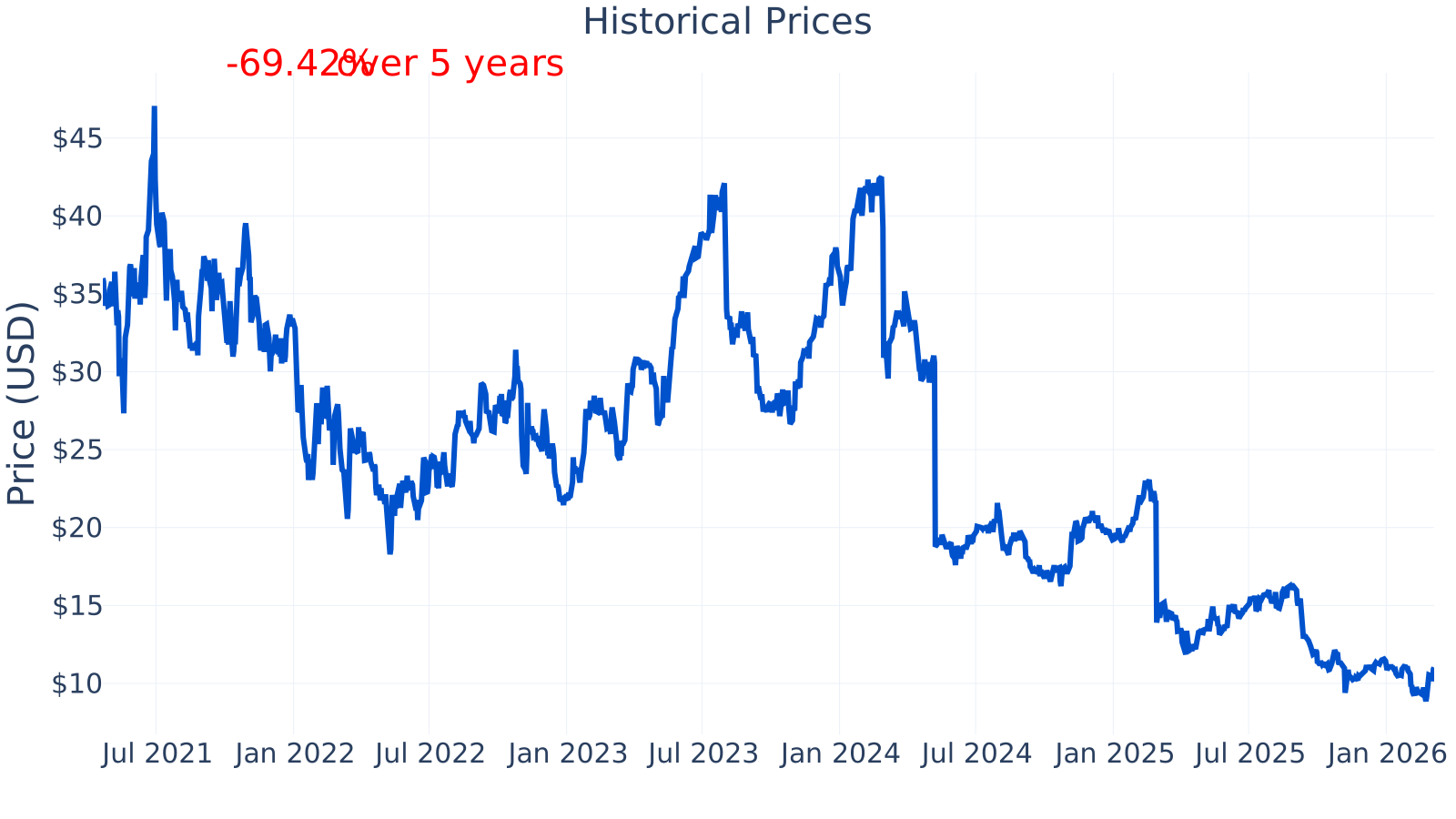
DoubleVerify’s market capitalization is about $1.78B, and its beta is about 0.98 (close to overall market volatility). The latest P/E ratio is about 36.7 versus an industry median near 33.3. Profit margin is about 6.8%, above the industry median near 2.3%. Year-over-year revenue growth is about 7.9% versus an industry median near 6.9%. Debt-to-equity is about 8.8%, well below the industry median near 30.2%. Trailing twelve-month free cash flow is about $172.7M.
Growth (Medium)
DoubleVerify operates in the digital advertising ecosystem, where spending has increasingly shifted from traditional media to digital formats, including streaming/connected TV. As budgets move online, advertisers tend to require more independent measurement to confirm ad quality and reduce wasted spending. This long-term trend supports demand for verification tools, especially as advertising formats become more complex (more platforms, more automation, more media types).
The company’s strategy focuses on expanding measurement capabilities across major digital channels and increasing product depth (for example, adding solutions around brand suitability, fraud protection, and more advanced outcomes/attention-style measurement). The business model can scale if usage grows with customer ad spend and if new products increase revenue per customer.
Revenue growth has clearly slowed from the very high rates seen earlier (above 30–40% in 2021–2022) to more moderate levels more recently (around 8% in the latest period shown). This pattern can happen as a company becomes larger and as the advertising market cycles, but it also raises the bar for future execution if the market expects faster growth.
Free cash flow has increased steadily over time (from about $37.3M in mid-2021 to about $138.5M by early 2025 in the periods shown, and about $172.7M on a trailing basis in the latest metrics). For many long-term observers, rising free cash flow can be a useful sign of an operating model that is scaling and producing cash that can be reinvested in the business.
Risks (High)
A key risk for DoubleVerify is that it sits between large advertising platforms, publishers, ad-tech intermediaries, and advertisers—an ecosystem where rules and access can change. If major platforms change what third parties can measure, limit data sharing, or push more “walled garden” measurement, independent verification providers can face product limitations or slower adoption.
Competition is another major factor. DoubleVerify operates in a space with well-known verification and measurement companies. Major competitors commonly cited in industry discussions and company filings include Integral Ad Science (IAS) and, more broadly, other ad measurement, fraud detection, and brand-safety solution providers (including platform-native measurement tools). In this kind of market, differentiation often comes from coverage across channels, accuracy, speed of detection, integrations with buying platforms, and trust with large agencies and brands. DoubleVerify is a significant player, but the market does not function like a single-winner category.
Leverage looks relatively low. The latest debt-to-equity is about 8.8%, below the industry median near 30.2%, and it has generally remained under roughly 10% for several years. Lower leverage can reduce financial risk, though it does not remove operational and competitive risks.
Profitability has fluctuated. Profit margin peaked in earlier periods (often around 10–13% during 2022–2024 quarters shown) and more recently has been closer to the mid-single digits (about 6.1% to 7.4% in several 2025 quarters shown, ending at 6.8%). Even after that decline, the latest margin is still above the industry median (about 5.0% in the latest period). The direction of margins matters because the company is investing heavily in R&D and sales capacity, and increased competition can pressure pricing and customer retention.
Valuation
The stock’s latest P/E ratio is about 36, and the historical range shown includes substantially higher levels earlier (often above 70–120 in parts of 2022–2023), followed by a decline toward the mid-30s more recently. Compared with the industry median P/E (about 37.7 at the latest point shown), DoubleVerify appears broadly in the same range.
A P/E in the 30s typically implies the market is pricing in a combination of durable growth and healthy profitability over time. In DoubleVerify’s case, this valuation context sits alongside (1) moderating revenue growth and (2) positive free cash flow generation, with relatively low balance-sheet leverage. Whether that multiple is “high” or “low” depends largely on how future growth and margins develop, and on how stable third-party measurement remains across major ad platforms.
Conclusion
DoubleVerify is a digital advertising quality and measurement company that benefits from long-term trends toward online and streaming advertising and the continuing need to reduce fraud and improve trust in ad outcomes. Over recent years, revenue expanded substantially in absolute dollars, free cash flow has grown, and leverage has remained comparatively low versus peers.
At the same time, the business operates in a competitive, fast-changing ecosystem where platform policies, privacy constraints, and rival offerings can influence what can be measured and how services are priced. Revenue growth has also slowed materially from earlier years, which makes future results more dependent on product expansion, customer retention, and broader advertising market conditions. The current valuation level (P/E in the mid-30s) appears to reflect expectations of continued execution, rather than a distressed scenario.
Sources:
- SEC EDGAR — DoubleVerify Holdings, Inc. Form 10-K (Annual Report)
- SEC EDGAR — DoubleVerify Holdings, Inc. Form 10-Q (Quarterly Reports)
- DoubleVerify Investor Relations — Quarterly/Annual Results and Shareholder Materials (press releases and presentations)
- Wikipedia — “DoubleVerify” (basic company background)
This article is for informational purposes only and does not constitute financial advice. Some content is AI-generated. See Disclaimer