Stock Analysis · DoorDash Inc (DASH)
Overview
DoorDash, Inc. is a logistics and local commerce platform best known for connecting consumers with restaurants for on-demand delivery. Over time, it has expanded beyond restaurant meals into convenience, grocery, and other local retail categories, aiming to be a broader “last-mile” delivery network that helps local merchants reach customers and helps consumers get items delivered quickly.
In simple terms, DoorDash sits in the middle of a three-sided marketplace: consumers place orders, merchants receive demand and operational tools, and independent delivery drivers (“Dashers”) complete deliveries. The company’s business model depends on maintaining strong selection (merchants), reliable delivery capacity (Dashers), and a good ordering experience (consumers), while managing delivery efficiency and costs.
DoorDash’s revenue is primarily made up of fees tied to orders and services provided to merchants and consumers. Based on the company’s reporting categories in its filings, the main sources typically include:
- Marketplace (consumer & merchant related fees tied to orders) — includes commissions and service-related fees generated through the core ordering platform
- Platform services — includes value-added services provided to merchants (and related service revenue)
DoorDash also operates membership programs (such as DashPass) designed to increase order frequency and retention, with economics that are reflected through the overall revenue and cost structure reported in filings.
Across the periods shown, total revenue rises substantially (from about $4.9B in 2021 to about $13.7B in 2025). Over the same span, profitability improves noticeably: operating income moves from a loss in 2021–2024 to a positive figure in 2025, and net income also turns positive by 2024 and grows further in 2025. This pattern suggests scaling benefits and/or improved cost discipline alongside growth.
Key Figures
| Metric | Value | Industry ⓘ |
|---|---|---|
| Date | Feb 23, 2026 | |
| Context | ||
| Sector | Consumer Cyclical | |
| Industry | Internet Retail | |
| Market Cap ⓘ | $75.98B | |
| Beta ⓘ | 1.79 | |
| Fundamental | ||
| P/E Ratio ⓘ | 89.49 | 32.68 |
| Profit Margin ⓘ | 6.82% | 6.46% |
| Revenue Growth ⓘ | 37.70% | 13.05% |
| Debt to Equity ⓘ | 37.39% | 32.25% |
| PEG ⓘ | 0.68 | |
| Free Cash Flow ⓘ | $1.83B | |
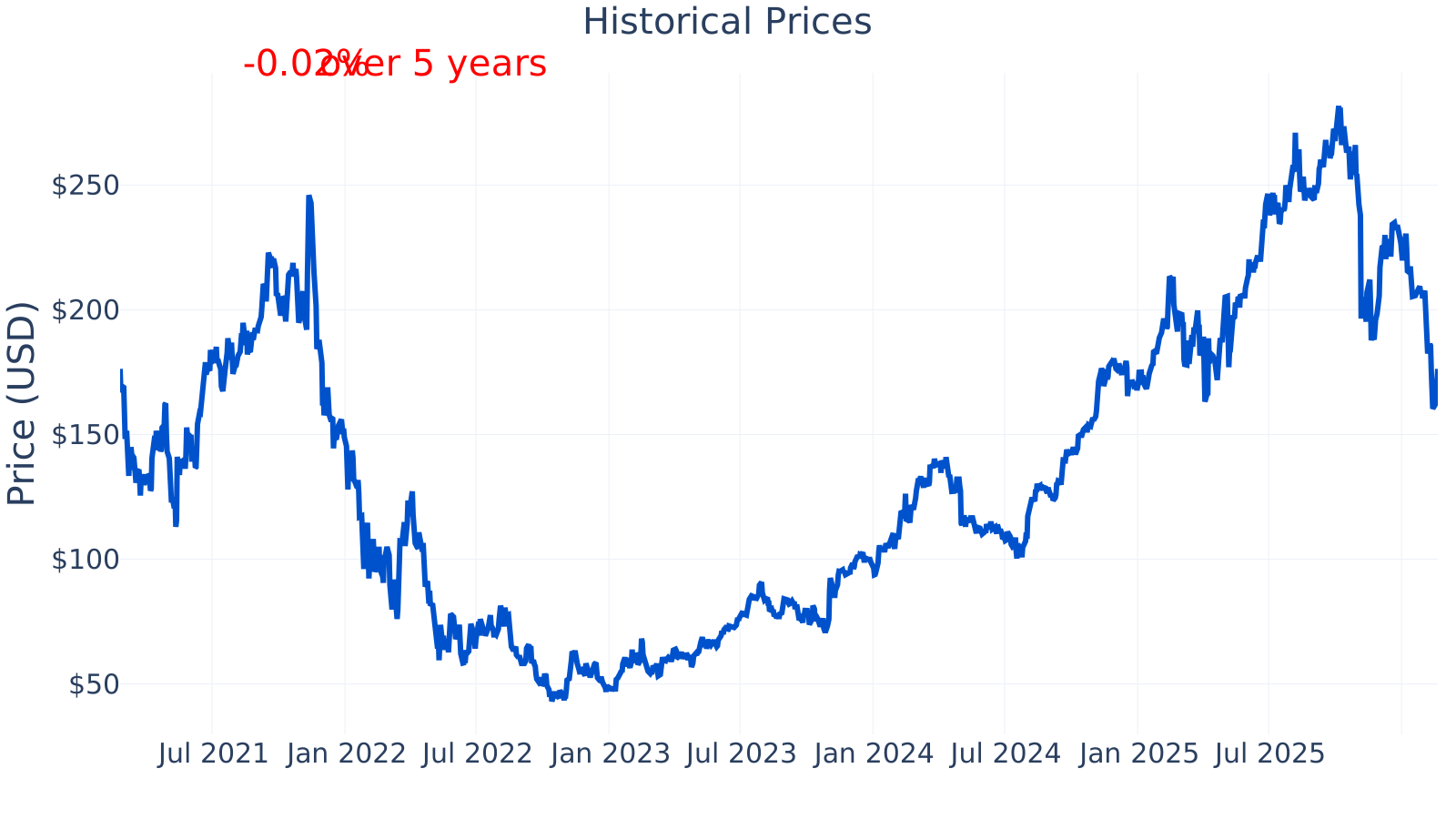
DoorDash’s market capitalization is about $76.0B, and the stock has a beta of ~1.80, which commonly implies above-average volatility versus the broader market. The company’s profit margin is ~6.82%, slightly above the industry median (~6.46%), while year-over-year revenue growth is ~37.7%, well above the industry median (~13.1%). Leverage appears moderate with debt-to-equity of ~37% (industry median ~32%). The P/E ratio is ~89.5, notably above the industry median (~32.7), which typically indicates the market is pricing in higher growth expectations and/or improving profitability. Trailing twelve-month free cash flow is about $1.83B.
Growth (Medium)
DoorDash operates in on-demand local commerce, where consumers increasingly expect fast delivery not only for restaurant meals but also for everyday items (convenience and grocery). This broader “local delivery” space is tied to long-term trends like mobile ordering, logistics optimization, and merchants outsourcing delivery complexity rather than building their own fleets.
A key part of DoorDash’s growth strategy is expanding selection and use cases: more merchants, more categories, and more frequent ordering. At the same time, the company’s long-term potential depends on improving unit economics—making deliveries more efficient and increasing contribution profit per order through better routing, higher density (more orders in the same area), and product mix shifts.
The year-over-year revenue growth rates shown remain strong across the timeline and accelerate again in the most recent point (ending around 37.7%). Even though growth rates can fluctuate quarter to quarter, the overall picture indicates DoorDash has continued expanding at a pace above the industry median shown.
Free cash flow increases meaningfully over time (from roughly $0.36B in 2021 to about $1.83B most recently). For a platform business, rising free cash flow can matter because it indicates the company is generating cash after operating needs and investments, which can improve financial flexibility.
Potential catalysts for longer-term growth (in a neutral, factual sense) typically include continued category expansion (beyond restaurants), deeper merchant tools and services, membership penetration (which may increase order frequency), and operating leverage if costs grow more slowly than revenue.
Risks (High)
This article is for informational purposes only and does not constitute financial advice. Some content is AI-generated. See Disclaimer