Stock Analysis · Donnelley Financial Solutions Inc (DFIN)
Overview
Donnelley Financial Solutions Inc. (DFIN) provides software and tech-enabled services that help companies prepare, manage, and distribute regulated business information. In plain terms, it supports organizations that must produce accurate documents on tight timelines and follow strict rules—especially public companies dealing with SEC filings, investor communications, and transactions like mergers, acquisitions, or capital raises.
The business typically mixes recurring software subscriptions (used for ongoing compliance and reporting workflows) with more project-driven services (often tied to specific corporate events). That combination can make results steadier than a purely project-based model, but still sensitive to how active capital markets are in a given year.
In its filings, DFIN reports revenue by operating segments (rather than a simple product “menu” with published percentages). The segments are generally described as:
- Software Solutions (subscription-based platforms and related services)
- Compliance and Communications Management (SEC reporting, regulatory communications, and related solutions)
- Capital Markets – Software & Solutions (tools and services supporting deals and transactions, including M&A and financing activity)
Because the company’s public reporting emphasizes segment totals, precise revenue “source percentages” (largest to smallest) depend on the specific annual filing and how segments are defined in that year.
Across recent years, total revenue has trended down from about $993.3M (2021) to about $781.9M (2024). Over the same period, cost of revenue also declined (about $413.1M to $297.9M), and gross profit held up better than revenue (about $580.2M to $484.0M). Operating income decreased from about $217.6M (2021) to about $140.2M (2024), with selling, general, and administrative expenses remaining a large cost line each year.
Key Figures
| Metric | Value | Industry ⓘ |
|---|---|---|
| Date | Feb 08, 2026 | |
| Context | ||
| Sector | Technology | |
| Industry | Software - Application | |
| Market Cap ⓘ | $1.33B | |
| Beta ⓘ | 0.86 | |
| Fundamental | ||
| P/E Ratio ⓘ | 43.12 | 27.79 |
| Profit Margin ⓘ | 4.33% | 6.02% |
| Revenue Growth ⓘ | -2.30% | 15.80% |
| Debt to Equity ⓘ | 38.45% | 25.15% |
| PEG ⓘ | 4.88 | |
| Free Cash Flow ⓘ | $101.20M | |
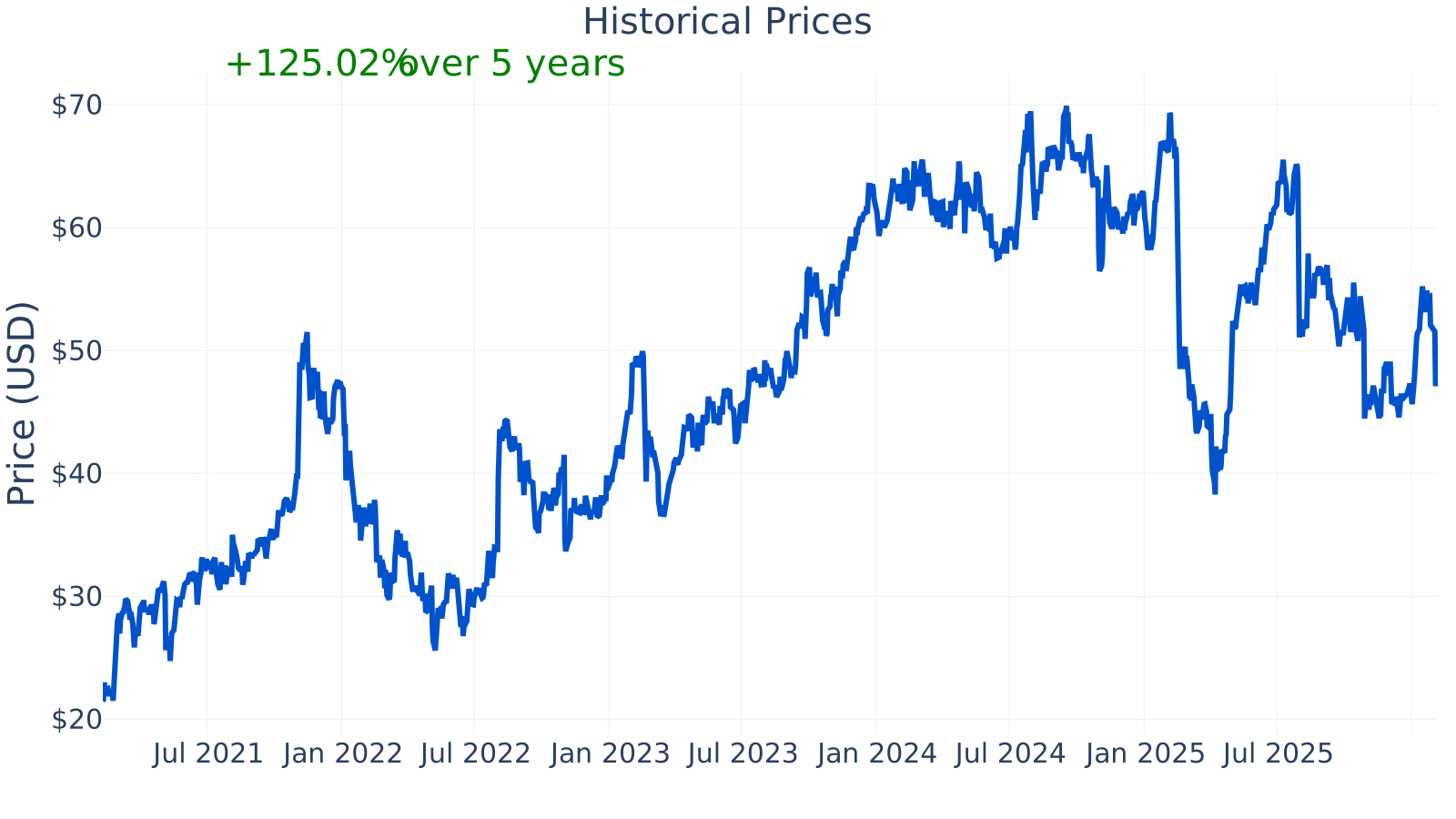
Donnelley Financial Solutions has a market capitalization of about $1.33B and a beta of 0.86 (historically less volatile than the broader market). The latest P/E ratio is about 43.1 versus an industry median near 27.8. Profit margin is about 4.33% versus an industry median near 6.03%. Year-over-year revenue growth is about -2.3% versus an industry median near +15.8%. Debt-to-equity is about 38.5% versus an industry median near 25.2%. The PEG ratio is about 4.88, and trailing twelve-month free cash flow is about $101.2M.
Growth (Medium)
DFIN sits at the intersection of two long-running trends. First, regulatory and reporting requirements remain complex, which tends to support demand for specialized software and services that reduce errors and speed up filings. Second, companies continue shifting workflows from manual processes and on-premise tools to cloud-based platforms, which can favor vendors with established products and embedded customer relationships.
That said, DFIN also has meaningful exposure to capital markets activity (for example, M&A, debt or equity offerings, and other transactions). When transaction volumes slow, related project work can soften. This cyclicality can make growth uneven even if the broader “compliance technology” need remains structurally relevant.
Revenue growth has been inconsistent over the last several years, with multiple quarters showing negative year-over-year comparisons. More recently, the pattern remains choppy, and the latest reading shown is around -2.3% year over year, which is below the industry median in the same period.
Free cash flow has stayed positive across the periods shown, but it has fluctuated: roughly $120.8M (2021), $121.9M (2022), $96.0M (2023), $84.1M (2024), and $94.4M (2025). Consistently positive free cash flow can support flexibility (for example, funding product development, debt reduction, or repurchases), but the downward shift from 2021–2022 levels suggests cash generation has not been steadily expanding.
Potential catalysts, based on how the business is structured, typically include (1) improving capital markets conditions that lift transaction-related activity, and (2) successful expansion of software subscription offerings that increase recurring revenue and reduce reliance on event-driven work.
Risks (Medium-High)
This article is for informational purposes only and does not constitute financial advice. Some content is AI-generated. See Disclaimer