Stock Analysis · DocuSign Inc (DOCU)
Overview
DocuSign Inc (DOCU) is a software company best known for electronic signatures, helping people and organizations sign documents digitally. Over time, it has expanded beyond signatures into a broader “agreement workflow” approach—tools that help create, send, sign, and manage agreements in a more automated and trackable way. Its customers range from small businesses to large enterprises, and its services are typically delivered through cloud-based subscriptions.
DocuSign’s revenue is primarily subscription-based, meaning customers pay recurring fees to use its software. In its financial reporting, revenue is generally described in two main categories:
- Subscription revenue (recurring access to products and platforms) — typically the large majority of revenue
- Professional services and other (implementation, support, and related services) — typically a smaller portion of revenue
For context on overall scale, total revenue increased from about $2.11B (FY2022) to about $2.98B (FY2025), based on the company’s reported fiscal-year results (fiscal year ending January 31).
Across FY2022 to FY2025, revenue rose steadily (about $2.11B to $2.98B) and gross profit also increased (about $1.64B to $2.36B). A notable shift over the period is profitability: operating income moved from negative (FY2022–FY2023) to positive (FY2024–FY2025), indicating a stronger cost structure relative to revenue.
Key Figures
| Metric | Value | Industry ⓘ |
|---|---|---|
| Date | Feb 07, 2026 | |
| Context | ||
| Sector | Technology | |
| Industry | Software - Application | |
| Market Cap ⓘ | $9.44B | |
| Beta ⓘ | 1.01 | |
| Fundamental | ||
| P/E Ratio ⓘ | 32.96 | 27.79 |
| Profit Margin ⓘ | 9.57% | 6.02% |
| Revenue Growth ⓘ | 8.40% | 15.80% |
| Debt to Equity ⓘ | 7.59% | 25.15% |
| PEG ⓘ | 0.41 | |
| Free Cash Flow ⓘ | $987.93M | |
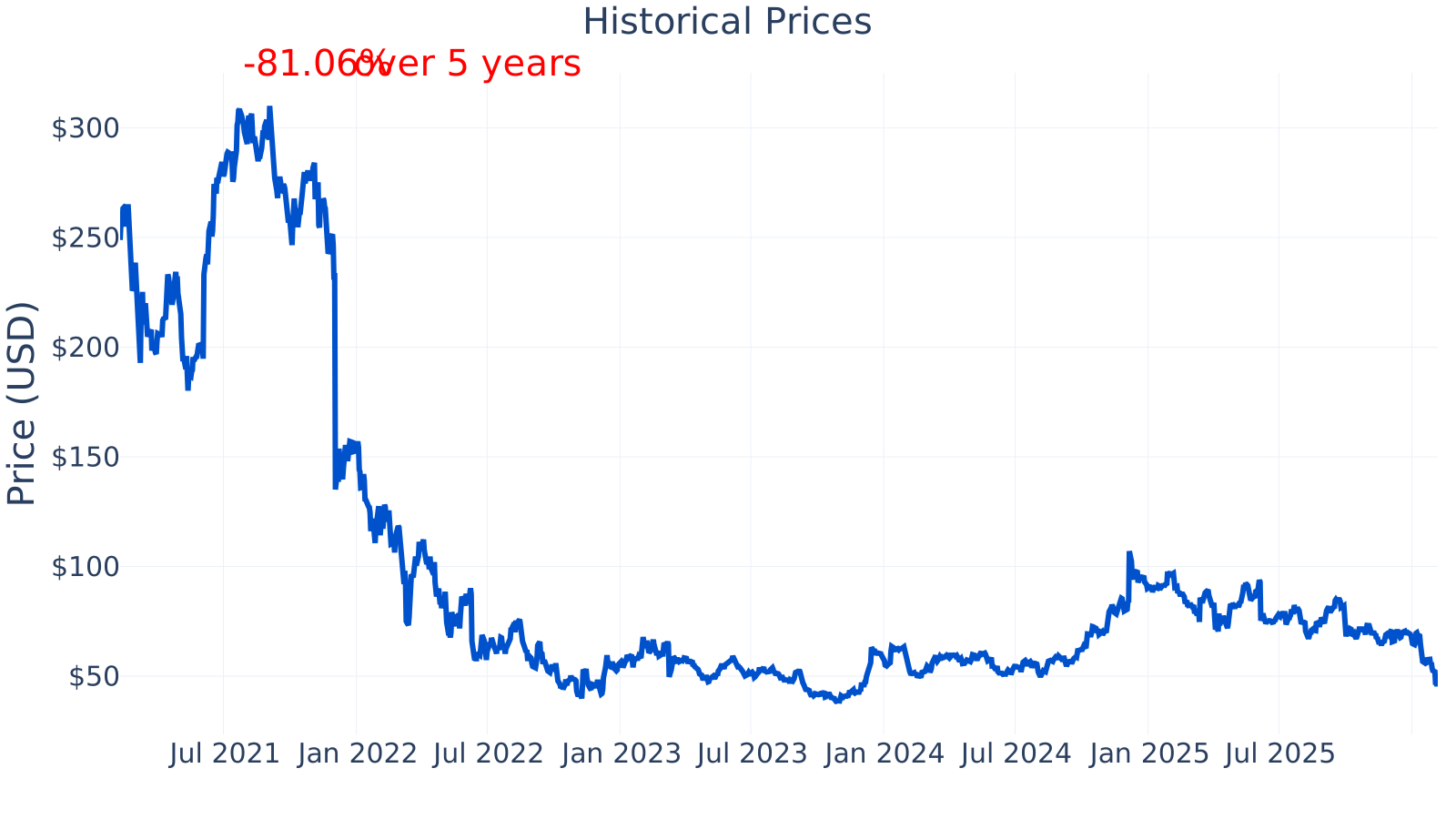
DocuSign’s market capitalization is about $9.44B, and the stock’s beta is about 1.01, which is close to overall market volatility. The P/E ratio is ~33.0 versus an industry median of ~27.8, suggesting the shares trade at a higher earnings multiple than the typical peer in its application software group. Net profit margin is about 9.6% versus an industry median of about 6.0%, while revenue growth year-over-year is about 8.4% compared with an industry median of about 15.8%. Debt-to-equity is about 7.6%, below an industry median of about 25.2%. Trailing twelve-month free cash flow is about $988M.
Growth (Medium)
DocuSign operates in a part of the software market tied to digital transformation: replacing manual, paper-based agreement processes with digital workflows. This general shift has been a multi-year trend as organizations seek faster turnaround times, better audit trails, and easier remote collaboration. In that sense, the industry direction is supportive, but growth rates can vary depending on how mature adoption is in core customer segments.
The company’s recent pattern shows a slowdown from very high growth earlier in the decade to more moderate expansion. Year-over-year revenue growth declined from roughly 58% (FY2021 period shown) to the high single-digits more recently (about 8–9% in the latest periods shown). This can be consistent with a business moving from a rapid adoption phase toward a more mature phase, where growth relies more on expanding product usage, moving upmarket, and improving retention rather than adding entirely new first-time users.
The chart highlights this step-down from rapid growth to steadier growth. Relative to the software application peer median shown, DocuSign’s current growth rate appears lower, which increases the importance of execution in areas like enterprise expansion, new product adoption, and pricing/packaging.
One potential catalyst visible in the financial profile is the company’s ability to generate cash. Free cash flow has been substantial and improved from about $445M (TTM around FY2022) to about $920M–$988M in more recent trailing periods shown. Strong cash generation can support reinvestment, debt reduction, and other corporate priorities, though what matters over the long run is whether cash generation can be sustained alongside competitive product development.
Risks (Medium)
This article is for informational purposes only and does not constitute financial advice. Some content is AI-generated. See Disclaimer