Stock Analysis · Dillard's Inc (DDS)
Overview
Dillard’s, Inc. is a U.S. department store retailer. It sells a broad range of consumer merchandise, including apparel, cosmetics, shoes, accessories, and home-related products. The company operates physical stores (generally in shopping malls and shopping centers) and also sells through its e-commerce channel. In addition to merchandise sales, Dillard’s earns income from its in-store financial services through its credit card program, which is operated with a third-party bank partner (with Dillard’s typically receiving program income such as royalties and other fees as described in its filings).
In simple terms, the business model is built around (1) buying merchandise from brands and vendors, (2) selling it to customers at a markup through stores and online, and (3) supporting demand through promotions, loyalty/credit programs, and customer service.
Main sources of revenue are typically concentrated in retail merchandise sales, with additional income from the credit card program and other smaller items (such as shipping revenue, service income, and similar categories disclosed in filings). Public filings generally describe the revenue mix at a high level rather than as a consumer-style breakdown by product line.
Across the last several fiscal years shown, total revenue has been broadly in the mid-$6B range, while profitability has eased from the peak period: net income declined from about $892M (FY2023) to about $593M (FY2025). Operating income also trended lower over the same span, which is consistent with a retailer moving from unusually strong demand/price conditions toward a more typical environment where promotions, freight, labor, and inventory balancing play a larger role.
Key Figures
| Metric | Value | Industry ⓘ |
|---|---|---|
| Date | Feb 07, 2026 | |
| Context | ||
| Sector | Consumer Cyclical | |
| Industry | Department Stores | |
| Market Cap ⓘ | $10.41B | |
| Beta ⓘ | 1.34 | |
| Fundamental | ||
| P/E Ratio ⓘ | 18.12 | |
| Profit Margin ⓘ | 8.77% | |
| Revenue Growth ⓘ | 2.70% | |
| Debt to Equity ⓘ | 26.83% | |
| PEG ⓘ | -1.28 | |
| Free Cash Flow ⓘ | $777.99M | |
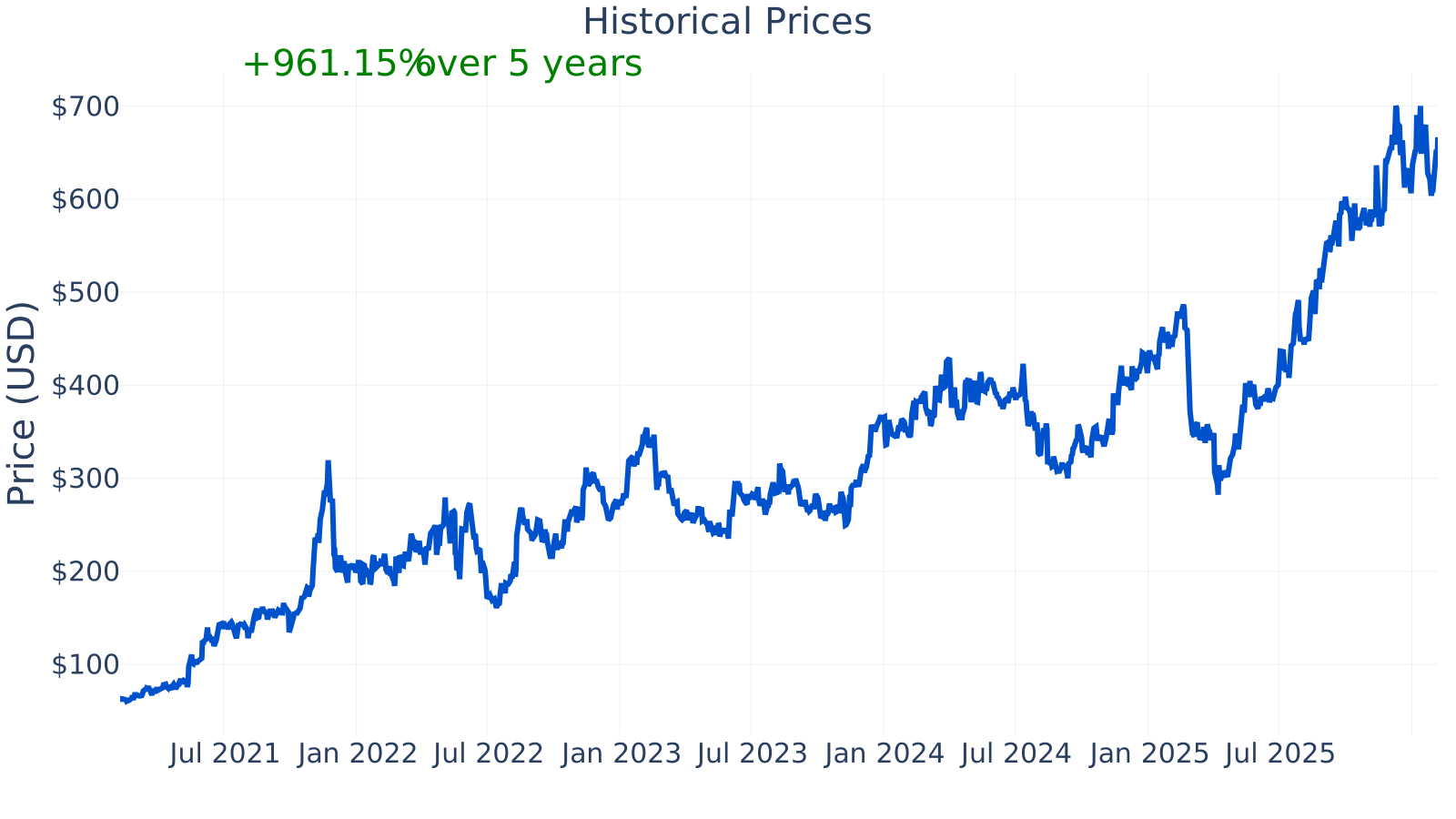
Dillard’s has a market capitalization of about $10.4B and a beta of 1.34, which indicates the share price has historically moved more than the broader market (up or down). The current P/E ratio is about 18.1, and the net profit margin is about 8.8%.
Recent top-line growth is modest (about 2.7% year-over-year in the latest figure shown). Leverage appears moderate with debt-to-equity around 26.8%. Free cash flow over the trailing twelve months is about $778M, which matters for a retailer because it reflects the cash left after operating needs and capital spending (such as store upkeep and systems) are funded.
Growth (Low to Medium)
Department stores are generally considered a mature segment of retail rather than a structurally high-growth industry. Long-term demand tends to track consumer spending and population/income trends, while competition from off-price retailers, specialty chains, and e-commerce keeps pressure on pricing and traffic. As a result, growth is often driven more by execution (merchandising, inventory discipline, customer experience, and digital capabilities) than by industry expansion.
The year-over-year revenue growth pattern shows a sharp rebound in 2021 and early 2022 (a period when many retailers experienced unusually strong demand), followed by a long stretch of flat-to-negative comparisons through 2023–2025, and then a return to small positives more recently. This pattern fits a business cycling from a surge period back toward a steadier, more competitive baseline.
Free cash flow remains meaningful but has declined from earlier levels (roughly $1.17B in FY2022 to about $610M in FY2025, then about $778M TTM in the latest figure shown). For long-term business momentum, a key question is whether Dillard’s can stabilize cash generation through normal retail cycles by managing inventory tightly, keeping store productivity high, and maintaining a relevant assortment in categories that drive repeat visits (for many department stores: beauty, key apparel brands, and home).
Potential catalysts typically come from factors like stronger-than-expected consumer demand, improved merchandising and inventory turns, continued expansion of online capabilities, and disciplined capital allocation (for example, balancing reinvestment in stores and systems with returning capital to shareholders, where applicable and disclosed). However, these are operational outcomes rather than guaranteed structural tailwinds.
Risks (Medium to High)
This article is for informational purposes only and does not constitute financial advice. Some content is AI-generated. See Disclaimer


