Stock Analysis · Dicks Sporting Goods Inc (DKS)
Overview
DICK’S Sporting Goods, Inc. is a U.S. specialty retailer focused on sporting goods, athletic apparel, footwear, and equipment. The company sells through a large store network and digital channels, and it also operates specialty concepts (including Golf Galaxy) and “House of Sport” locations that emphasize experiences like services, training, and product trials. Its business model combines national brands with a growing set of private-label offerings, aiming to keep customers engaged across both in-store and online shopping.
Revenue is primarily generated from retail sales to customers (rather than long-term contracts). Based on the company’s reporting approach in its SEC filings, the revenue mix is generally described by merchandise categories and sales channels rather than a detailed percentage split each period.
Main sources of revenue (largest to smaller, described at a high level):
- Footwear (athletic shoes and related products)
- Apparel (activewear and sportswear)
- Hardlines (sports equipment and gear)
- Outdoor and seasonal categories (category grouping can vary by reporting period)
- Services and other (e.g., certain specialty services; typically smaller than merchandise sales)
The company’s recent income profile (shown below) highlights a retailer with substantial cost of goods sold and operating expenses, where profitability depends on merchandising, inventory discipline, and store/digital efficiency. Over the last four fiscal years shown, revenue rose from about $12.3B (FY2022) to about $13.4B (FY2025), while net income moved from about $1.52B to about $1.17B, reflecting how margins can shift even when sales are relatively steady.
Key Figures
| Metric | Value | Industry ⓘ |
|---|---|---|
| Date | Feb 07, 2026 | |
| Context | ||
| Sector | Consumer Cyclical | |
| Industry | Specialty Retail | |
| Market Cap ⓘ | $18.74B | |
| Beta ⓘ | 1.26 | |
| Fundamental | ||
| P/E Ratio ⓘ | 16.95 | 23.78 |
| Profit Margin ⓘ | 6.86% | 6.27% |
| Revenue Growth ⓘ | 36.30% | 5.20% |
| Debt to Equity ⓘ | 139.47% | 103.28% |
| PEG ⓘ | 2.01 | |
| Free Cash Flow ⓘ | $140.39M | |
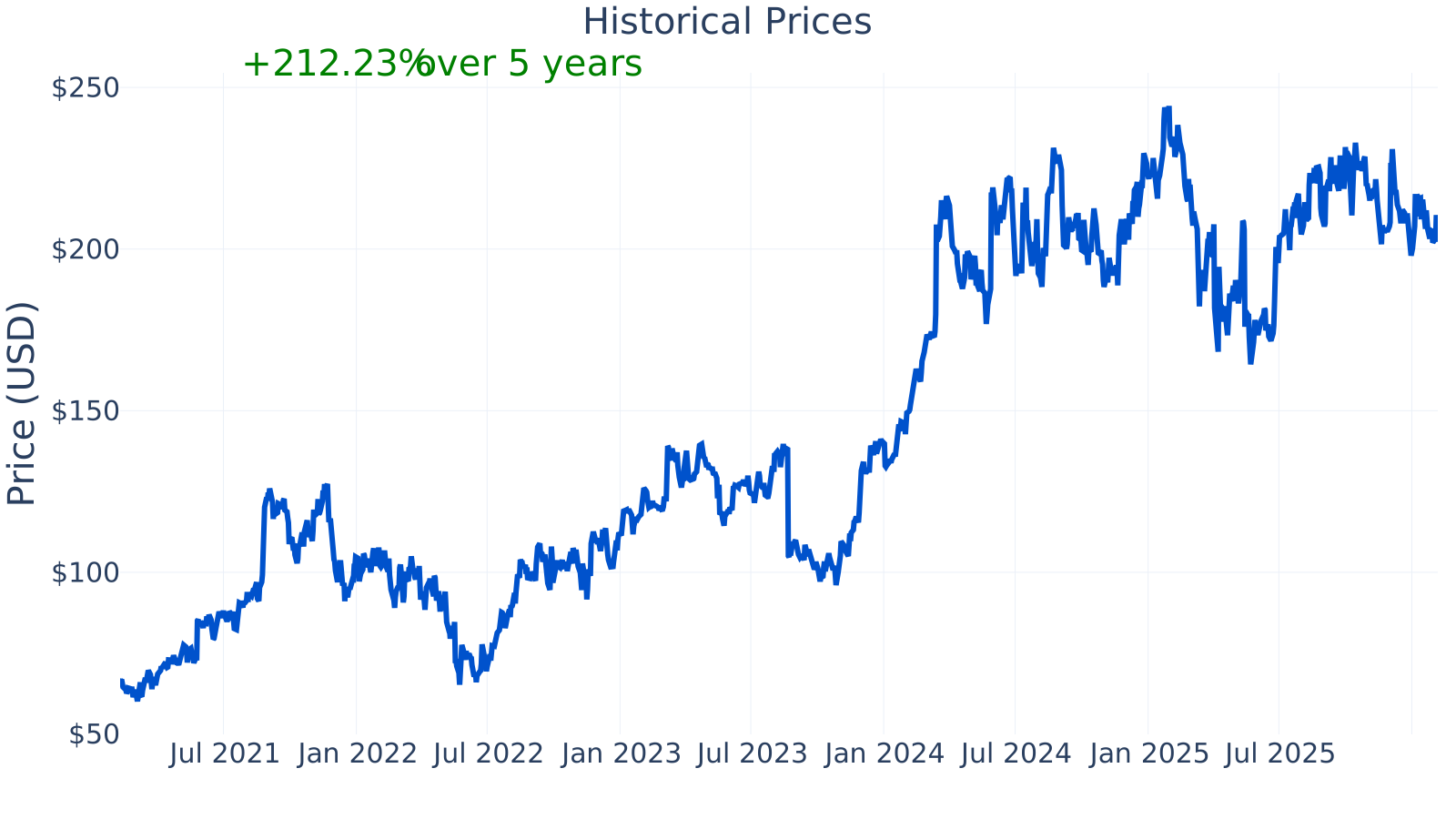
DICK’S Sporting Goods has a market capitalization of about $18.7B. The stock’s beta (~1.26) suggests it has historically moved more than the broader market on average (higher volatility). The current P/E ratio is ~16.95 versus an industry median around 23.78. Profitability is shown by a net profit margin of ~6.86% compared with an industry median near 6.27%. Year-over-year revenue growth in the latest reading is shown at about 36.33% (industry median ~5.2%), while debt-to-equity is ~139% (industry median ~103%). Trailing twelve-month free cash flow is shown at about $140M.
Growth (Medium)
DICK’S operates in the consumer discretionary retail space, which is closely tied to household budgets. Demand for sporting goods and athletic apparel tends to benefit from long-term health and fitness participation trends, but year-to-year results can be influenced by the economic cycle, promotional intensity, and how quickly customers replace big-ticket equipment or refresh apparel and footwear.
Strategically, the company has emphasized a combination of store productivity improvements, omnichannel convenience (buy online/pick up in store and ship-to-home), and differentiated store formats. Experience-driven concepts can potentially support customer engagement and help the company present a wider assortment and services, which may be harder to replicate purely online. The company also has the typical retail levers for growth: new or remodeled stores, improved inventory management, and category mix shifts (for example, stronger footwear or apparel demand versus equipment).
The revenue growth pattern shown is uneven, which is common in retail. After very strong growth earlier in the period, there are stretches of low single-digit growth and occasional declines, followed by a notable recent jump (about 36% year-over-year in the latest reading). When revenue growth changes this sharply, it is often important to interpret it in the context of comparisons to prior-year periods, promotional levels, and product demand cycles rather than assuming a straight-line trend.
Free cash flow has also fluctuated meaningfully. The chart shows trailing twelve-month free cash flow moving from about $1.31B (FY2022) down to about $558M (FY2023), up to about $940M (FY2024), then down to about $509M (FY2025), with the latest metric showing about $140M. For a retailer, free cash flow can swing due to inventory builds/releases, capital spending (new stores, remodels), and timing effects in payables and receivables. Persistent weakness over multiple periods can reduce flexibility, while stronger periods can support reinvestment and shareholder returns.
Risks (Medium)
This article is for informational purposes only and does not constitute financial advice. Some content is AI-generated. See Disclaimer