Stock Analysis · Dell Technologies Inc (DELL)
Overview
Dell Technologies Inc. is a global technology company best known for designing and selling computers and related hardware, but it also has a large business focused on helping organizations run their IT infrastructure. In simple terms, Dell sells devices people use (like laptops and desktops) and the equipment companies use behind the scenes (like servers and storage systems), plus a range of services such as support, deployment, and financing.
Its operations are generally described through two major segments in company filings:
- Infrastructure Solutions Group (ISG): mainly servers, storage, and networking solutions used in data centers.
- Client Solutions Group (CSG): mainly commercial and consumer PCs, including laptops, desktops, and related peripherals.
Across these activities, Dell’s revenue typically comes primarily from hardware sales (PCs and infrastructure equipment) and secondarily from attached services and support. The exact mix can change from year to year depending on PC demand cycles and enterprise spending patterns (as detailed in Dell’s annual report).
Over the last few fiscal years shown, total revenue moved from about $101.2B (FY2022) to $102.3B (FY2023), then fell to about $88.4B (FY2024) before rising to about $95.6B (FY2025). Costs of revenue remain the largest expense item, which is typical for hardware-focused businesses, while operating income and net income have also fluctuated over the period.
Key Figures
| Metric | Value | Industry ⓘ |
|---|---|---|
| Date | Feb 07, 2026 | |
| Context | ||
| Sector | Technology | |
| Industry | Computer Hardware | |
| Market Cap ⓘ | $81.13B | |
| Beta ⓘ | 1.10 | |
| Fundamental | ||
| P/E Ratio ⓘ | 16.18 | 25.91 |
| Profit Margin ⓘ | 5.01% | 3.74% |
| Revenue Growth ⓘ | 10.80% | 21.50% |
| Debt to Equity ⓘ | -1192.48% | 4.92% |
| PEG ⓘ | 0.50 | |
| Free Cash Flow ⓘ | $4.45B | |
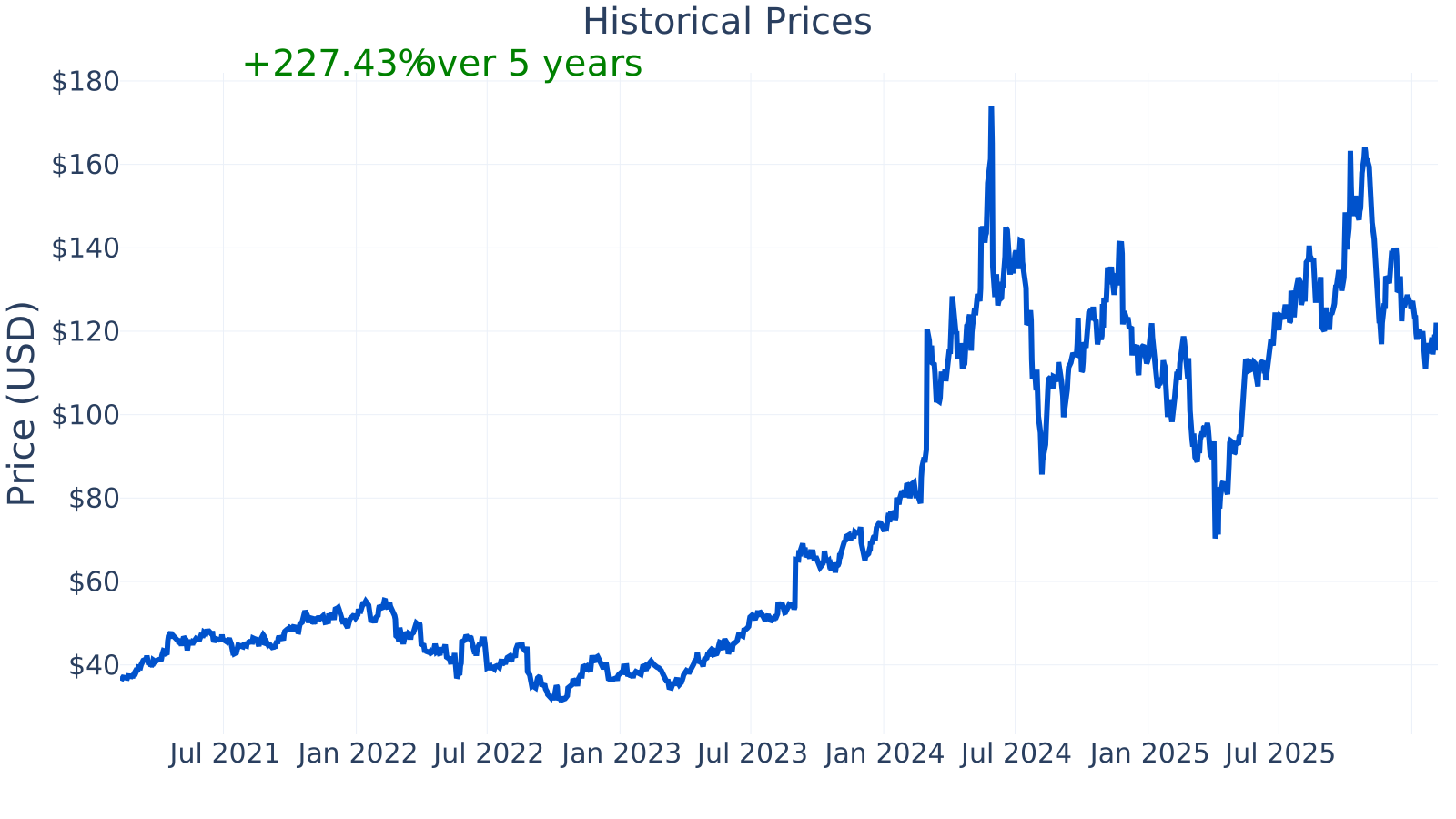
Dell’s market capitalization is about $81.1B and the stock’s beta is about 1.10, which indicates the share price has historically moved slightly more than the overall market. The latest P/E ratio is about 16.18 versus an industry median near 25.91, while the profit margin is about 5.01% versus an industry median near 3.74%.
Revenue growth year-over-year is about 10.8% compared with an industry median near 21.5%. Free cash flow over the trailing twelve months is about $4.45B. The debt-to-equity figure appears as a large negative value, which commonly happens when accounting equity is negative (often influenced by large share repurchases and balance-sheet structure), making this particular ratio less intuitive to compare directly to peers without additional balance-sheet context.
Growth (Medium)
Dell operates in markets that are mature but still strategically important: PCs remain widely used in workplaces and homes, and data center infrastructure continues to matter as cloud computing, AI workloads, cybersecurity needs, and data growth expand. That said, demand can be cyclical. PC upgrades often come in waves, and enterprise infrastructure spending can pause when customers optimize budgets.
Dell’s strategy, as described in its filings, leans on being a scaled provider to both endpoints (PCs) and the data center, supported by a global supply chain, enterprise relationships, and service capabilities. A potential long-term catalyst for the infrastructure side is rising demand for compute and storage capacity—especially as organizations deploy more data-intensive applications and AI-related workloads—though the timing and magnitude of that demand can vary significantly.
Revenue growth has been uneven across the period shown: there were quarters with sizable declines (notably through parts of 2023 and early 2024) followed by a return to positive growth more recently, including roughly 10.8% year-over-year in the latest point shown. This pattern is consistent with cyclical end-markets rather than steady, linear expansion.
Free cash flow has also been volatile: about $7.51B (FY2022), dropping sharply to about $0.56B (FY2023), rebounding to about $5.92B (FY2024), and then about $1.87B (FY2025), with the latest trailing twelve months around $4.45B. For long-term business resilience, the key takeaway is that cash generation exists but can swing materially depending on working capital movements and demand conditions—both important in hardware-heavy models.
Risks (High)
This article is for informational purposes only and does not constitute financial advice. Some content is AI-generated. See Disclaimer