Stock Analysis · Darden Restaurants Inc (DRI)
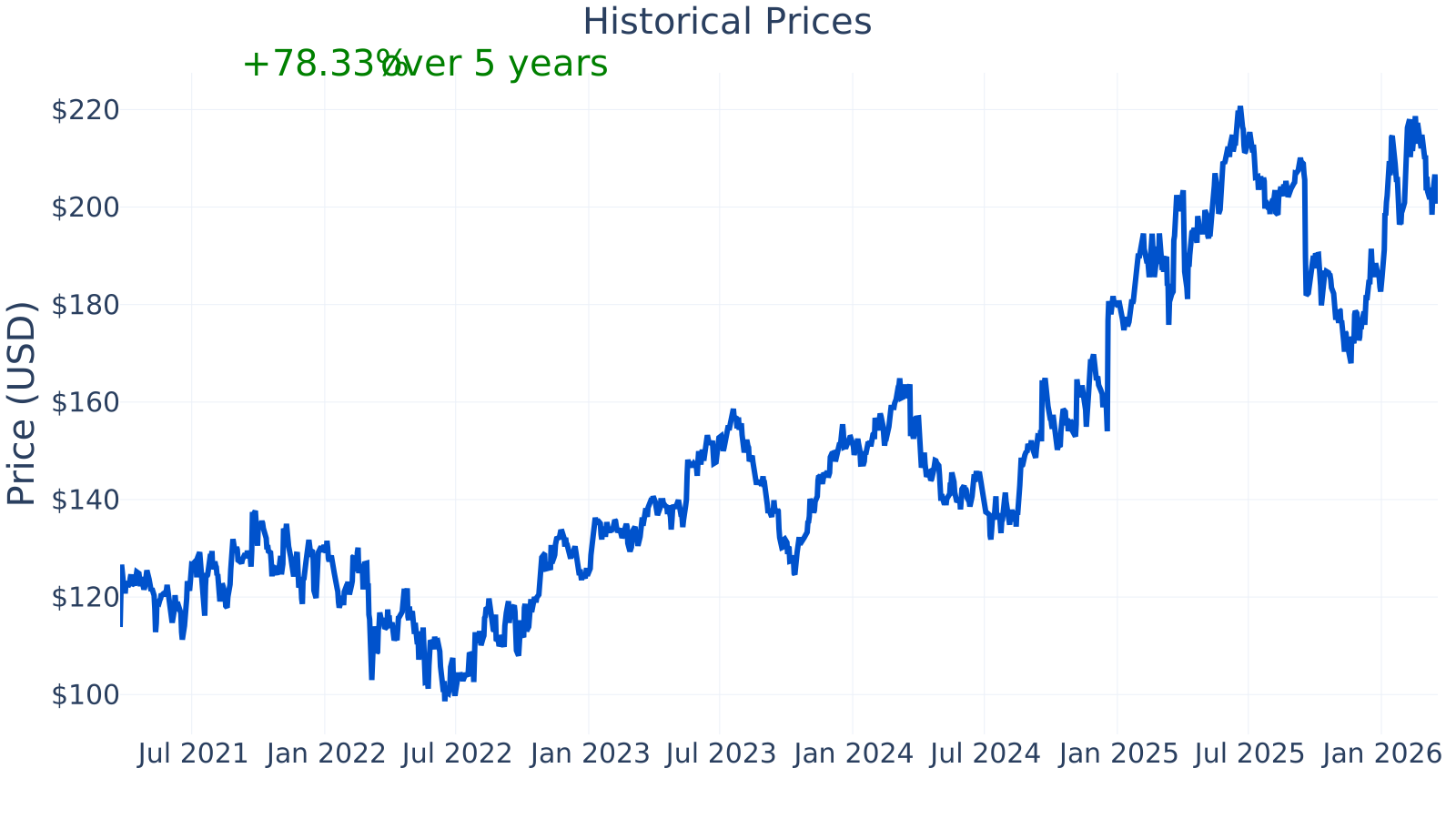
Overview
Darden Restaurants, Inc. is a U.S. restaurant company that owns and operates a portfolio of well-known casual dining brands. Its business model is straightforward: it generates revenue primarily by serving meals and beverages in company-owned restaurants, supported by to-go and delivery options (where available by brand and market). The company’s scale matters in this industry because a large purchasing footprint, centralized support functions, and shared operational know-how can help with food sourcing, staffing processes, marketing, and new restaurant development.
Darden reports results by operating segments (its restaurant brands). Revenue is largely “restaurant sales,” meaning guest checks from food and drinks. Based on its segment reporting structure, the largest sources of revenue typically come from its biggest brands:
- Olive Garden (largest segment)
- LongHorn Steakhouse
- Fine Dining (including brands such as The Capital Grille)
- Other Business (a group of smaller brands)
Percentages by segment can vary year to year and are best taken from the most recent annual report segment footnote; the key takeaway is that Olive Garden and LongHorn are the two primary earnings engines, while the remaining brands add diversification but are smaller contributors.
Over the period shown, total revenue rises meaningfully (from about $7.2B to about $12.1B). Costs also rise, but operating income and net income remain positive throughout. One notable change is that interest expense increases over time, which can matter when comparing operating performance versus what ultimately reaches net income.
Key Figures
| Metric | Value | Industry ⓘ |
|---|---|---|
| Date | Mar 23, 2026 | |
| Context | ||
| Sector | Consumer Cyclical | |
| Industry | Restaurants | |
| Market Cap ⓘ | $23.62B | |
| Beta ⓘ | 0.60 | |
| Fundamental | ||
| P/E Ratio ⓘ | 21.28 | 28.03 |
| Profit Margin ⓘ | 8.66% | 7.24% |
| Revenue Growth ⓘ | 5.90% | 7.60% |
| Debt to Equity ⓘ | 293.98% | 93.31% |
| PEG ⓘ | 1.81 | |
| Free Cash Flow ⓘ | $1.57B | |
Darden’s equity market value is about $23.6B, and its beta of ~0.60 indicates the stock has historically moved less than the broader market on average (though this can change over time). The company’s P/E ratio is ~21.3, below the restaurant industry median shown (~28.0). Profitability is solid on this snapshot: profit margin is ~8.7% versus an industry median of ~7.2%. Recent year-over-year revenue growth is ~5.9%, somewhat below the industry median shown (~7.6%). Leverage stands out: debt-to-equity is ~294%, higher than the industry median shown (~93%). Trailing twelve-month free cash flow is about $1.57B, which is a key resource for reinvestment, debt service, and shareholder returns (the mix depends on management decisions and conditions).
Growth (Medium)
The restaurant industry is generally mature in the U.S., so long-term growth tends to come from a combination of (1) opening new locations, (2) increasing sales at existing restaurants through guest traffic and/or pricing, and (3) improving efficiency. Darden’s brand portfolio approach can support durability: large, established concepts can fund steady unit growth, while smaller concepts may offer optionality—though they may also require more experimentation to scale successfully.
The year-over-year revenue growth trend shows a post-pandemic surge early in the period (very high growth rates) that normalizes into mid- to high-single digits more recently. That pattern is common after a major disruption: comparisons get tougher, and growth rates settle closer to what a mature industry typically delivers.
Free cash flow trends upward in the most recent period, reaching roughly $1.57B. For a restaurant operator, sustained free cash flow can be an important signal because the business requires ongoing spending for maintenance, remodels, and new unit development. Rising free cash flow can expand financial flexibility, although it should be considered alongside debt levels and lease obligations discussed in company filings.
Potential catalysts for future growth are generally operational rather than “breakthrough” in nature: disciplined new restaurant openings, menu and marketing execution, labor and food cost management, and maintaining brand relevance with guests. In casual dining, consistent execution across thousands of daily operating decisions tends to matter more than single big product launches.
Risks (Medium)
Darden operates in a highly competitive and economically sensitive space. Demand can weaken when consumers cut discretionary spending, and costs can rise quickly due to food commodity inflation or labor market pressure. Restaurants also face operational risks such as staffing shortages, wage inflation, and variability in guest traffic driven by local competition or shifting consumer preferences.
The leverage profile is a central risk item here. Debt-to-equity increases over time and stands around 294% in the latest point shown, well above the industry median displayed. Higher leverage can amplify outcomes: it may help boost returns when operations are stable, but it can reduce flexibility during downturns or periods of higher interest rates. This aligns with the earlier observation that interest expense has risen across the years shown in the cost breakdown.
Profit margin trends down from earlier peaks and sits around 8.7% most recently, still above the industry median displayed. This suggests Darden has been able to maintain comparatively solid profitability, but margins remain exposed to cost pressures (food, wages, utilities) and the need to balance pricing with guest demand.
Competitive positioning in casual dining typically comes from brand strength, consistent guest experience, purchasing scale, and real estate execution (good sites, strong operations). Darden is among the larger U.S. full-service restaurant operators by revenue and store count, which can provide purchasing and operating scale. At the same time, consumers have many alternatives across casual dining chains, fast casual concepts, and independent restaurants.
Key competitor groups include other large casual dining and steakhouse operators, as well as broader “eating away from home” options. Competitive pressure often shows up through discounting, marketing intensity, and the ability (or inability) to pass costs to customers without losing traffic. Darden’s multi-brand approach adds diversification, but it also requires management to allocate capital effectively across concepts with different growth and margin profiles.
Valuation
On earnings, Darden’s valuation appears lower than the industry median shown across much of the period displayed, with the most recent P/E around 19–21 depending on the date point referenced, versus a higher industry median. A lower P/E can reflect market expectations of slower growth, higher perceived risk, or simply differences in business mix and profitability versus peers.
Whether the current valuation is “high” or “low” depends largely on how a reader weighs several offsetting fundamentals visible in the metrics. On one hand, profitability is above the industry median shown and free cash flow is strong in the latest period. On the other hand, leverage (debt relative to equity) is materially higher than the industry median displayed, and revenue growth in the latest snapshot is below the industry median shown. In practice, valuation often ends up reflecting this kind of trade-off: stable brands and cash generation can support a higher multiple, while higher leverage and mature-industry growth can constrain it.
Conclusion
Darden is a scaled, multi-brand restaurant operator with revenue driven primarily by in-restaurant food and beverage sales across well-established concepts. The financial picture shown is consistent with a mature consumer business: revenue growth has normalized after an earlier surge, profit margins remain positive and above the industry median shown, and free cash flow has strengthened in the most recent period.
The most prominent balancing factor is leverage. Debt-to-equity is well above the industry median shown, and interest expense has increased over time in the expense breakdown, both of which can matter in weaker consumer environments or when financing costs remain elevated. Overall, the company profile here combines durable brands and cash generation with meaningful sensitivity to consumer demand and a higher-debt capital structure than many peers, making the long-term outcome more dependent on steady execution and financial discipline.
Sources:
- SEC EDGAR — Darden Restaurants, Inc. Form 10-K (Annual Report)
- SEC EDGAR — Darden Restaurants, Inc. Form 10-Q (Quarterly Reports)
- Darden Restaurants, Inc. Investor Relations — Annual Report materials and SEC filing copies (company-hosted)
- Wikipedia — “Darden Restaurants” (basic company background)
This article is for informational purposes only and does not constitute financial advice. Some content is AI-generated. See Disclaimer


