Stock Analysis · Dana Inc (DAN)
Overview
Dana Incorporated is an automotive supplier that designs and manufactures parts that help vehicles move and manage power. In simple terms, it produces drivetrain and propulsion-related components (such as axles, driveshafts, and related systems) used in passenger vehicles, commercial trucks, and off-highway equipment. Its customers are typically vehicle manufacturers (OEMs) and, in some cases, the aftermarket ecosystem that supports vehicles already in use.
Because Dana sells into the transportation and industrial vehicle supply chains, its business results tend to move with vehicle production volumes, model cycles, and broader economic conditions. The company also operates in a sector that is being reshaped by electrification, which can create both opportunities (new product demand) and transition challenges (pricing pressure, investment needs, and changing customer requirements).
Public filings generally describe Dana’s revenue primarily by operating segments rather than a simple “product list.” Percentages by segment can vary by year and reporting format, so they should be taken from the most recent annual report when needed for precision. At a high level, Dana’s revenue is typically driven by a mix of:
- Light Vehicle-related systems (components used in passenger cars, SUVs, and pickups)
- Commercial Vehicle-related systems (components used in trucks, buses, and similar vehicles)
- Off-Highway-related systems (components used in construction, agriculture, and industrial equipment)
- Electrification-focused products (e-propulsion and related components, generally reported within operating segments depending on reporting)
At the income-statement level, the company’s recent profile shows a high cost base relative to sales and meaningful spending on operating items like R&D and administrative costs, which helps explain why small changes in volume and pricing can have an outsized impact on profits.
Across the years shown, total revenue rose from about $8.95B (2021) to $10.56B (2023), then eased to $10.28B (2024). Net income has been uneven, moving from a profit in 2021 to a loss in 2022, a small profit in 2023, and a loss again in 2024. Interest expense has also trended upward (from about $131M in 2021 to $161M in 2024), which can matter more when profit margins are thin.
Key Figures
| Metric | Value | Industry ⓘ |
|---|---|---|
| Date | Mar 02, 2026 | |
| Context | ||
| Sector | Consumer Cyclical | |
| Industry | Auto Parts | |
| Market Cap ⓘ | $2.46B | |
| Beta ⓘ | 2.16 | |
| Fundamental | ||
| P/E Ratio ⓘ | 47.93 | 24.70 |
| Profit Margin ⓘ | 0.55% | 3.56% |
| Revenue Growth ⓘ | 1.10% | 4.90% |
| Debt to Equity ⓘ | 323.15% | 76.35% |
| PEG ⓘ | 6.85 | |
| Free Cash Flow ⓘ | $306.00M | |
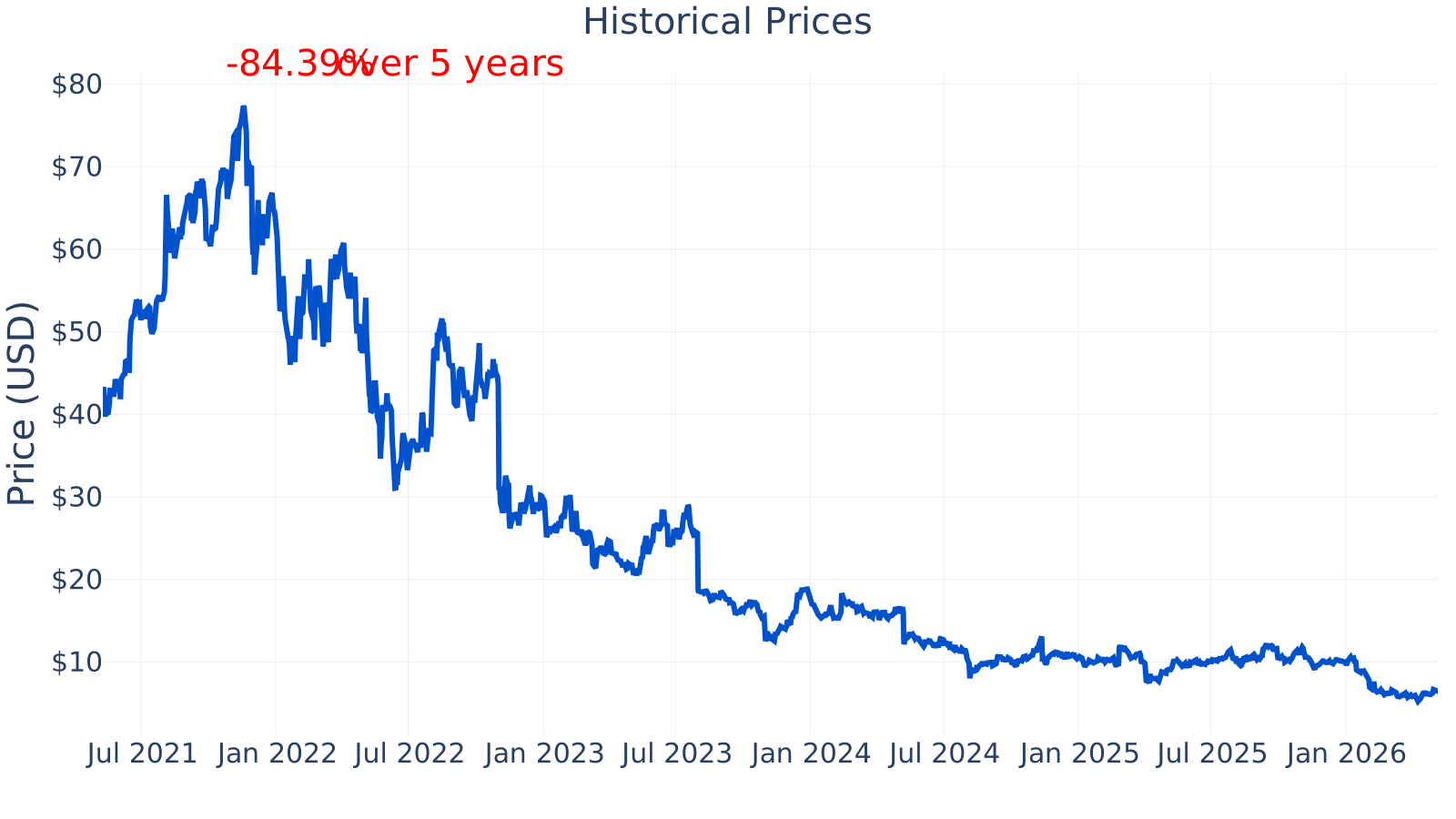
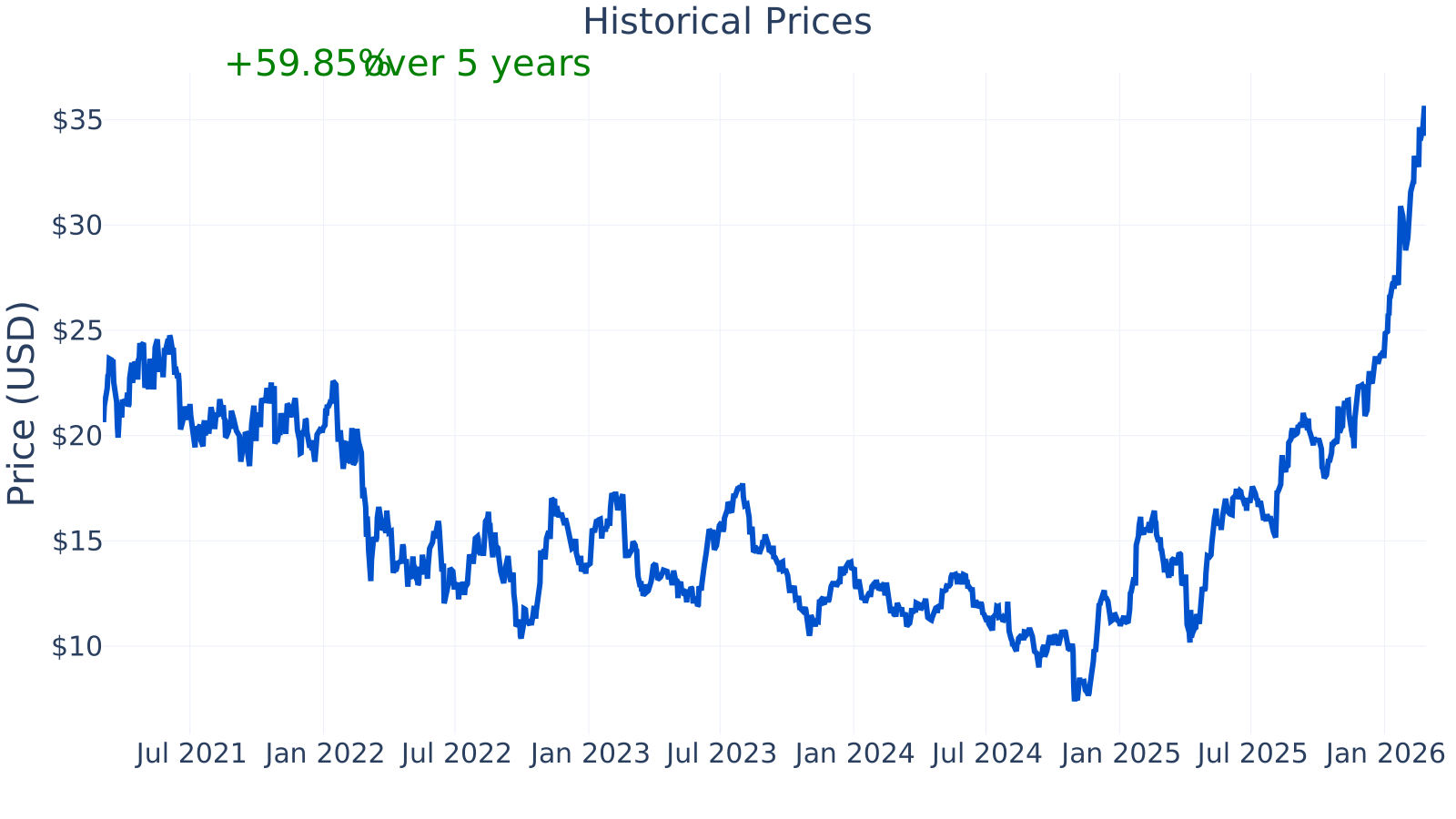
Dana’s market capitalization is about $2.46B, placing it in the small-to-mid range compared with many global auto suppliers. The stock’s beta of ~2.16 indicates that, historically, its share price has moved more than the overall market in both directions.
Profitability and leverage stand out versus the industry median in the table. The company’s profit margin is ~0.55% compared with an industry median around 3.57%, meaning Dana has recently been converting a smaller share of sales into bottom-line profit than many peers. Dana’s debt-to-equity is ~323% versus an industry median near 76%, suggesting heavier use of debt relative to shareholder equity than the typical company in the same industry grouping.
On growth, the latest year-over-year revenue growth shown is about 1.1% versus an industry median near 4.9%, indicating slower recent top-line momentum compared with the median peer in the group.
Growth (Medium)
Dana operates in the auto parts industry, which is closely tied to long-term themes such as vehicle production levels, global platform consolidation, and the ongoing shift toward hybrid and electric drivetrains. In theory, the electrification transition can expand the addressable market for certain advanced propulsion components, but it also tends to intensify competition and requires sustained engineering investment.
From a revenue perspective, the pattern shown is uneven. After strong growth periods earlier in the series, several quarters show negative year-over-year comparisons, followed by mixed results. This is consistent with an industry where customer production schedules and inventory adjustments can cause swings even when long-term demand remains intact.
Cash generation is particularly important for suppliers because they often need to fund new program launches, factory upgrades, and engineering work while navigating cyclical demand. The trailing free cash flow shown is positive at about $306M (TTM in the table), while the time series indicates meaningful variability, including a period of negative free cash flow (notably around 2022) and later recovery.
Potential catalysts for improved fundamentals in this type of business usually include a combination of (1) higher vehicle build rates from customers, (2) improved pricing and mix, (3) operational efficiency and lower scrap/warranty costs, and (4) disciplined capital spending that allows more operating cash to translate into free cash flow. The company’s filings and presentations are the appropriate place to verify whether program launches, cost initiatives, and electrification-related wins are translating into measurable margin and cash improvements.
Risks (High)
Dana’s risk profile is shaped by two core factors: cyclicality and operating leverage. When margins are low, relatively small changes in volumes, pricing, raw materials, launch costs, or warranty costs can push results between profit and loss. This sensitivity appears in the profit margin history, where results move around the break-even zone and often sit below the industry median.
Leverage is another notable risk. Dana’s debt-to-equity ratio has risen materially over the period shown and sits well above the industry median. Higher leverage can reduce flexibility during downturns, and it can make interest costs more burdensome when profits are thin.
Competitive positioning in auto parts is typically defined by scale, engineering depth, manufacturing footprint, cost competitiveness, and long-term customer relationships. Dana participates in categories where competitors can include large global suppliers and specialized drivetrain and propulsion companies. In many cases, leadership is platform- or product-specific rather than industry-wide, and supplier contracts are often awarded program-by-program. That structure can limit pricing power and can require continuous investment to maintain competitiveness.
Other practical risks common to this business model include customer concentration (large OEMs have significant negotiating leverage), execution risk on new product launches, supply chain disruptions, labor and energy cost volatility, and the pace and direction of electrification adoption (which can shift demand between traditional drivetrain components and newer electric propulsion solutions).
Valuation
The latest P/E ratio in the table is about 47.9 versus an industry median around 24.7. A higher P/E can sometimes be explained by expectations of earnings recovery or temporarily depressed earnings (where the “E” in P/E is unusually low), but it can also signal that the market is assigning a larger multiple despite current profitability challenges.
The historical P/E series shown is also uneven, with some periods not displaying meaningful values (often a sign that earnings were very low or negative at the time). In businesses with volatile margins, P/E ratios can swing sharply and may be less informative on their own; they are typically interpreted alongside operating margin trends, free cash flow consistency, and balance-sheet leverage.
The PEG ratio (~6.85) shown in the table is relatively high in simple terms (price relative to growth expectations), which is often consistent with a situation where near-term growth is modest and/or earnings visibility is not strong. In practice, assessing whether today’s valuation is justified generally depends on whether margins and cash generation can improve sustainably while leverage trends stabilize or improve.
Conclusion
Dana is a drivetrain and propulsion-focused auto supplier whose results are closely linked to vehicle production cycles and execution on cost, pricing, and program launches. The company has participated in large end markets and long-term vehicle technology shifts, but recent fundamentals reflect thin profitability relative to the industry median and a comparatively high leverage profile.
The key long-term variables to monitor are whether Dana can translate its scale and engineering work into consistently higher margins, whether free cash flow remains durable across the cycle, and whether balance-sheet leverage trends improve over time. Valuation metrics like P/E appear elevated versus the industry median, which can happen when earnings are depressed or volatile—making operational progress and cash generation especially important context for interpreting the multiple.
Sources:
- U.S. Securities and Exchange Commission (SEC) EDGAR — Dana Incorporated filings (Form 10-K, Form 10-Q)
- Dana Incorporated — Investor Relations materials and SEC filing copies (Annual Report / Form 10-K)
- Wikipedia — “Dana Incorporated” (basic company background)
This article is for informational purposes only and does not constitute financial advice. Some content is AI-generated. See Disclaimer