Stock Analysis · Daktronics Inc (DAKT)
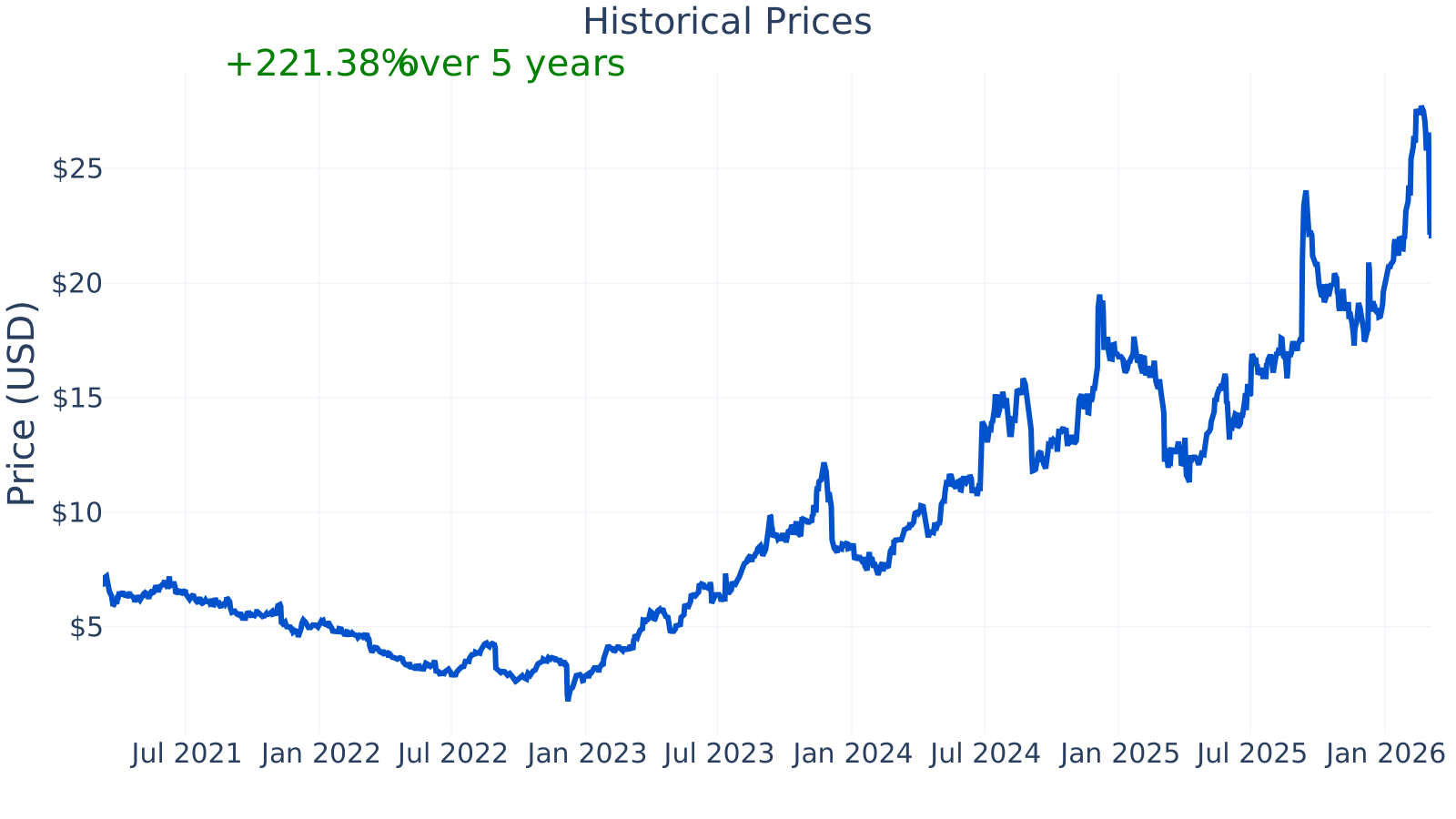
Overview
Daktronics, Inc. designs and manufactures electronic display systems. In plain terms, it builds large-format LED video displays and digital signs used to show scores, replays, advertising, directions, and other real-time information. These systems are commonly installed in sports venues (professional and college stadiums/arenas), schools, transportation hubs, and commercial sites. The company typically combines hardware (displays and control systems), software, installation, and ongoing service into a complete solution.
In its SEC filings, Daktronics describes its business using operating segments that reflect where products are sold and supported. Common end markets include (1) Live Events (sports and entertainment venues), (2) Commercial (digital-out-of-home signage and on-premise displays), (3) High School Park & Recreation, (4) Transportation, and (5) International. Revenue is primarily generated from selling display systems (often tied to project-based installations) and related services such as installation, content/control software, and maintenance.
The business mix can change from year to year because many deals are project-based and depend on timing of customer budgets, construction schedules, and major venue upgrades.
Over the last several fiscal years, total revenue increased meaningfully from FY2021 to FY2024, but profitability has been uneven. The most recent full-year snapshot shown indicates operating income and net income can swing from solidly positive to negative even when revenue remains substantial, highlighting that cost control and project execution (materials, labor, and installation) are major drivers of results.
Key Figures
| Metric | Value | Industry ⓘ |
|---|---|---|
| Date | Mar 09, 2026 | |
| Context | ||
| Sector | Technology | |
| Industry | Electronic Components | |
| Market Cap ⓘ | $1.07B | |
| Beta ⓘ | 1.68 | |
| Fundamental | ||
| P/E Ratio ⓘ | 182.92 | 40.17 |
| Profit Margin ⓘ | 3.43% | 6.11% |
| Revenue Growth ⓘ | 21.60% | 17.40% |
| Debt to Equity ⓘ | 10.98% | 41.32% |
| PEG ⓘ | 0.59 | |
| Free Cash Flow ⓘ | $61.98M | |
Daktronics’ market capitalization is about $1.07B, placing it in small-cap territory. The stock’s beta of ~1.68 suggests it has historically moved more than the broader market (higher volatility).
On profitability, the latest net profit margin is ~3.43%, below the industry median shown (~6.11%). Growth looks stronger on the latest snapshot: year-over-year revenue growth ~21.6% versus an industry median of ~17.4%. Balance sheet leverage appears modest with debt-to-equity ~11% versus an industry median of ~41%.
Two valuation-related figures stand out: the latest P/E ratio is ~182.9 versus an industry median of ~40.2, and the PEG ratio is ~0.59 (PEG can look low when expected growth is high, but it can also be distorted when earnings are volatile). Free cash flow over the trailing twelve months is about $62.0M.
Growth (Medium)
Daktronics operates in markets that tend to benefit from a multi-year shift toward LED and digital signage, as venues and advertisers prefer dynamic content over static signs. In sports and live events, the “game-day experience” has become a focus area, which can support demand for larger, higher-resolution video boards and integrated control systems. In commercial and transportation settings, digital displays can be used to update messages quickly and manage content centrally, which can support ongoing replacement cycles.
That said, much of Daktronics’ business is tied to large projects (venue builds, major renovations, infrastructure upgrades). This means growth can be “lumpy”: strong periods can be followed by slower periods depending on the timing of customer capital spending.
Recent year-over-year revenue growth has been volatile. There were periods of very strong growth earlier in the timeline (including quarters above 30% and even higher), followed by several negative growth periods, and most recently a rebound to roughly 21.6% year-over-year. This pattern is consistent with a project-driven business where comparisons can swing based on delivery schedules and customer timing.
Free cash flow improved sharply from negative levels in 2022 and 2023 to strongly positive in 2024, and it has remained positive into 2025–2026 (around $62M most recently). For long-term business quality, sustained positive free cash flow can matter because it indicates the company is generating cash after covering operating needs and capital spending, although it can still fluctuate with working capital (inventory, receivables) in project businesses.
Potential catalysts discussed in company materials often relate to execution and capacity: improving manufacturing and installation efficiency, delivering projects on schedule, and converting demand (orders/backlog) into revenue while protecting margins. Large venue upgrade cycles and public infrastructure projects (transportation) can also influence results, but timing can be hard to predict.
Risks (High)
The biggest practical risk is earnings volatility. Even with substantial revenue, profitability can swing as input costs, labor availability, project mix, warranty/service costs, and execution issues change. In project-based work, a few large contracts can influence a full year’s results, and margin outcomes can depend on how well costs are estimated and managed.
Profit margin has moved dramatically over time, including periods of losses and periods of healthier profitability. The latest net margin is about 3.43%, which is below the industry median shown (~6.11%). This gap suggests that, relative to peers, Daktronics has recently converted a smaller share of sales into bottom-line profit, and that margin stability remains a key question.
Another risk is competition. Daktronics participates in a global LED display market with many capable suppliers, including large electronics manufacturers and specialized display companies. Competition can pressure pricing and margins, especially on commodity-like display components. Competitive differentiation often comes from a mix of product performance, reliability, software/control capabilities, service network, and the ability to deliver complex installations.
Customer concentration by type is also a risk. Some end markets (schools, municipalities, transportation authorities) can be sensitive to public budgets and bond cycles. Commercial signage spend can slow in weak economic periods. Venue projects can be delayed by construction timelines or financing constraints.
Supply chain and component availability can matter as well. LED displays rely on electronics components and logistics, and disruptions can affect delivery schedules and costs.
Leverage appears relatively conservative: the latest debt-to-equity is about 11%, below the industry median shown (~41%). Lower leverage can reduce financial risk during downturns, but it does not eliminate operational risk from margin swings and project execution.
On competitive advantages, Daktronics’ long operating history in large-format displays, installed base, and experience delivering complex sports/venue projects can be strengths. However, the company operates in a space where technology and manufacturing scale can favor larger players, and where bid-driven projects can limit the durability of pricing power.
Valuation
The latest P/E ratio shown (~182.9) is far above the industry median (~40.2), and the historical P/E has also been very unstable, including periods where the P/E is not meaningful (for example when earnings are near zero or negative). In practical terms, a very high P/E often indicates that reported earnings are currently low relative to the stock price, which can happen after a profit drop or loss year—even if revenue remains sizable.
Because Daktronics’ profit margin and earnings have been volatile, P/E alone can be a fragile yardstick. In those situations, investors often look at multiple lenses at once (for example: cash generation, operating margin consistency, and balance sheet risk). The company’s recent positive free cash flow contrasts with uneven net income, which may reflect the timing of working capital, non-cash items, or a gap between cash collections and accounting profits in a project business.
Overall, the valuation picture depends heavily on whether profitability normalizes and becomes more consistent, because small changes in margin can have an outsized effect on earnings for a company with hundreds of millions of dollars in annual revenue.
Conclusion
Daktronics is a specialized provider of LED video and digital display systems with meaningful exposure to sports venues, commercial signage, education, transportation, and international markets. The business participates in a long-term shift toward digital displays, but results can be cyclical and project-driven.
The recent profile is mixed: revenue growth has re-accelerated and free cash flow has been positive, while profit margins and net income have been inconsistent and, at times, weak versus the industry median shown. The balance sheet leverage appears modest relative to peers, which can help during uneven periods, but competitive pressure and execution risk remain central.
From a valuation perspective, the current P/E shown is very elevated versus the industry median, and the company’s earnings volatility makes single-metric valuation comparisons less reliable. The key long-term question is whether Daktronics can sustain steadier margins and earnings through varying project cycles while continuing to convert demand into cash.
Sources:
- SEC EDGAR — Daktronics, Inc. Form 10-K (Annual Report) (business description, segments, risk factors, financial statements)
- SEC EDGAR — Daktronics, Inc. Form 10-Q (Quarterly Reports) (updates on operations, financial condition, and risks)
- Daktronics Investor Relations — SEC filings archive and investor materials (company-hosted)
- Wikipedia — “Daktronics” (basic company background; non-financial context)
This article is for informational purposes only and does not constitute financial advice. Some content is AI-generated. See Disclaimer


