Stock Analysis · DXC Technology Co (DXC)
Overview
DXC Technology Co (DXC) is an information technology services company. In simple terms, it helps large organizations run, modernize, and secure their IT systems. This can include managing day-to-day technology operations, moving systems to the cloud, improving cybersecurity practices, and building or updating business applications. DXC primarily serves enterprise and public-sector clients and typically works through multi-month or multi-year service engagements.
In its reporting, DXC generally describes its business through two main segments:
- Global Business Services (GBS): consulting and engineering services, application development and modernization, analytics, and other digital services.
- Global Infrastructure Services (GIS): infrastructure and workplace services (such as IT operations, cloud and hosting-related services, networks, and user support).
Segment mix and customer demand can shift over time as clients change spending priorities (for example, from traditional infrastructure outsourcing toward cloud-related projects). Exact, current revenue percentages by segment should be taken from the company’s most recent annual report (Form 10-K).
Across the income statement, DXC’s recent scale shows a large services cost base. For the fiscal year ending 2025-03-31, total revenue was about $12.9B, with cost of revenue around $9.8B, and operating income around $0.9B. Compared with earlier years shown, revenue has trended down while operating profitability has recovered from a weaker period.
Over the periods shown, total revenue declines from about $16.3B (FY2022) to $12.9B (FY2025), while operating income improves from a loss in FY2023 (about -$0.7B) to a positive level in FY2025 (about $0.9B). This points to a business that has been shrinking in size but has recently shown better cost control and profitability.
Key Figures
| Metric | Value | Industry ⓘ |
|---|---|---|
| Date | Feb 08, 2026 | |
| Context | ||
| Sector | Technology | |
| Industry | Information Technology Services | |
| Market Cap ⓘ | $2.65B | |
| Beta ⓘ | 1.08 | |
| Fundamental | ||
| P/E Ratio ⓘ | 6.61 | 21.42 |
| Profit Margin ⓘ | 3.34% | 4.91% |
| Revenue Growth ⓘ | -1.00% | 6.15% |
| Debt to Equity ⓘ | 152.27% | 54.49% |
| PEG ⓘ | 0.28 | |
| Free Cash Flow ⓘ | $1.10B | |
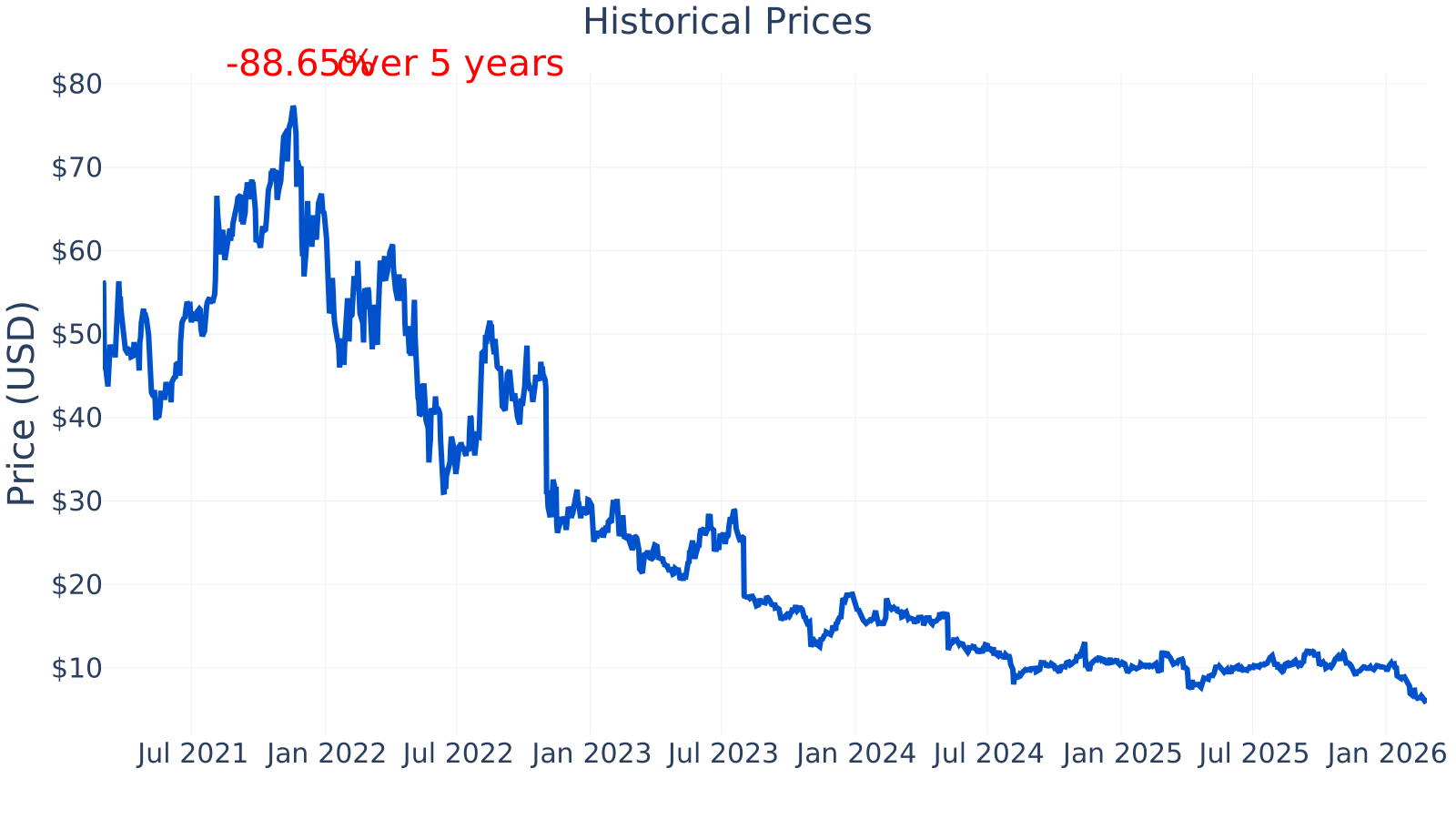
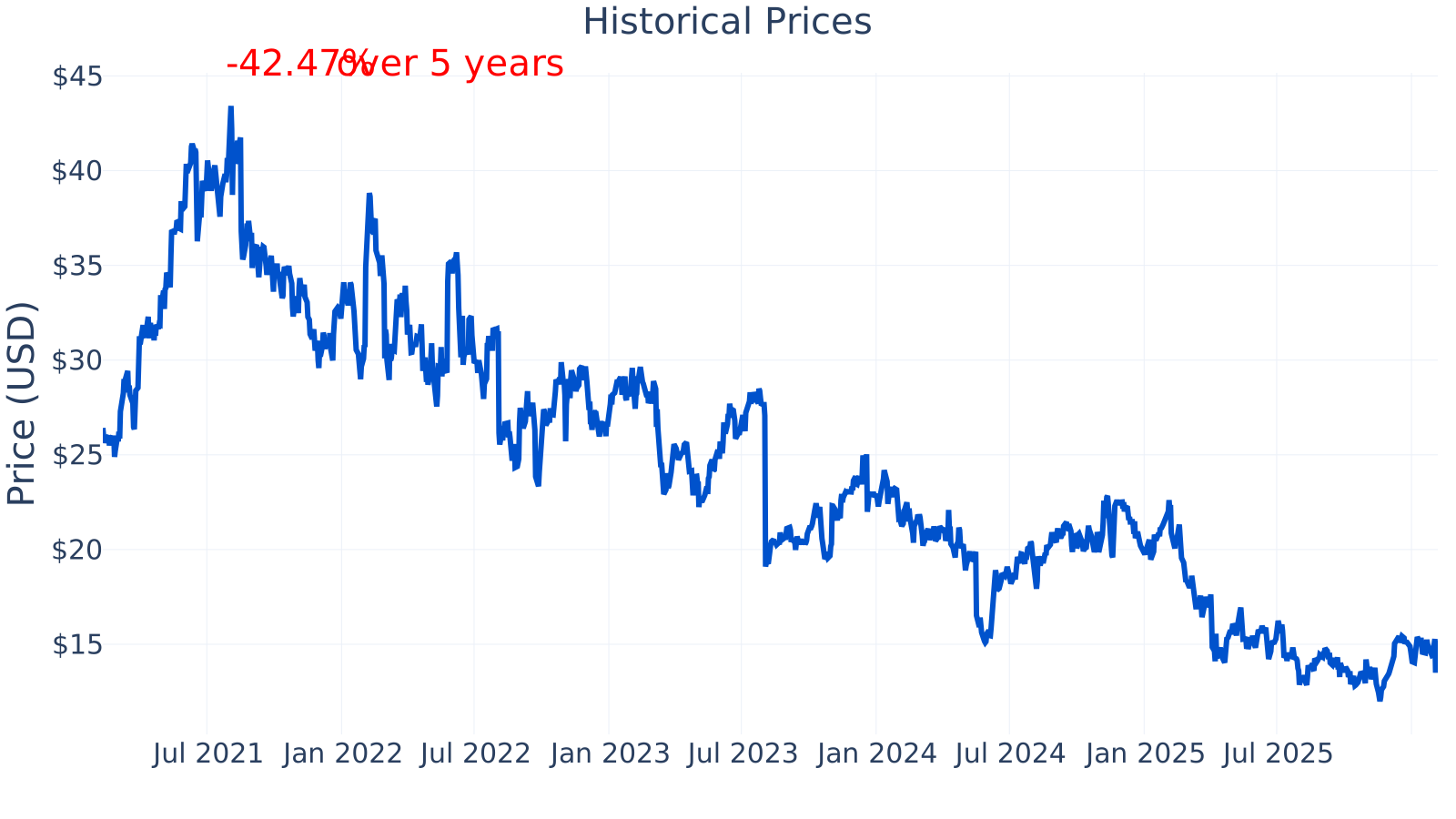
DXC’s market capitalization is about $2.65B, and the stock’s beta is about 1.08, which is close to the overall market’s typical volatility. Profit margin is about 3.34% versus an industry median near 4.91%, indicating profitability below the midpoint of its peer group. Year-over-year revenue growth is about -1.0% compared with an industry median around +6.15%, reflecting a company that has recently been contracting while many peers have been expanding. Debt-to-equity is about 152% versus an industry median near 54%, meaning DXC uses materially more leverage than the typical company in its industry. The trailing P/E ratio is about 6.61 versus an industry median near 21.42, which can reflect lower market expectations, higher perceived risk, or more variable earnings. Free cash flow over the last twelve months is about $1.105B, showing strong cash generation relative to the company’s size.
Growth (Low)
DXC operates in IT services, an area supported by long-term themes such as cloud adoption, cybersecurity needs, and modernization of older systems. However, industry growth does not automatically translate into company growth. For DXC specifically, the revenue trend shown is persistently negative over multiple periods, with only brief stabilization (for example, near flat around late 2024), and it returns to slightly negative growth afterward.
The pattern here is important for long-term context: revenue growth is negative for most quarters shown, improving from steep declines (often around -6% to -13% in earlier periods) to around -1% to -2% more recently. That is a stabilization signal, but it is not the same as sustained expansion.
A potential positive for future flexibility is DXC’s cash generation. Even as revenue has declined, free cash flow has remained around the $1.0B–$1.16B range in most periods shown after 2021, which can support debt reduction, restructuring, or investment in higher-growth offerings.
The key “catalysts” to watch in a services company like DXC are typically execution-based rather than one-off events: improved contract wins, better retention/renewals, pricing discipline, shifting mix toward higher-margin offerings, and consistent delivery. The visuals above show improving profitability and stable cash flow; the missing piece for growth is a clear return to consistent revenue expansion.
Risks (High)
This article is for informational purposes only and does not constitute financial advice. Some content is AI-generated. See Disclaimer