Stock Analysis · Crocs Inc (CROX)
Overview
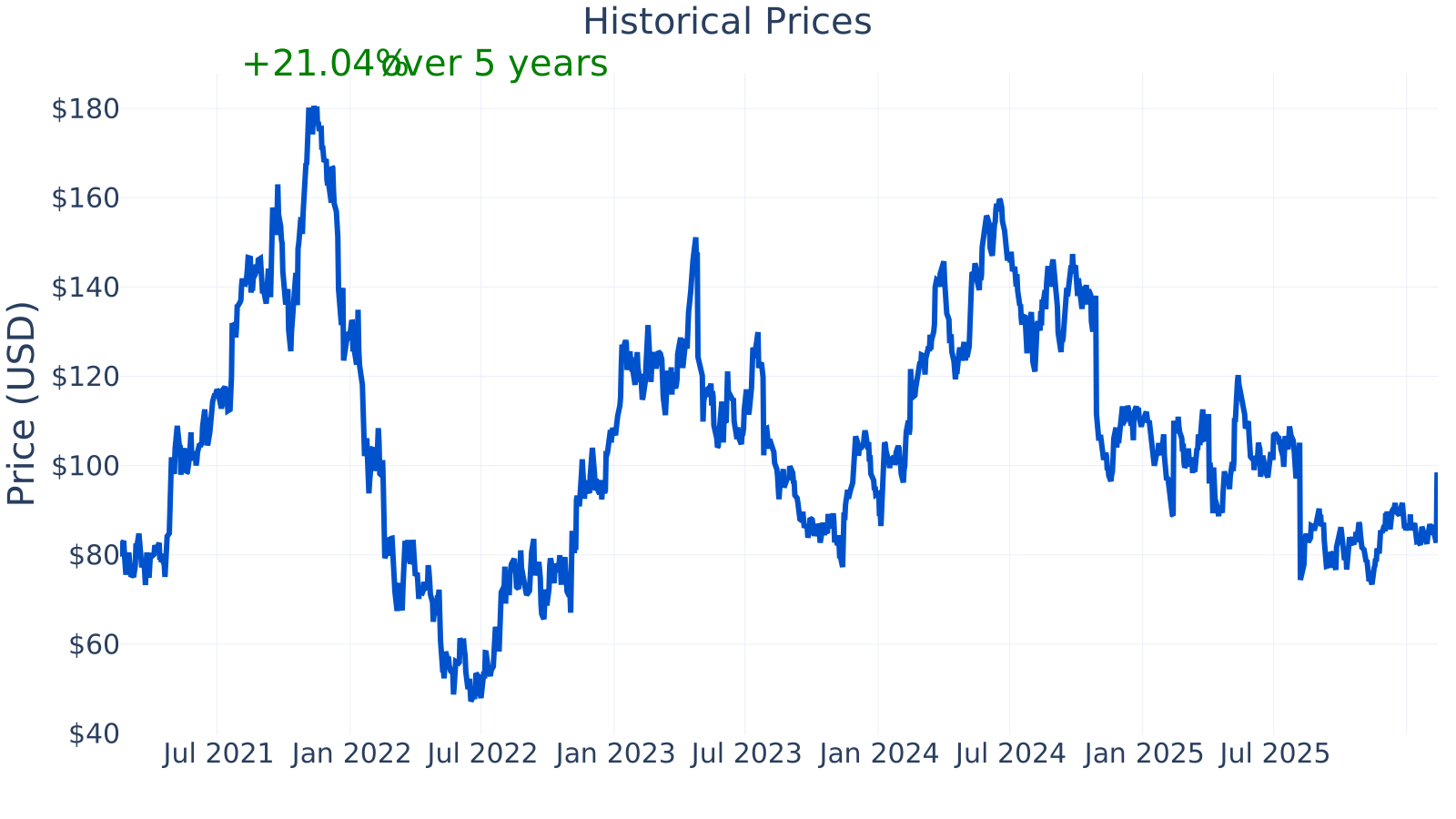
Crocs, Inc. is a global footwear company best known for its Crocs-branded clogs made from proprietary foam materials. Over time, the company has expanded beyond its core clog product into sandals, slides, and other casual footwear, and it sells through a mix of wholesale partners (retailers) and its own direct-to-consumer channels (e-commerce and company-operated stores). Crocs operates in the broader consumer discretionary space, meaning demand can rise when consumers feel confident and pull back when budgets tighten.
Revenue is primarily generated by selling footwear under its brand portfolio and through multiple channels. In recent annual filings, Crocs has described two major brand reporting segments (Crocs and HEYDUDE) and commonly discusses results by distribution channel (wholesale vs. direct-to-consumer). Exact percentages can shift by year and are best read directly from the latest annual report segment and channel disclosures.
Main revenue drivers typically include:
- Crocs brand (core clogs and related casual footwear)
- HEYDUDE brand (casual shoes)
- Distribution channels: wholesale partners and direct-to-consumer (digital + retail)
Across recent years, total revenue expanded meaningfully from about $2.31B (2021) to about $4.10B (2024), while operating income rose from about $685M (2021) to about $1.02B (2024). In 2025, revenue is shown slightly lower (about $4.04B) and net income is negative in the figures shown, even though operating income remains positive—this gap highlights how items outside core operations (such as taxes, financing costs, and other one-time or non-operating items) can materially affect bottom-line profit in a given period.
Key Figures
| Metric | Value | Industry ⓘ |
|---|---|---|
| Date | Feb 16, 2026 | |
| Context | ||
| Sector | Consumer Cyclical | |
| Industry | Footwear & Accessories | |
| Market Cap ⓘ | $5.03B | |
| Beta ⓘ | 1.55 | |
| Fundamental | ||
| P/E Ratio ⓘ | 29.80 | 29.80 |
| Profit Margin ⓘ | -2.01% | 5.43% |
| Revenue Growth ⓘ | -3.20% | 6.90% |
| Debt to Equity ⓘ | 124.79% | 63.50% |
| PEG ⓘ | -31.83 | |
| Free Cash Flow ⓘ | $659.20M | |
Crocs’ market capitalization is about $5.03B, and its beta of ~1.55 suggests the stock has historically tended to move more than the overall market. The latest P/E ratio is ~29.8, in line with the provided industry median. Recent headline profitability is weak in the latest snapshot (-2.0% profit margin vs. an industry median of 5.4%), while year-over-year revenue growth is -3.2% versus an industry median of 6.9%. Leverage is higher than the peer median with debt-to-equity ~125% (industry median ~63%). Despite these pressures, trailing twelve-month free cash flow is about $659M, showing the business has recently generated substantial cash even when accounting earnings are under pressure.
Growth (Medium)
Crocs operates in the global footwear market, which is large, competitive, and influenced by fashion cycles, consumer spending, and retailer inventory patterns. Rather than depending on the entire industry expanding rapidly, Crocs’ growth has historically leaned on brand demand, product innovation (new styles and collaborations), international expansion, and improving its direct-to-consumer reach.
The year-over-year revenue pattern shown here illustrates a shift from very high growth rates earlier in the period to much more modest growth and occasional declines more recently (ending at about -3.2%). For a consumer brand, this can happen when comparisons become tougher after a strong expansion phase, when certain product lines cool off, or when wholesale partners adjust ordering patterns. Whether growth re-accelerates tends to depend on brand heat, successful product refreshes, and distribution execution.
Cash generation has been a notable feature in the trend shown. Free cash flow rose from roughly $348M (2021) to about $884M (2025) at the latest point in the series, even as growth moderated. For long-term business durability, sustained free cash flow can matter because it provides flexibility for debt repayment, reinvestment in the brand, share repurchases, or other corporate purposes—though how that cash is used (and at what point in the cycle) can influence outcomes.
Potential catalysts discussed in company materials typically include expanding internationally, growing direct-to-consumer sales (which can improve brand control and customer data), and extending product offerings beyond the core clog franchise. At the same time, in footwear, demand can be sensitive to product trends; maintaining momentum often requires consistent newness and marketing effectiveness.
Risks (High)
Crocs faces meaningful consumer and brand risks. Footwear demand can fluctuate with discretionary spending, and style-driven categories can see sharp changes in popularity. If key products lose relevance, volumes and pricing can weaken. The company also manages sourcing and logistics across global supply chains, which can expose it to cost volatility, shipping disruptions, and changes in trade conditions or tariffs.
Leverage is an important consideration. The debt-to-equity ratio shown declines dramatically from earlier extremes to more typical levels, but the latest level is still around 125%, above the industry median near 80%. Higher leverage can amplify results in both directions: it may support strategic flexibility in strong periods, but it can also increase financial risk if demand slows, margins compress, or refinancing becomes more expensive.
Profitability has also become more volatile in the series. Crocs showed very strong net margins earlier (often well above the industry median), but the most recent point turns negative (about -2.0%), roughly in line with a weaker industry backdrop in the same period (industry median around 4.7%). Because operating income in the overview remains positive while net income turns negative, it suggests that below-the-line items (non-operating charges, taxes, financing, or other accounting impacts) may be a major driver of the latest net result. For long-term evaluation, it can be useful to track whether margins stabilize and whether any large one-time items fade or repeat.
Competition is intense. Crocs competes with large global athletic and lifestyle footwear companies and many casual footwear brands across wholesale shelves and online search results. Competitive advantages Crocs often highlights in filings include strong brand recognition for its core product, distinctive styling, comfort positioning, and a business model that can generate cash. Whether those advantages persist depends on continued consumer interest, successful line extensions, and disciplined inventory and promotional management.
Valuation
The P/E ratio trend has varied widely over time, and the latest value is about 29.8, close to the provided industry median at the same point. In general terms, a P/E ratio is easiest to interpret when earnings are stable and representative; when earnings are volatile or temporarily distorted (as suggested by the recent negative margin figure), simple P/E comparisons can become less informative. In those cases, investors often look alongside valuation at other indicators such as cash flow generation, balance sheet leverage, and whether revenue and margins are stabilizing.
With Crocs, the context includes (1) a period of strong historical profitability and cash generation, (2) more recent deceleration in growth, and (3) signs of pressure in reported net profitability. A valuation that matches the industry median may indicate the market is not assigning an exceptional premium relative to peers at this moment, but the company-specific volatility in margins and leverage can still be a central part of how the price is assessed.
Conclusion
Crocs is a consumer footwear company built around a highly recognizable core product and a broader portfolio that has supported multi-year revenue expansion. The business has demonstrated strong cash generation over several years, which can provide resilience and flexibility.
At the same time, recent signals point to a more challenging phase: slower (and sometimes negative) revenue growth, heightened leverage versus peers, and a sharp deterioration in the latest reported net margin. For long-term assessment, the key questions tend to center on whether brand demand and product innovation can sustain sales, whether profitability normalizes after recent volatility, and whether leverage trends improve over time. The valuation multiples shown are broadly in line with the industry median, making the durability of earnings and cash flows especially important for interpreting what that valuation implies.
Sources:
- Crocs, Inc. — Form 10-K (Annual Report) (SEC EDGAR)
- Crocs, Inc. — Form 10-Q (Quarterly Reports) (SEC EDGAR)
- Crocs, Inc. — Investor Relations materials and press releases (Company website)
- SEC EDGAR — Company filings search results for Crocs, Inc.
- Wikipedia — “Crocs” (company overview and background)
This article is for informational purposes only and does not constitute financial advice. Some content is AI-generated. See Disclaimer