Stock Analysis · Coupang LLC (CPNG)
Overview
Coupang LLC is a technology-driven commerce company best known for its online retail and fast delivery services, primarily in South Korea. It operates an e-commerce marketplace where customers can buy everyday goods, and it supports that shopping experience with an end-to-end logistics network (fulfillment centers, last-mile delivery, and related technology). Over time, the company has also expanded into adjacent services such as food delivery, video streaming as part of memberships, and developing newer commerce offerings in additional geographies.
In its reporting, Coupang groups its business into a few main segments rather than listing a detailed revenue “mix” by product line. Based on those segments, its revenue is primarily generated from:
- Product Commerce (largest): Revenue mainly from selling goods to customers (and related commerce services) through Coupang’s retail offering.
- Developing Offerings: Revenue from newer initiatives that may include services and expansions outside the core product-commerce business.
Because the company’s public filings emphasize segment reporting, exact percentages by revenue source (for example, “retail vs. advertising vs. memberships”) may not be consistently disclosed as a clean percentage split in a single standardized table across periods. For long-term readers, the key takeaway is that the core engine remains commerce volume supported by fulfillment and delivery, while newer offerings are intended to add additional growth levers over time.
Across recent years, total revenue increased substantially (from about $18.4B in 2021 to about $34.5B in 2025). Profitability also improved versus earlier periods: operating income moved from a loss in 2021–2022 to positive territory in 2023 and remained positive in 2024, reflecting scale benefits and cost control even as the company continued investing in operations.
Key Figures
| Metric | Value | Industry ⓘ |
|---|---|---|
| Date | Mar 09, 2026 | |
| Context | ||
| Sector | Consumer Cyclical | |
| Industry | Internet Retail | |
| Market Cap ⓘ | $34.86B | |
| Beta ⓘ | 1.20 | |
| Fundamental | ||
| P/E Ratio ⓘ | 173.36 | 32.88 |
| Profit Margin ⓘ | 0.60% | 6.54% |
| Revenue Growth ⓘ | 10.90% | 11.60% |
| Debt to Equity ⓘ | 153.95% | 26.93% |
| PEG ⓘ | 0.45 | |
| Free Cash Flow ⓘ | $505.51M | |
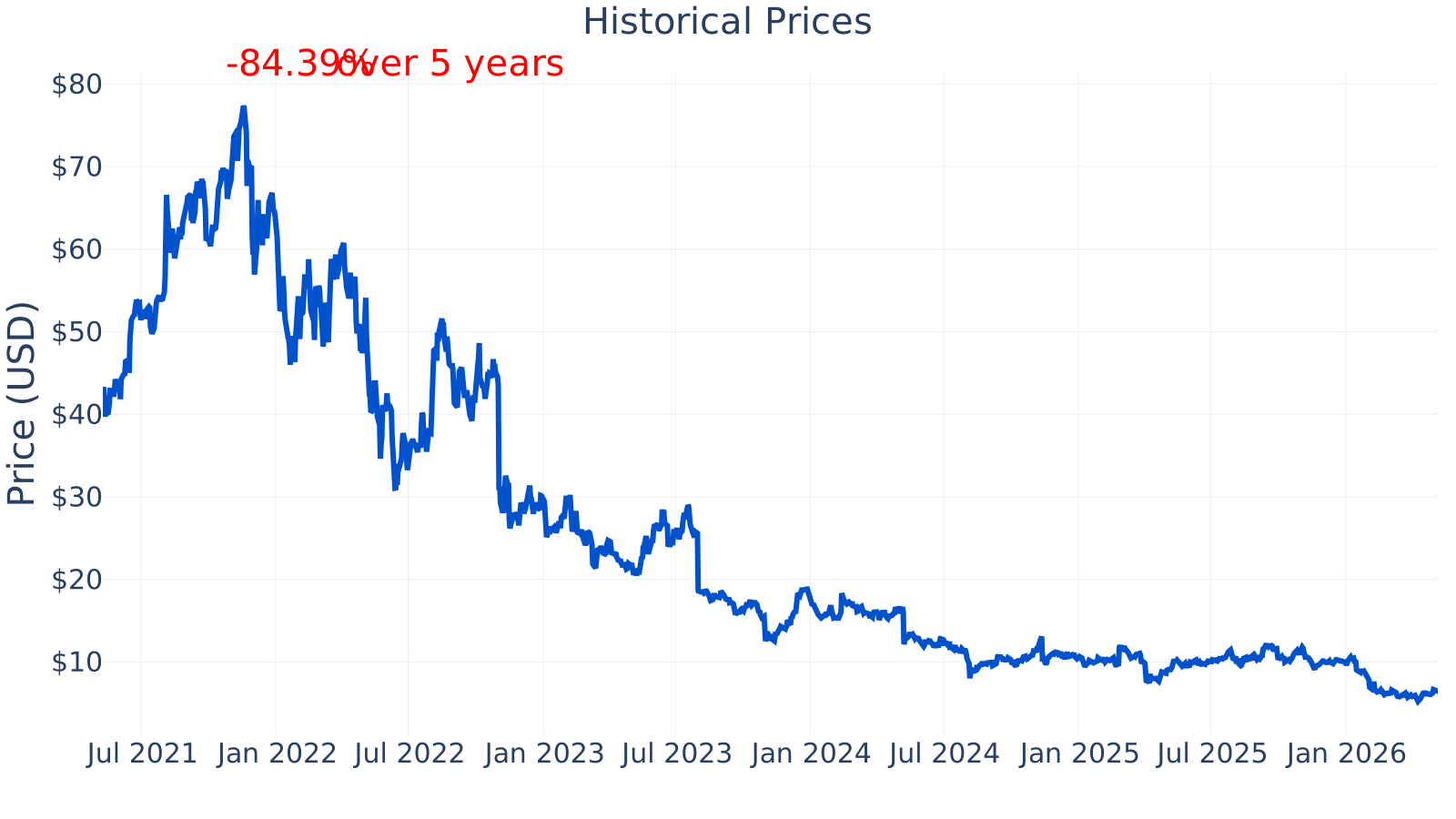
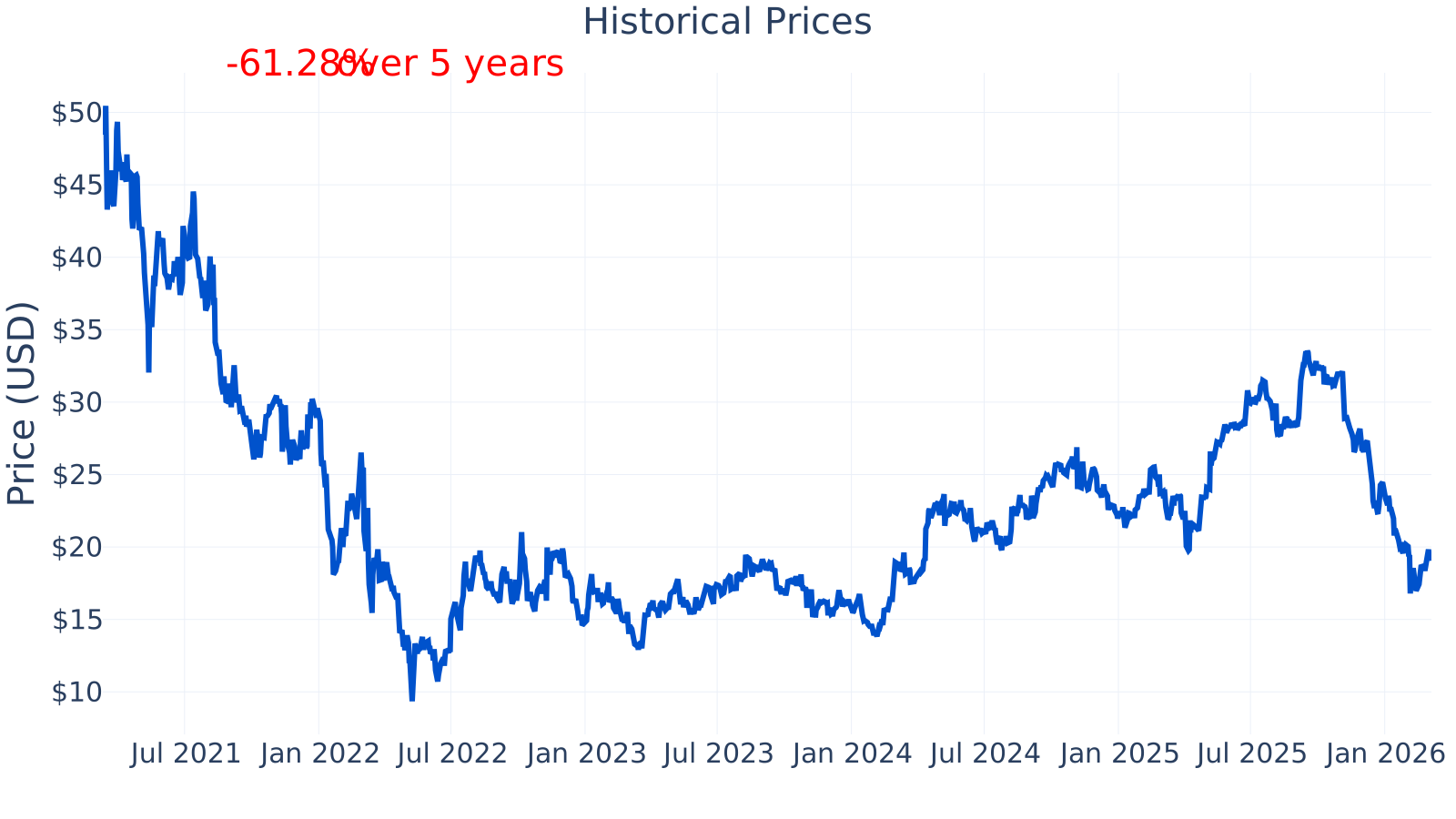
Coupang’s market capitalization is about $34.9B. The stock’s beta of ~1.2 suggests it has tended to move somewhat more than the broader market. The company’s profit margin is ~0.6%, which is below the industry median (~6.5%), highlighting that it operates on relatively thin profitability today. Year-over-year revenue growth is about 10.9%, close to the industry median (~11.6%). Leverage stands out: debt-to-equity is ~154% versus an industry median of ~27%. Free cash flow over the trailing twelve months is about $506M, indicating the business has recently been generating cash after operating needs and capital spending. The P/E ratio (~173) is far above the industry median (~33), which often happens when earnings are low relative to sales and the market is pricing in higher future profitability.
Growth (medium)
Coupang operates in online retail, a category that has structurally benefited from consumers shifting more spending online. However, e-commerce is also known for intense competition and fulfillment costs, so long-term growth depends not only on increasing sales but also on maintaining service quality while improving unit economics (how much profit the company makes per order).
A core part of Coupang’s strategy is controlling more of the customer experience through its logistics and delivery network. In plain terms, if the company can deliver reliably and quickly at scale, it can improve customer retention and order frequency. Over time, that can help spread fixed costs (warehouses, technology, delivery operations) across more orders, which can support better margins if executed well.
Revenue growth slowed from very high levels earlier in the company’s public history to more moderate rates more recently. For example, year-over-year growth reached the 20%+ range in several quarters during 2023–2024, and then moved closer to the low-to-mid teens and around ~11% by late 2025. This pattern can be consistent with a business maturing in its core market while still expanding through additional services and geographies.
Cash generation has shown a notable shift. Trailing twelve-month free cash flow was negative in 2021–2022 (roughly -$0.9B to -$1.0B), then turned positive by 2023 (about +$0.44B) and rose meaningfully in 2024 (about +$1.46B), before remaining positive in 2025 (about +$1.02B in the period shown, and about +$0.51B in the latest metric snapshot). For many long-duration business models, the ability to fund operations and investment internally (without relying as much on external financing) is an important potential catalyst—though it can fluctuate with working capital, investment pace, and profitability.
Risks (high)
Coupang’s business is operationally complex. Fast delivery and high service levels require continual spending on fulfillment capacity, technology, and labor. That can create a risk that profitability remains thin, especially if the company faces cost inflation (wages, transportation, packaging) or decides to reinvest heavily to defend market position or grow into new areas.
Leverage is a key point to monitor. Debt-to-equity rose over time and reached about 154% most recently, which is materially higher than the industry median (roughly 27%). Higher leverage can amplify outcomes: it may help fund expansion, but it can also increase sensitivity to business downturns, changes in interest rates, and refinancing conditions.
Profitability has improved compared to earlier periods when margins were negative, but it remains relatively slim recently. The profit margin trend shows a move from losses in 2021–2022 to modestly positive levels across 2023–2025, ending near 0.6% most recently—below the industry median (around 6.3% in the latest comparison). Thin margins matter because small changes in costs or pricing can have an outsized impact on earnings.
Competitive pressure is an ongoing risk in internet retail. In South Korea, Coupang competes with a mix of e-commerce marketplaces, traditional retailers with online offerings, and delivery-focused platforms. Competition can show up through price discounting, free/fast shipping offers, merchant incentives, or higher marketing spend—all of which can pressure margins. Coupang’s main competitive advantages described in its public materials typically relate to its integrated logistics capabilities, customer experience, and scale in its core market. Whether these advantages remain durable depends on execution, consumer preferences, and how aggressively competitors invest.
International expansion and newer offerings can also add uncertainty. New markets and services may require upfront investment and can take time to reach meaningful scale. Execution risk is higher when a company expands beyond its most established playbook.
Valuation
On a price-to-earnings basis, Coupang’s valuation appears elevated versus the internet retail peer group median. The latest P/E is around 173, compared with an industry median around 33. The historical pattern also shows that Coupang’s P/E has been volatile, including periods where it rose very high (for example, above 100 in several points shown). This often happens when earnings are small relative to revenue (or move around from quarter to quarter), so even modest changes in profit can meaningfully change the ratio.
Because margins are currently thin, valuation can be especially sensitive to the long-term path of profitability and cash generation. If the company expands margins over time, the same revenue base can translate into much higher earnings; if margins stay low due to competitive and fulfillment pressures, earnings may remain limited even with growing revenue. In that context, comparing the company’s revenue growth (recently around ~11% year-over-year) with its current profitability and leverage can help frame why the market might assign a higher earnings multiple—and why that multiple can also carry higher downside sensitivity if profitability progress stalls.
Conclusion
Coupang is a large-scale e-commerce and logistics-driven commerce platform, primarily in South Korea, with additional growth initiatives beyond its core product commerce business. The company has demonstrated substantial multi-year revenue expansion and a meaningful improvement in cash generation, with free cash flow turning positive after earlier negative periods.
At the same time, the business profile includes notable uncertainties that are typical for high-service internet retail: thin current margins, operational intensity, competitive pressure, and comparatively high leverage versus peers. The current valuation metrics (notably the high P/E relative to the industry median) indicate that market expectations are closely tied to continued improvement in profitability and sustained cash generation rather than revenue growth alone.
Sources:
- SEC EDGAR — Coupang LLC Form 10-K (Annual Report)
- SEC EDGAR — Coupang LLC Form 10-Q (Quarterly Reports)
- Coupang Investor Relations — Shareholder letters / earnings materials (company-hosted)
- Wikipedia — “Coupang” (basic company background)
This article is for informational purposes only and does not constitute financial advice. Some content is AI-generated. See Disclaimer