Stock Analysis · Corning Incorporated (GLW)
Overview
Corning Incorporated is a materials science company best known for making specialized glass and ceramic technologies used inside everyday products and industrial systems. Its products show up in smartphone and tablet covers, fiber-optic networks that carry internet traffic, advanced displays (including for TVs and laptops), emissions-control parts used in vehicles, and laboratory consumables used in life sciences.
Corning reports its business through several major segments. In simple terms, the company earns revenue by selling engineered materials and components to large manufacturers and network operators, often through long-standing customer relationships and high-volume production. A key part of its model is investing heavily in research and development to create materials that are hard to replicate at scale, then manufacturing them with specialized processes.
Based on segment reporting in company filings, Corning’s revenue is primarily driven by these areas (largest to smaller, exact percentages vary by year):
- Optical Communications: fiber, cables, and connectivity hardware used in telecom and data-center networks.
- Display Technologies: glass substrates used in televisions and other display applications.
- Specialty Materials: cover glass and related materials, historically including well-known products used in consumer electronics.
- Environmental Technologies: ceramic substrates and filters used in emissions-control systems.
- Life Sciences: laboratory products such as consumables and specialized vessels used in research and manufacturing environments.
- Hemlock and Emerging Growth Businesses: smaller and more variable contributions (reported separately in filings).
At a high level, Corning’s business mix combines cyclical end-markets (like consumer devices and display glass) with infrastructure-oriented demand (like fiber networks). This mix can help diversify revenue sources, but it also means results may fluctuate with broader economic cycles and customer inventory behavior.
Looking at the multi-year income flow, total revenue dipped from 2022 to 2024 before rising again in 2025. Over the same period, research and development spending remained relatively steady (around $1.0–$1.1B per year), while net income fell sharply in 2023–2024 and then rebounded in 2025. This pattern suggests profitability has been more volatile than top-line revenue, which can happen when pricing, volumes, product mix, and manufacturing costs shift across cycles.
Key Figures
| Metric | Value | Industry ⓘ |
|---|---|---|
| Date | Feb 07, 2026 | |
| Context | ||
| Sector | Technology | |
| Industry | Electronic Components | |
| Market Cap ⓘ | $104.74B | |
| Beta ⓘ | 1.12 | |
| Fundamental | ||
| P/E Ratio ⓘ | 66.75 | 41.23 |
| Profit Margin ⓘ | 10.21% | 6.11% |
| Revenue Growth ⓘ | 20.40% | 12.20% |
| Debt to Equity ⓘ | 71.43% | 39.00% |
| PEG ⓘ | 1.26 | |
| Free Cash Flow ⓘ | $1.41B | |
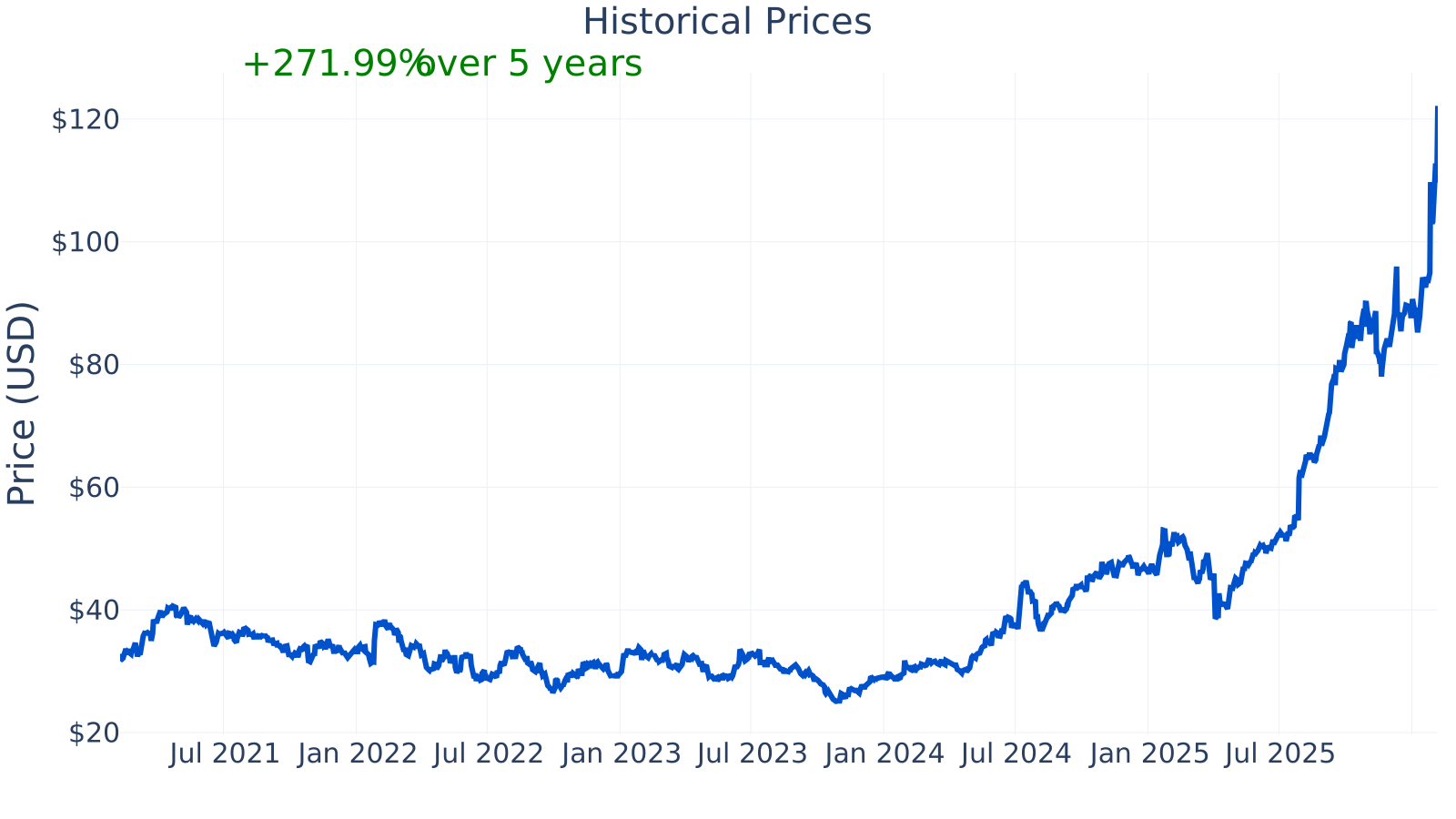
Corning’s market capitalization is about $104.7B, and its stock’s beta of 1.12 indicates it has historically moved somewhat more than the overall market. Recent profitability and growth metrics stand out versus the median of its electronic components peer group: profit margin is about 10.2% (vs. 6.1% median), and year-over-year revenue growth is about 20.4% (vs. 12.2% median). The company’s debt-to-equity ratio is about 71% (vs. 39% median), indicating higher leverage than typical for the peer set. Free cash flow over the trailing twelve months is about $1.41B.
Growth (Medium)
Corning operates in markets with long-term demand drivers, but not all of them grow smoothly year to year. Optical fiber and connectivity are tied to data usage growth (cloud services, streaming, AI-driven data traffic, and network upgrades), while display glass and consumer-device materials can be more cyclical and dependent on upgrade cycles and consumer spending. Environmental technologies depend on vehicle production trends and emissions regulations, while life sciences demand often tracks research, bioprocessing activity, and capital spending in labs and manufacturing.
A key element of Corning’s strategy is to keep funding innovation through the cycle. That matters because materials leadership is often defended by proprietary formulations, manufacturing know-how, and the ability to produce at scale with consistent quality. In practice, the upside from this approach is typically seen when end-markets recover and new product generations ramp, but the timing can be uneven.
Revenue growth shows a clear cycle: strong growth in 2021, a contraction through 2022–2024, and then a return to positive growth that accelerated into 2025 (around 20% year-over-year in the latest period shown). For a long-term view, this suggests Corning’s end-markets and customer ordering patterns can swing, with periods of rebound following downturns.
Free cash flow also shows variability. It was around $1.5B in 2021–2022, dropped sharply in 2023 (to roughly $0.43B), and then recovered through 2024–2025 (to about $1.07B in 2025). This pattern is consistent with a business that can generate meaningful cash over time but may experience pressure during down-cycles, especially when volumes soften or when working capital and investment needs rise.
Risks (Medium)
This article is for informational purposes only and does not constitute financial advice. Some content is AI-generated. See Disclaimer