Stock Analysis · Core Scientific Inc (CORZ)
Overview
Core Scientific, Inc. (CORZ) operates large-scale data center infrastructure that is primarily used for bitcoin mining (running specialized computers to secure the Bitcoin network and earn bitcoin as a reward). The company also offers hosting services, where it provides space, power, and operations support for customers who own their own mining machines.
In simple terms, Core Scientific is a power- and infrastructure-heavy business: it aims to secure low-cost electricity, build and run facilities reliably, and keep its equipment working efficiently. Revenue can swing meaningfully because bitcoin mining economics depend on factors outside the company’s control (notably the bitcoin price, network difficulty, and power costs).
Main sources of revenue are typically grouped as:
- Self-mining (the company mines bitcoin for its own account; revenue is closely tied to bitcoin market conditions)
- Hosting / colocation (customers pay the company to host and operate their mining equipment; this tends to be more contract-like and service-oriented)
The mix between these two can change over time depending on strategy and market conditions. For precise percentages by period, the most reliable reference is the company’s segment and revenue-note disclosures in its SEC filings.
Across the years shown, total revenue fluctuates, while profitability has been inconsistent. Costs tied to running facilities (notably cost of revenue) take a large share of revenue, and periods of very large losses highlight how quickly results can deteriorate when mining economics or accounting impacts move against the company.
Key Figures
| Metric | Value | Industry ⓘ |
|---|---|---|
| Date | Apr 06, 2026 | |
| Context | ||
| Sector | Technology | |
| Industry | Software - Infrastructure | |
| Market Cap ⓘ | $5.12B | |
| Beta ⓘ | 6.36 | |
| Fundamental | ||
| P/E Ratio ⓘ | N/A | 26.23 |
| Profit Margin ⓘ | -90.47% | 6.71% |
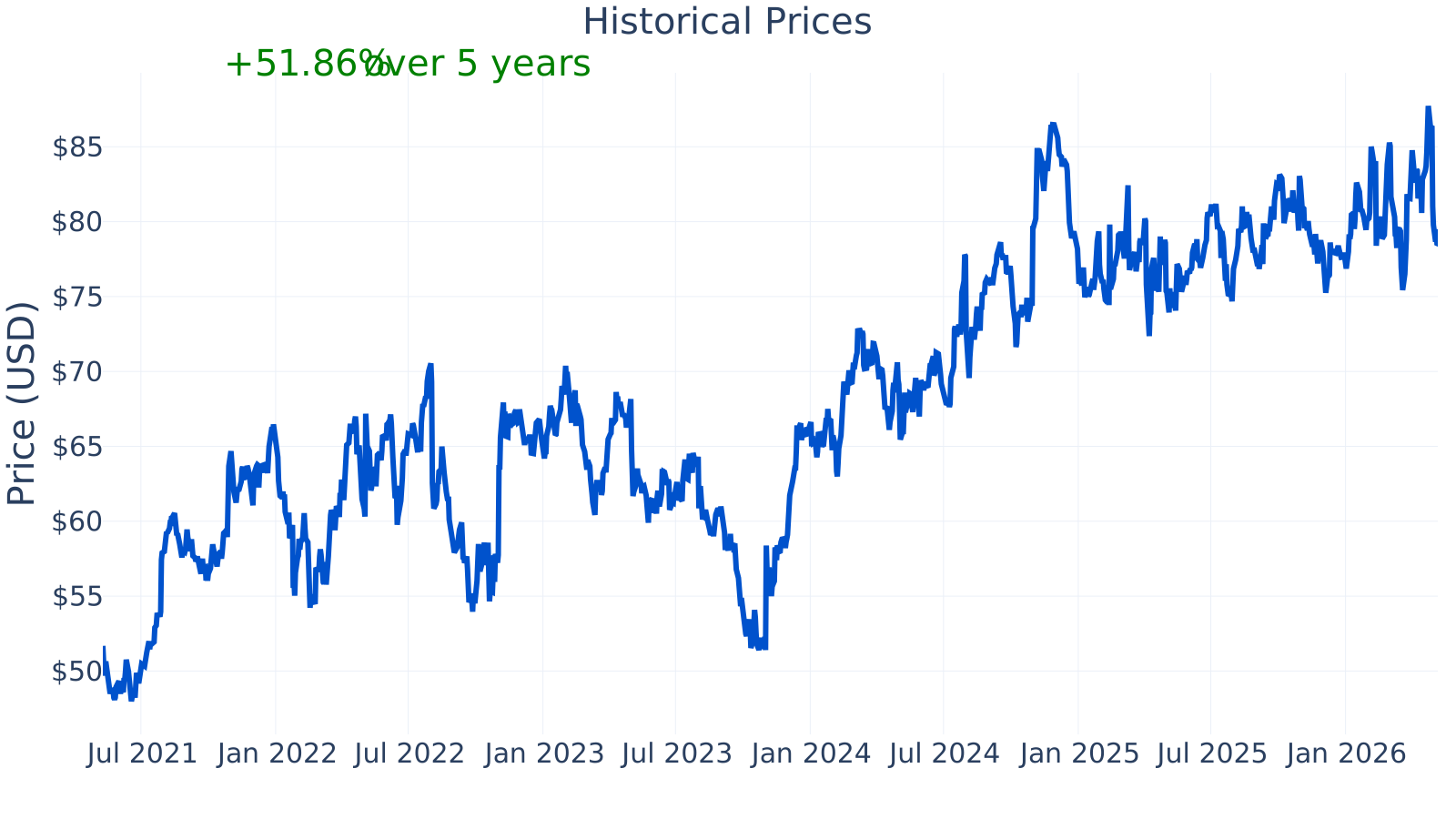
| Revenue Growth ⓘ | -16.00% | 14.80% |
| Debt to Equity ⓘ | -110.14% | 25.35% |
| PEG ⓘ | N/A | |
| Free Cash Flow ⓘ | -$460.87M | |
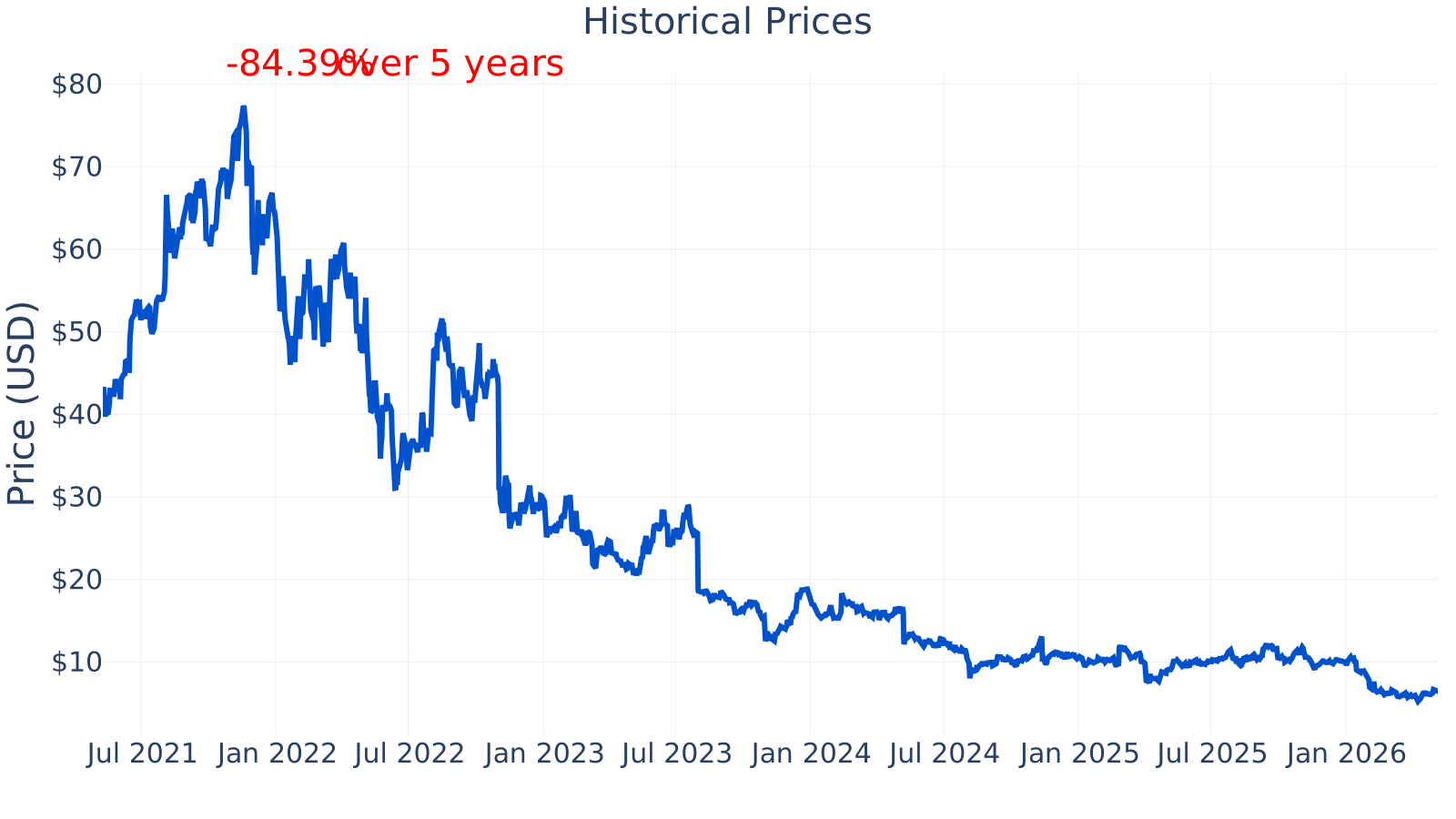
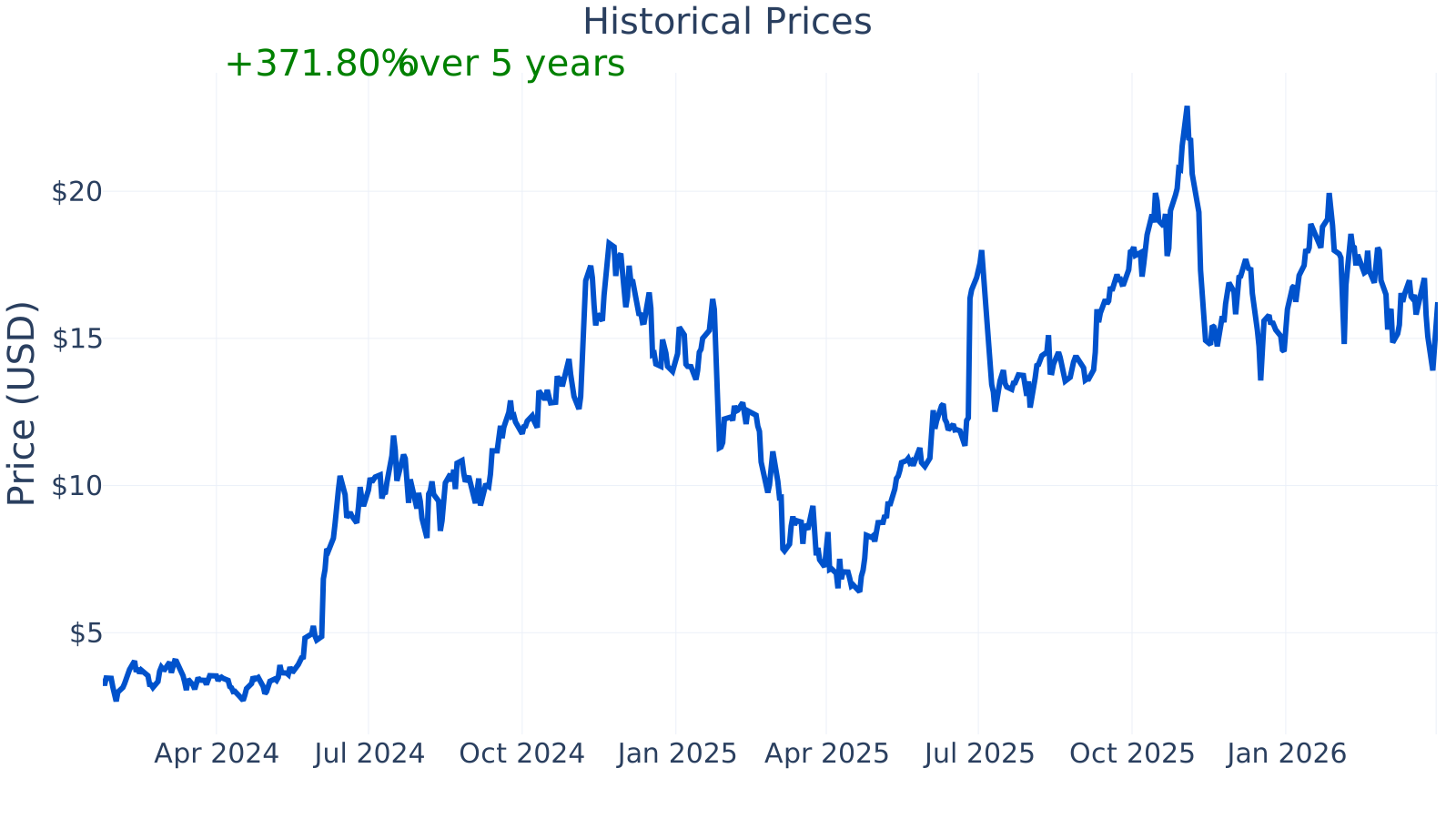
Core Scientific’s market capitalization is about $5.1B. The stock has shown very high volatility (beta about 6.36), meaning its price has historically moved far more than the overall market. Profitability is currently weak: the latest profit margin shown is about -90.5% versus an industry median near +6.7%. Recent year-over-year revenue growth is also negative (about -16% versus an industry median near +14.8%). Free cash flow over the trailing period shown is negative (about -$460.9M), indicating the business has recently consumed cash rather than generating it. Debt-to-equity is shown as negative, which usually happens when a company has negative shareholders’ equity (often due to accumulated losses and balance sheet structure), making this leverage metric harder to interpret in the usual “lower is safer” way.
Growth (Medium)
Core Scientific sits at the intersection of two themes that can expand over time: digital infrastructure (large-scale power and data center operations) and crypto network compute demand (bitcoin mining). That said, bitcoin mining is not a “typical” software or cloud growth story; it behaves more like a commodity business where industry-wide economics drive outcomes.
A key strategic question is whether the company can keep improving its unit economics: securing competitive power, running efficient sites, and keeping uptime high. In stronger bitcoin environments, operationally efficient miners can scale output and potentially improve margins; in weaker environments, even large operators can see profitability compress quickly.
The year-over-year revenue growth shown is consistently negative across the periods displayed (roughly ranging from about -15% to about -56%). That pattern suggests the company has been operating through a difficult revenue backdrop, whether due to changes in mining economics, business mix, or other company-specific factors disclosed in filings.
Free cash flow is negative in the periods shown (moving from roughly -$54.3M to about -$171.2M, and the latest table value shows about -$460.9M). For an infrastructure-heavy operator, sustained negative free cash flow can matter because it may increase reliance on financing, asset sales, or restructuring of obligations to fund expansion and ongoing operations.
Potential catalysts (in either direction) typically include: changes in the bitcoin price, changes in network difficulty, the company’s ability to expand capacity at acceptable returns, and outcomes related to financing and balance sheet structure described in SEC filings.
Risks (Very High)
The largest risk is that Core Scientific’s results are heavily exposed to bitcoin mining economics. Even if the company executes well operationally, profitability can be pressured by factors it cannot control: bitcoin price declines, network difficulty increases, higher power costs, and industry-wide competition for efficient equipment and cheap energy. This can make long-term forecasting difficult compared with many other technology-sector businesses.
Debt-to-equity is shown as negative across the timeline, while the industry median remains positive (roughly in the mid-teens to mid-20% range). A negative ratio commonly indicates negative equity, which can be a sign of past large losses and can limit financial flexibility. It also means the usual comparisons of “more debt vs. less debt” using this single metric may be misleading without reading the balance sheet details in filings.
Profit margins are deeply negative throughout the periods shown (reaching levels below -200% in multiple quarters before improving to about -90.5% most recently), while the industry median stays modestly positive. This gap highlights a central challenge: even with substantial revenue, the overall cost structure and/or non-cash charges can result in large losses.
Competitive positioning in bitcoin mining often depends on scale, power pricing, facility reliability, and access to capital. Core Scientific is among the larger U.S.-listed mining-related operators by infrastructure footprint, but it operates in a crowded field with well-known public peers. Key competitors commonly referenced in the sector include other large miners and hosting operators such as MARA Holdings, Riot Platforms, CleanSpark, Bit Digital, Hut 8, and Bitfarms. Relative standing can change quickly based on expansion pace, energy strategy, financing, and operational execution.
Another practical risk is stock volatility. With a very high beta, the share price has historically been prone to large moves, which can amplify outcomes for long-term holders regardless of fundamentals in any single quarter.
Valuation
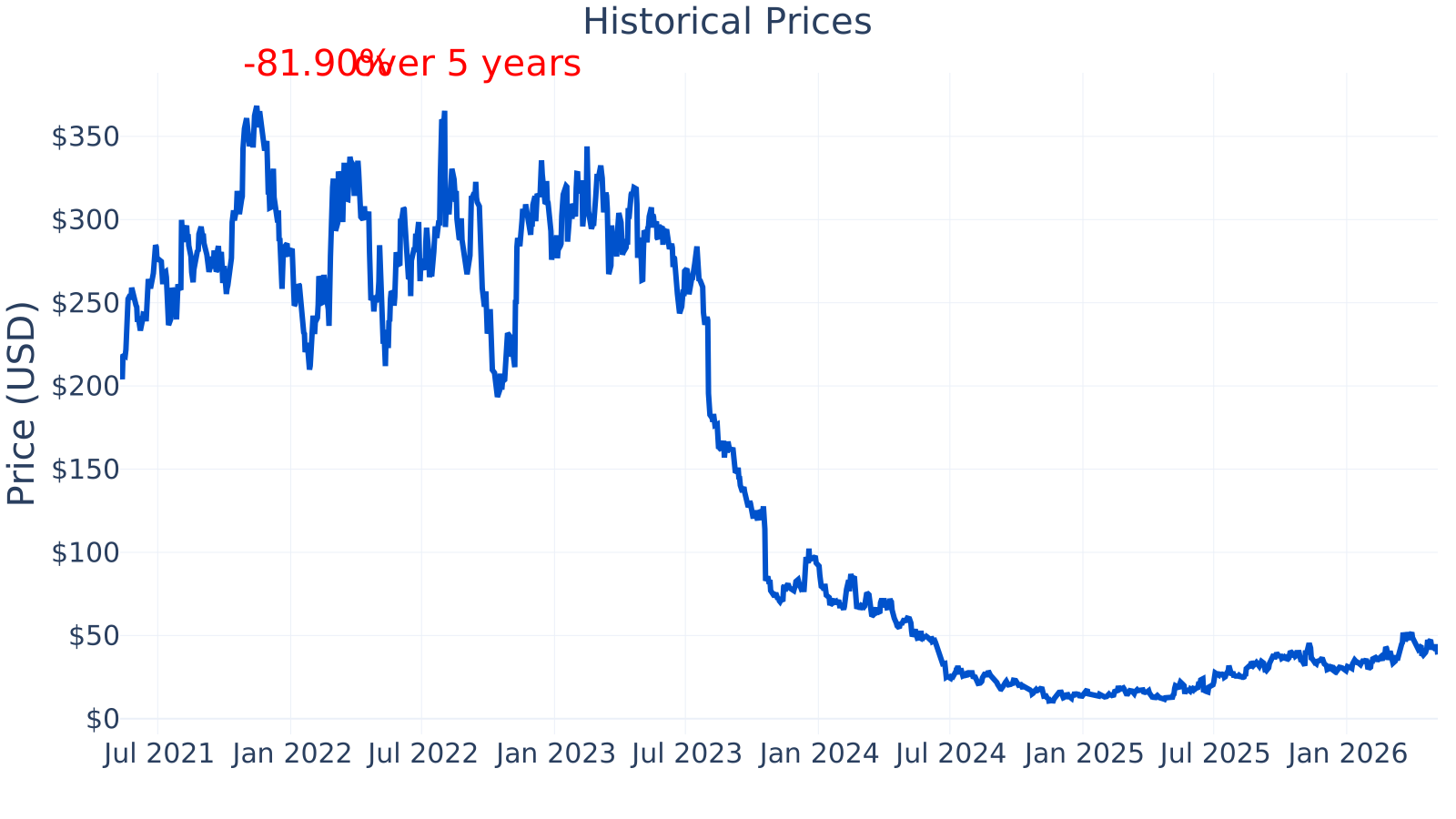
Traditional valuation ratios can be difficult to use when earnings are negative or highly unstable. That appears to be the case here: the P/E series shown is not meaningful (displayed as 0 across periods), while the industry median P/E remains around the high-20s to low-30s. In practice, that usually means investors often rely more on alternative lenses such as balance sheet strength, cash generation potential, operating cost per unit of compute, and the company’s ability to operate profitably across a full bitcoin cycle.
Because a meaningful P/E is not visible here, the stock price level is better interpreted alongside factors such as the company’s cash needs (negative free cash flow), profitability trajectory (still negative margins), and sensitivity to bitcoin market conditions. In other words, “expensive vs. cheap” is less about a single multiple and more about whether the company can eventually produce durable positive cash flow without excessive dilution or financial strain—topics that are typically clarified in SEC filings and management discussions.
Conclusion
Core Scientific is a large-scale operator in bitcoin mining and hosting, a business that can expand when crypto mining economics are favorable but can also contract quickly when conditions worsen. The information shown points to a company with high volatility, recent negative revenue growth, negative margins, and negative free cash flow, alongside balance sheet signals (negative debt-to-equity) that warrant careful reading of its most recent 10-K and 10-Q.
For long-term evaluation, the core factual question is whether the company can translate its infrastructure scale into sustained positive cash generation through different bitcoin cycles, while maintaining sufficient financial flexibility. The company’s filings are the most reliable place to track progress on operating efficiency, capacity changes, liquidity, and contractual structure for hosting arrangements.
Sources:
- SEC EDGAR — Core Scientific, Inc. filings (Form 10-K, Form 10-Q, Form 8-K)
- Core Scientific, Inc. Investor Relations — Press releases and presentations (company-published)
- Wikipedia — “Core Scientific” (basic company background)
This article is for informational purposes only and does not constitute financial advice. Some content is AI-generated. See Disclaimer