Stock Analysis · Core Scientific Inc (CORZ)
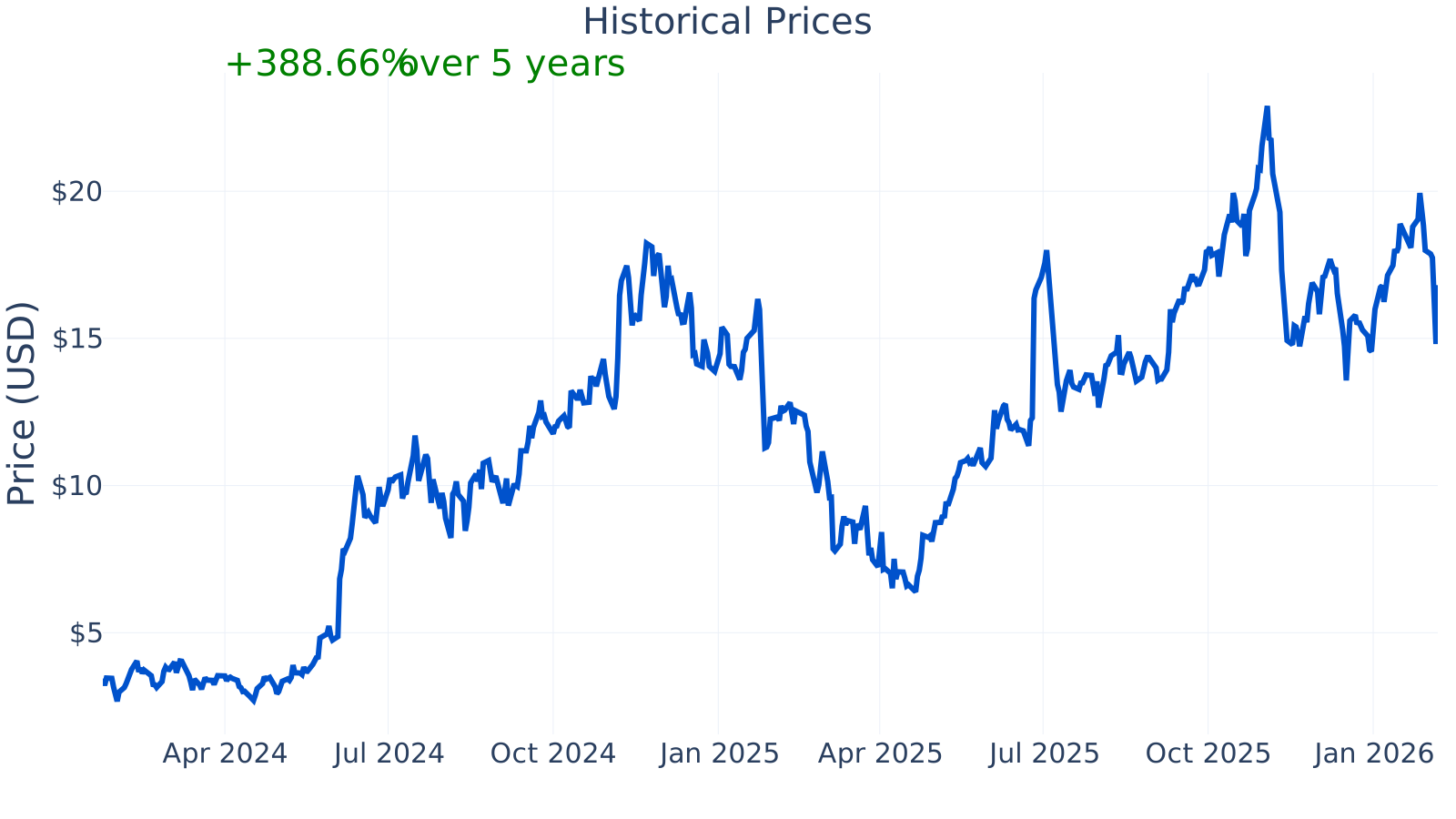
Overview
Core Scientific Inc (CORZ) is a U.S.-based company that operates large-scale digital infrastructure focused on high-performance computing. In practice, it runs data-center facilities and provides computing capacity that is used for blockchain-related workloads (notably Bitcoin mining) and, based on company disclosures, it has been expanding its strategy toward hosting and infrastructure services that can also support other compute-intensive applications over time.
The business is capital-intensive: it requires significant upfront spending on facilities, electrical capacity, and specialized computing equipment, followed by ongoing operating costs (especially power) to keep systems running. The company’s results can therefore swing meaningfully based on utilization, power pricing, and the economics of the workloads it supports.
Based on the company’s reporting, revenue is primarily tied to providing computing power and hosting services in its facilities. Public filings typically break this into categories such as self-mining and hosting/colocation (and, depending on the period, related infrastructure services). Exact percentages vary by quarter/year and should be taken from the latest 10-K/10-Q segment and revenue-footnote disclosures.
- Digital asset mining / self-mining revenue (generally the largest driver when Bitcoin mining economics are favorable)
- Hosting / colocation and related infrastructure services (fees earned for operating customers’ equipment in Core Scientific facilities)
- Other / ancillary services (if reported in a given period)
Across the years shown, total revenue was of similar magnitude in 2021, 2023, and the period displayed in 2024 (about $544M in 2021, ~$502M in 2023, and ~$511M for the 2024 period shown). The chart also highlights how sensitive profitability can be to operating items: despite a comparable revenue level in 2024 versus 2023, operating income and net income were far more negative in the 2024 period shown, indicating that costs and/or non-cash charges meaningfully affected results.
Key Figures
| Metric | Value | Industry ⓘ |
|---|---|---|
| Date | Feb 08, 2026 | |
| Context | ||
| Sector | Technology | |
| Industry | Software - Infrastructure | |
| Market Cap ⓘ | $5.21B | |
| Beta ⓘ | 6.88 | |
| Fundamental | ||
| P/E Ratio ⓘ | N/A | 25.66 |
| Profit Margin ⓘ | -229.91% | 6.68% |
| Revenue Growth ⓘ | -14.90% | 15.20% |
| Debt to Equity ⓘ | -93.89% | 19.82% |
| PEG ⓘ | N/A | |
| Free Cash Flow ⓘ | -$354.09M | |
Core Scientific’s market capitalization is about $5.2B. The stock’s beta (~6.9) points to very large price swings compared with the broader market. Profitability metrics stand out: the most recent profit margin is about -230% versus an industry median near 6.7%, which reflects substantial losses relative to revenue. Recent year-over-year revenue growth is about -14.9% versus an industry median near 15.2%. The company also shows negative free cash flow (TTM) of about -$354M, consistent with a business that is still funding operations and/or expansion with significant cash outflows.
Growth (medium)
Core Scientific sits at the intersection of two themes: (1) continued demand for large-scale computing infrastructure, and (2) the economics of Bitcoin mining. The broader data-center and computing-infrastructure landscape has long-term demand drivers (more digital services and more compute-intensive workloads). However, Core Scientific’s near- to medium-term financial outcomes have historically been heavily influenced by blockchain mining conditions, which can change quickly due to Bitcoin price moves, network difficulty, and protocol events.
Strategically, a key growth question for the company is how effectively it can translate its physical infrastructure (sites, power capacity, and operations experience) into more stable and diversified revenue streams over time. In company filings, management typically discusses efforts to optimize its fleet, expand or repurpose capacity, and pursue hosting and other compute-related arrangements. If these initiatives increase utilization and improve unit economics, they can act as catalysts; if not, results can remain tightly linked to volatile mining profitability.
The year-over-year revenue growth series shown is negative across the displayed periods (approximately -15.5%, -33.1%, -55.6%, -44.3%, then improving to about -14.9%). The pattern suggests a difficult stretch followed by a partial recovery in the latest period shown, but still below the industry median growth rate referenced in the table.
Free cash flow remains negative in the periods shown (about -$54M as of 2024-03-31 and about -$171M as of 2025-03-31), and the latest table value indicates about -$354M on a trailing basis. For long-term business building, sustained negative free cash flow can matter because it may require continued financing and it reduces flexibility during down cycles.
Risks (very high)
This article is for informational purposes only and does not constitute financial advice. Some content is AI-generated. See Disclaimer


