Stock Analysis · Concentrix Corporation (CNXC)
Overview
Concentrix Corporation is a business services company that helps other organizations run customer-facing operations. In simple terms, it provides outsourced support for things like customer care, technical support, sales assistance, and back-office processes. The company also offers technology-enabled services such as analytics and automation, with the goal of improving customer experience and operational efficiency for its clients.
Concentrix generally earns revenue by delivering these services under contracts (often ongoing, multi-year arrangements) where it is paid based on factors such as the number of employees dedicated to the work, service levels achieved, transaction volumes, or a mix of these. In its SEC filings, Concentrix describes revenue as coming primarily from service fees for customer experience (CX) solutions and related business process services, provided across multiple industries and geographies.
Public filings typically break the business down by service lines and/or by client industry and geography. Exact percentage splits can change over time and depend on the most recent annual report presentation. At a high level, the revenue mix is primarily driven by:
- CX and customer support operations (the core outsourced service work)
- Digital and technology-enabled services (analytics, automation, and related capabilities that support CX delivery)
- Other business process services (back-office and adjacent operational support)
The overall scale of the business (revenue near $9.8B in the latest period shown) indicates a large delivery footprint, where labor and operating execution are major drivers of results.
Across the periods shown, revenue grew meaningfully (about $5.6B to about $9.8B), while operating costs and overhead also increased. The most notable change is the swing to a large net loss in the latest period shown, despite revenue remaining high; that kind of outcome is often associated with large one-time items (for example, restructuring charges, impairment, acquisition-related costs, or other unusual expenses) rather than normal run-rate operations, but the specific cause should be confirmed directly in the most recent 10-K/10-Q.
Key Figures
| Metric | Value | Industry ⓘ |
|---|---|---|
| Date | Feb 08, 2026 | |
| Context | ||
| Sector | Technology | |
| Industry | Information Technology Services | |
| Market Cap ⓘ | $2.49B | |
| Beta ⓘ | 0.48 | |
| Fundamental | ||
| P/E Ratio ⓘ | N/A | 21.42 |
| Profit Margin ⓘ | -13.02% | 4.91% |
| Revenue Growth ⓘ | 4.30% | 6.15% |
| Debt to Equity ⓘ | 169.02% | 54.49% |
| PEG ⓘ | 0.36 | |
| Free Cash Flow ⓘ | $572.47M | |
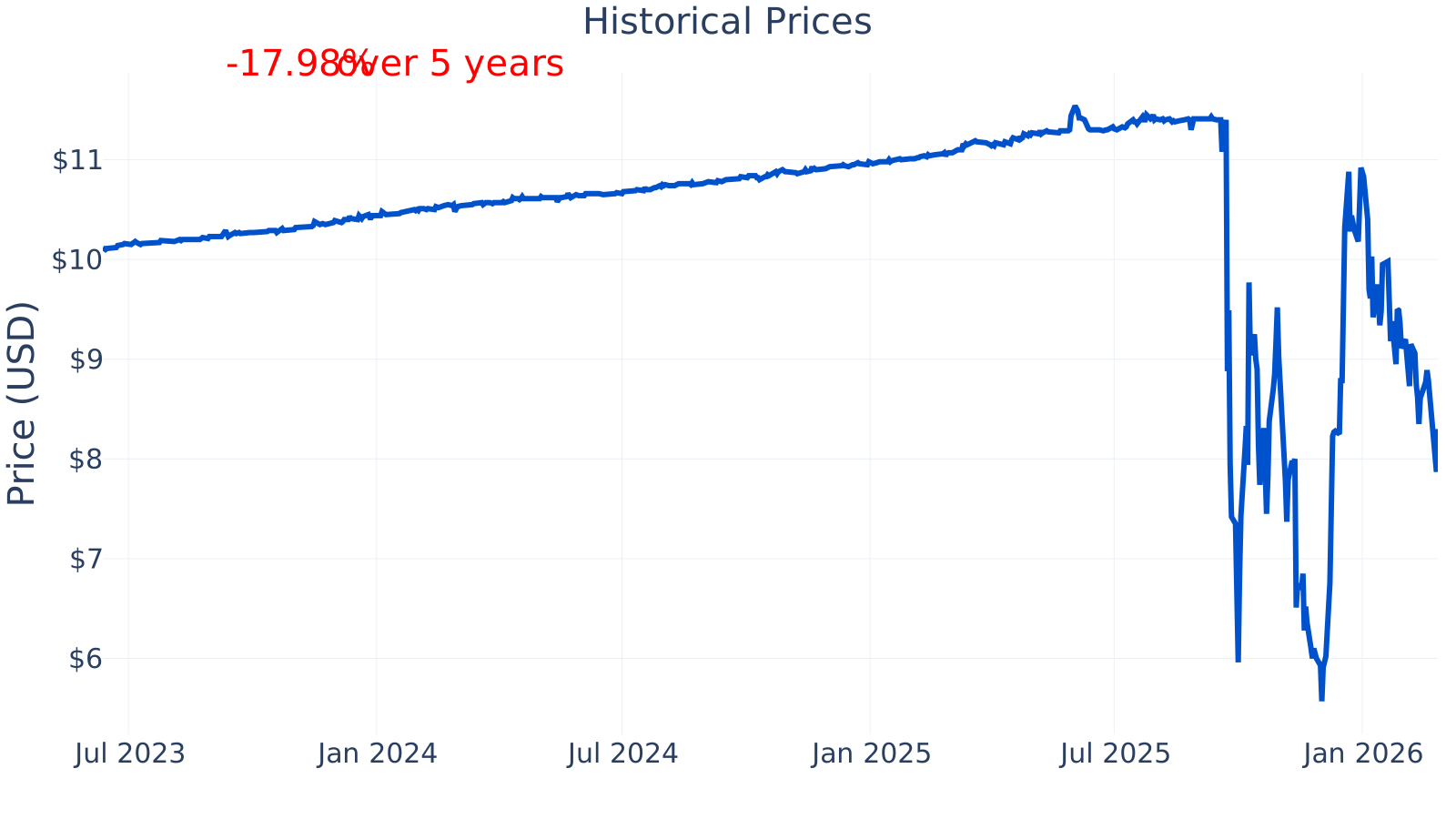
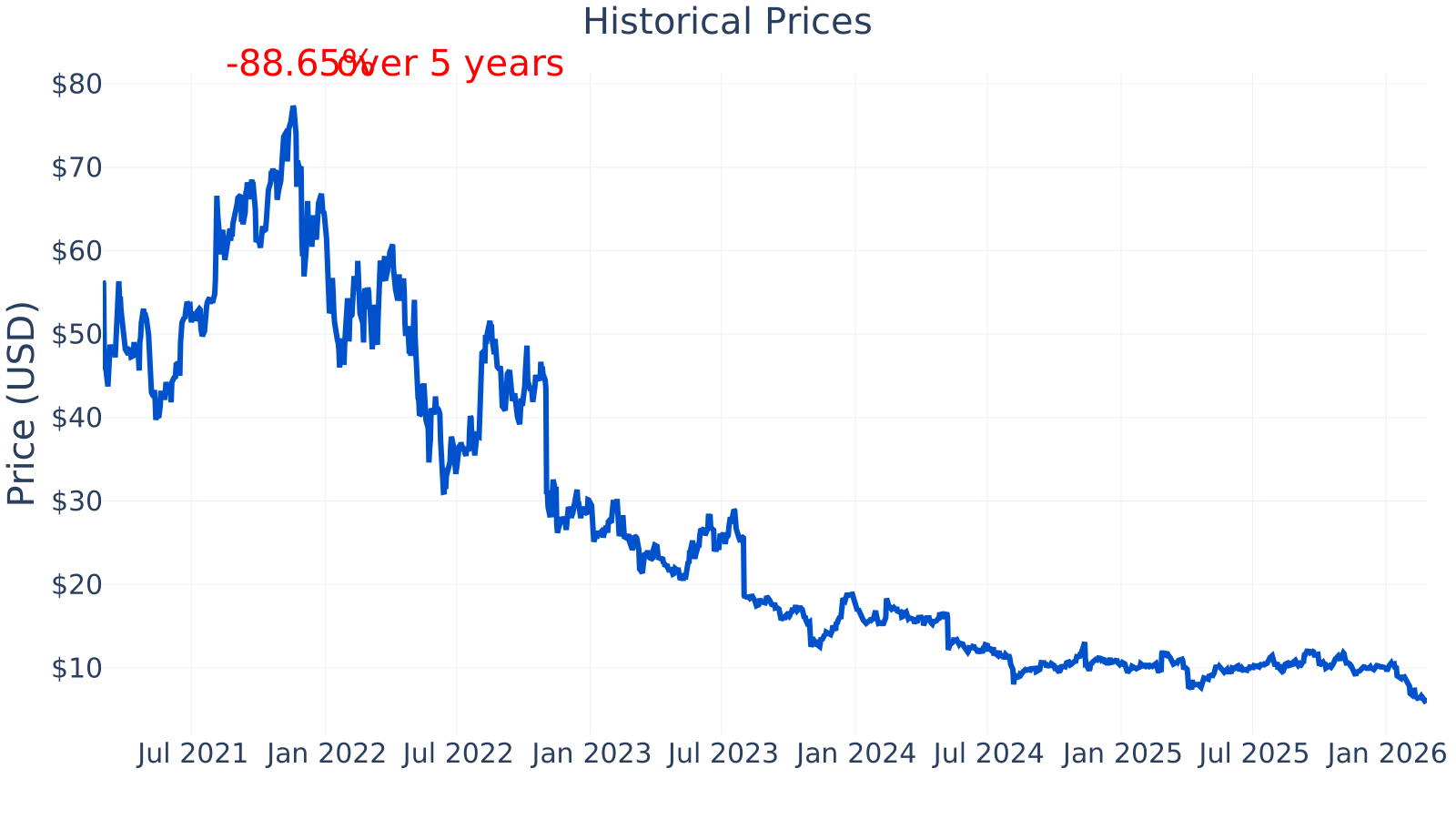
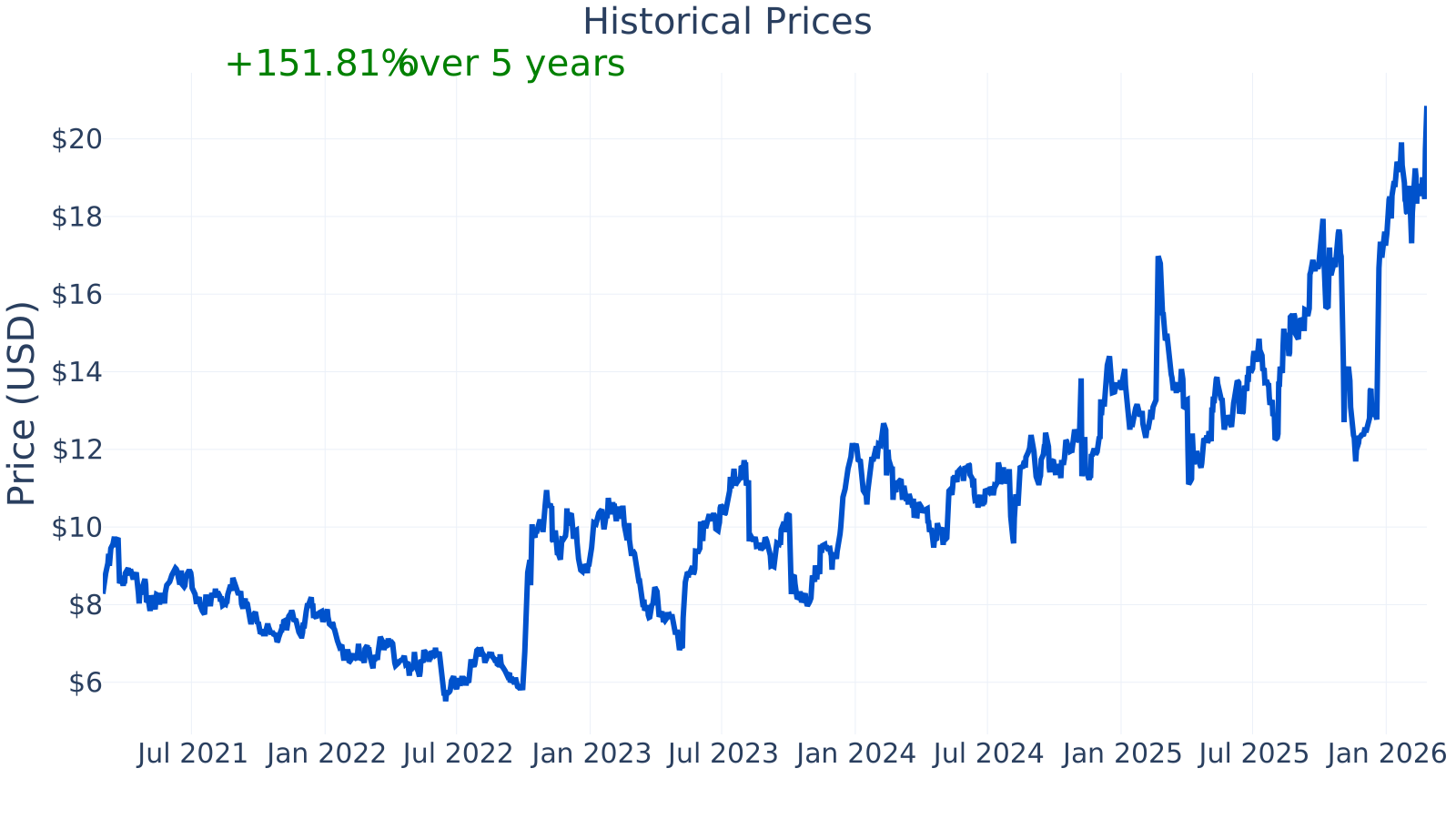
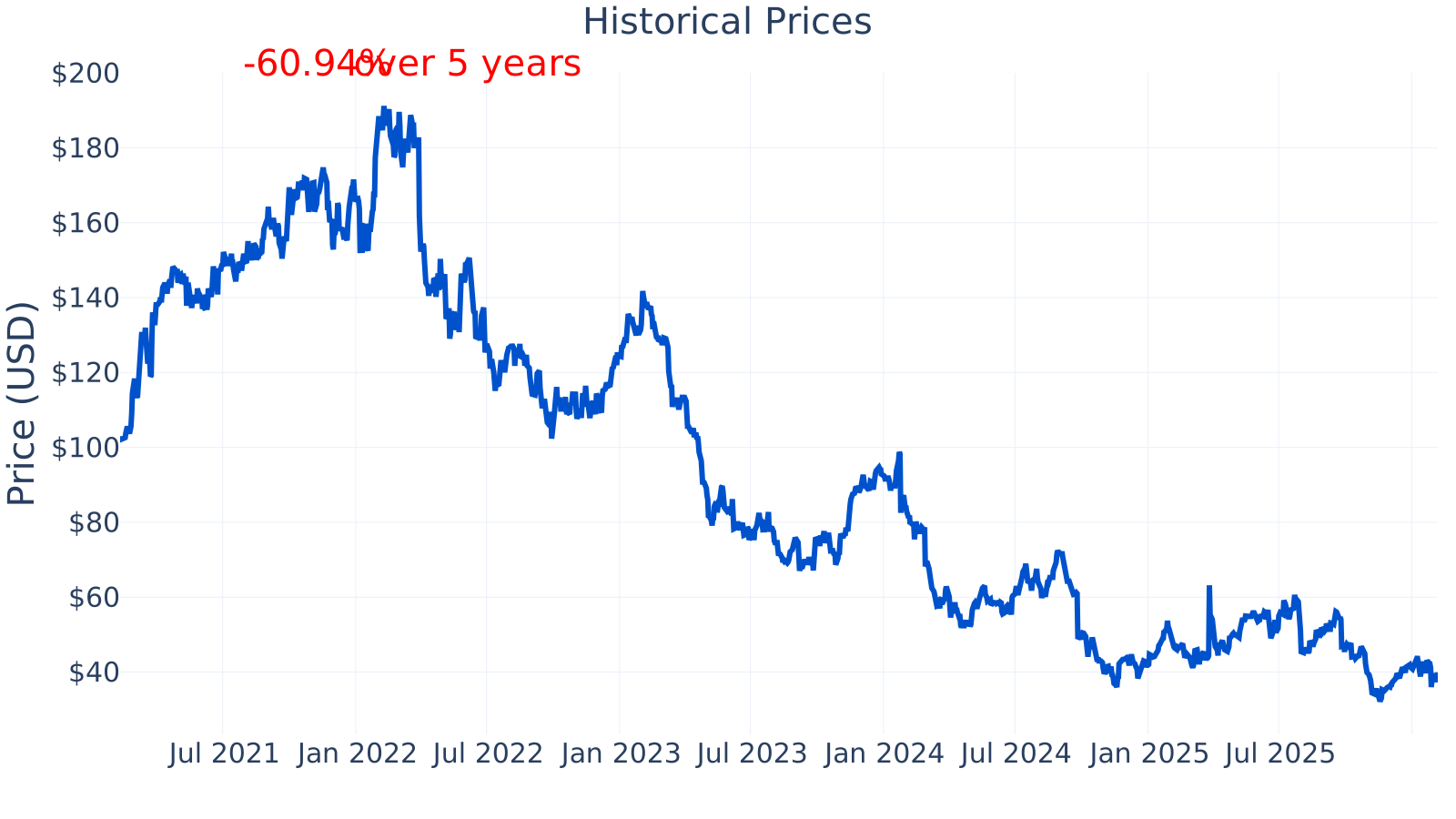
Concentrix has a market capitalization of about $2.49B and a relatively low beta of ~0.48, which describes how volatile the stock has been versus the broader market (historically, lower than average). The company’s latest profit margin is about -13.0%, below the industry median of about 4.9%, reflecting the recent loss. Year-over-year revenue growth is about 4.3%, somewhat below the industry median of about 6.2%. Leverage stands out: debt-to-equity is about 169%, well above the industry median of about 54%. At the same time, trailing twelve-month free cash flow is about $572M, which suggests the business can generate cash even when accounting earnings are under pressure (though this can vary significantly by period).
Growth (Medium)
Concentrix operates in the broad market for outsourced customer experience and technology-enabled business services. This area has long been supported by trends such as companies focusing on “core” activities while outsourcing specialized operations, global delivery models, and ongoing demand for multilingual customer support. More recently, client demand has been influenced by digital transformation, self-service, automation, and the use of AI-assisted tools to reduce handle times and improve resolution rates.
Strategically, Concentrix positions itself as a scaled provider that can combine people, process design, and enabling technology. In this type of business, long-term growth tends to come from (1) winning new client programs, (2) expanding work with existing clients, (3) moving into higher-value services (analytics/automation/consulting-adjacent work), and (4) acquisitions that broaden capabilities and customer base. Scale can matter because global delivery coverage, talent recruiting, compliance, and technology investments can be spread across a larger revenue base.
The year-over-year growth pattern shown is uneven: it was strong in some prior periods and has most recently slowed to low single digits (around 4%). That can be consistent with normalization after acquisition-driven expansion, changes in client spending, or program ramp/roll-off dynamics that are common in outsourced services.
Free cash flow has been positive across the periods shown and is currently around $572M (TTM), higher than several prior points on the chart. For a services company, sustained cash generation can be an important support for debt repayment, integration spending after acquisitions, and operational investments. A potential catalyst (in a purely factual sense) would be any demonstrated improvement in profitability and margin consistency after integration or restructuring periods—because even modest margin changes can have a large impact when revenue is near $10B.
Risks (High)
This article is for informational purposes only and does not constitute financial advice. Some content is AI-generated. See Disclaimer