Stock Analysis · Comcast Corp (CMCSA)
Overview
Comcast Corporation (CMCSA) is a large U.S.-based connectivity and media company. Its biggest business is delivering internet service to homes and businesses through its cable network, mainly under the Xfinity brand. Comcast also owns NBCUniversal, which includes TV networks and broadcast operations, film studios, and theme parks. In addition, Comcast operates a wireless phone offering that runs on a mix of its own Wi‑Fi network and a partner cellular network (an MVNO model).
In simple terms, Comcast combines two types of businesses that behave differently: (1) subscription-like connectivity services that tend to be steadier over time, and (2) media and entertainment businesses that can be more cyclical, depending on advertising markets, content performance, and consumer viewing habits.
Main revenue sources (based on company segment reporting in filings, with exact shares varying by year):
- Connectivity & Platforms (dominated by residential and business broadband/internet; also includes wireless, video, and other services)
- Media (NBCUniversal television networks, broadcast, and related advertising and distribution)
- Studios (film and television content production and distribution)
- Theme Parks (Universal theme parks and related experiences)
Across recent years, total revenue has been relatively stable to slightly rising overall, with broadband typically acting as the anchor and NBCUniversal/theme parks adding diversification.
The revenue-to-profit flow suggests a business with substantial direct costs and operating expenses, but with meaningful operating income. Net income shows noticeable variation across years (for example, a much lower level in 2022 versus higher levels in 2023–2025 in the figures shown), which highlights that profitability can swing based on non-routine items, business mix, and costs—especially in a company that combines telecom-like services with media assets.
Key Figures
| Metric | Value | Industry ⓘ |
|---|---|---|
| Date | Feb 07, 2026 | |
| Context | ||
| Sector | Communication Services | |
| Industry | Telecom Services | |
| Market Cap ⓘ | $114.31B | |
| Beta ⓘ | 0.79 | |
| Fundamental | ||
| P/E Ratio ⓘ | 5.82 | 15.18 |
| Profit Margin ⓘ | 16.17% | 6.18% |
| Revenue Growth ⓘ | 1.20% | 2.10% |
| Debt to Equity ⓘ | 113.97% | 113.97% |
| PEG ⓘ | 2.39 | |
| Free Cash Flow ⓘ | $21.89B | |
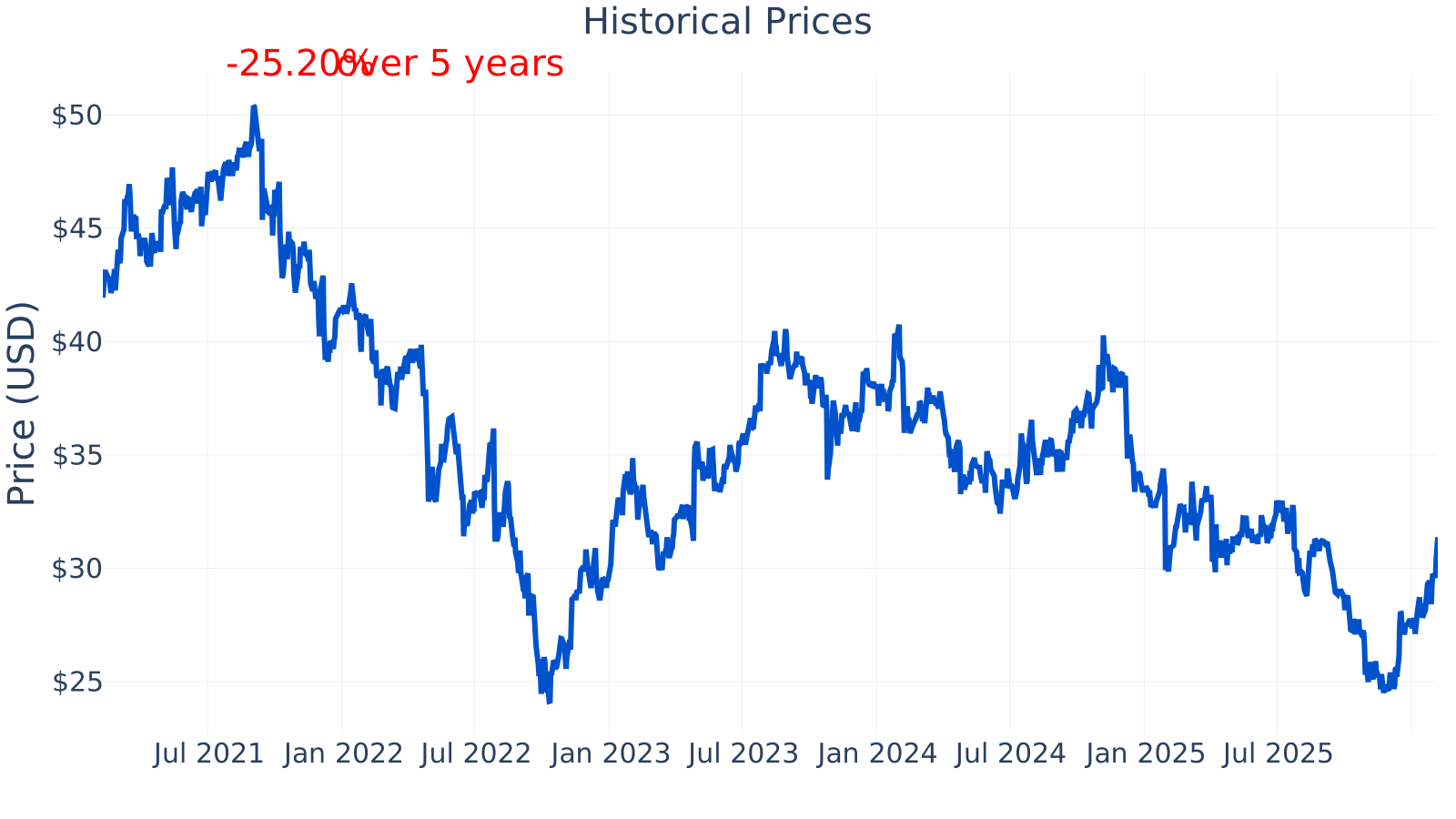
Comcast’s market capitalization is about $114B, and its beta (~0.79) indicates the shares have historically moved less than the broader market on average (though that can change). The company’s P/E ratio (~5.8) is well below the industry median shown (~15.2), while its profit margin (~16.2%) is notably above the industry median shown (~6.2%). Year-over-year revenue growth is modest at about 1.2% versus an industry median around 2.1%. Debt-to-equity is about 114%, in line with the industry median listed, and trailing twelve-month free cash flow is about $21.9B, which is a key support for ongoing investment in the network, shareholder returns, and debt servicing.
Growth (Low)
Comcast operates in industries that are mature overall. U.S. broadband is widely penetrated, and video (traditional pay-TV) has faced long-term pressure as consumers shift toward streaming. That backdrop generally limits “easy” growth and puts more emphasis on retaining customers, pricing discipline, and offering better bundles (for example, pairing home internet with wireless).
That said, Comcast still has identifiable growth levers. Broadband demand is supported by long-term trends such as higher household data usage, more connected devices, and remote/hybrid work. The company’s wireless offering can also be a way to deepen customer relationships and reduce churn by bundling services. On the NBCUniversal side, theme parks can grow through attendance, new attractions, and expansion initiatives, while content and distribution strategies evolve with changes in viewing behavior.
The year-over-year revenue pattern shown is mostly low single-digit growth with periodic dips into negative territory, which fits a mature, competitive environment where gains tend to be incremental rather than rapid.
Free cash flow appears consistently positive across the periods shown, even though it fluctuates. For a business with heavy network investment needs, steady free cash flow is important because it can fund capital spending, service debt, and support returns of capital without relying on frequent equity issuance.
Risks (Medium)
This article is for informational purposes only and does not constitute financial advice. Some content is AI-generated. See Disclaimer