Stock Analysis · Columbia Sportswear Company (COLM)
Overview
Columbia Sportswear Company designs, sources, markets, and sells outdoor, active, and lifestyle apparel, footwear, accessories, and equipment. Its products are sold through a mix of wholesale partners (such as sporting goods and department stores) and direct-to-consumer channels (brand stores and e-commerce). The business is built around a portfolio of brands that target different consumer needs and price points, with Columbia positioned as the largest brand in the group.
In company reporting, revenue is typically discussed by brand and by distribution channel (wholesale versus direct-to-consumer). In general terms, the main revenue drivers are:
- Brand portfolio: Columbia (largest), plus SOREL, Mountain Hardwear, and prAna.
- Distribution channels: wholesale to retail partners and direct-to-consumer (e-commerce and owned stores).
- Geographies: the United States is the largest single market, with additional sales across international regions.
Across recent years, total revenue has been relatively stable around the mid-$3B range, while profitability has been more sensitive to costs such as freight, promotions/discounting, and operating expenses.
From 2021 to 2025, revenue moved from about $3.13B to about $3.40B, but operating income declined from about $451M to about $230M. The largest swing in the profit structure over this period is the size of operating expenses versus gross profit, which helps explain why net income fell (about $354M in 2021 to about $177M in 2025) even though revenue ended higher than 2021.
Key Figures
| Metric | Value | Industry ⓘ |
|---|---|---|
| Date | Feb 07, 2026 | |
| Context | ||
| Sector | Consumer Cyclical | |
| Industry | Apparel Manufacturing | |
| Market Cap ⓘ | $3.45B | |
| Beta ⓘ | 0.88 | |
| Fundamental | ||
| P/E Ratio ⓘ | 19.47 | 22.80 |
| Profit Margin ⓘ | 5.22% | 4.94% |
| Revenue Growth ⓘ | -2.40% | 1.60% |
| Debt to Equity ⓘ | 27.93% | 99.72% |
| PEG ⓘ | 2.66 | |
| Free Cash Flow ⓘ | $216.74M | |
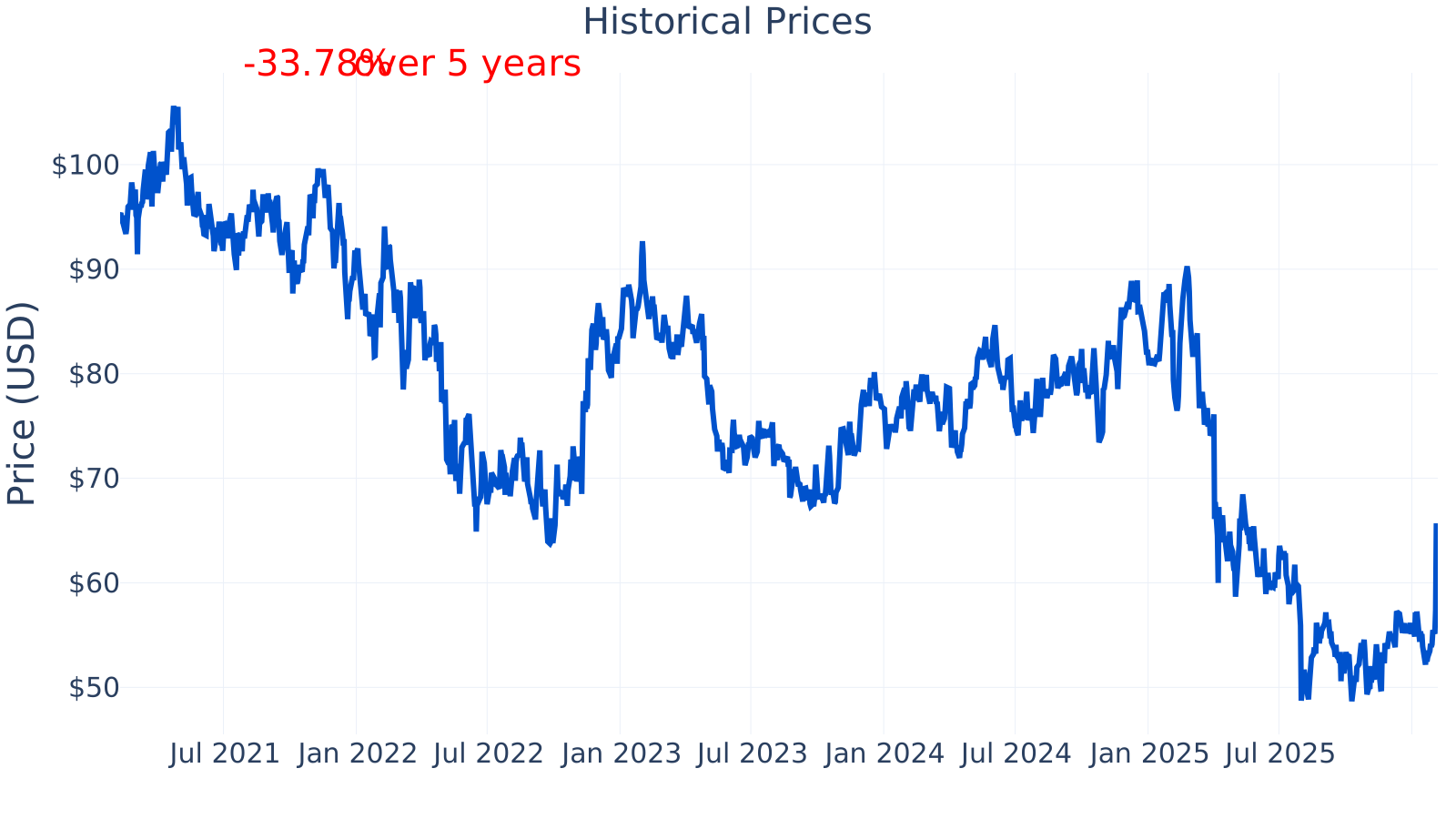
Columbia Sportswear’s market capitalization is about $3.45B, and the stock’s beta of ~0.88 suggests it has historically been somewhat less volatile than the overall market. The company’s P/E ratio is ~19.5, below the industry median shown (~22.8). Profitability (net profit margin) is about 5.2%, slightly above the industry median shown (~4.9%). Recent year-over-year revenue growth is -2.4% versus an industry median of +1.6%. Balance-sheet leverage looks comparatively conservative, with debt-to-equity of ~28% versus an industry median near 100%. Trailing twelve-month free cash flow is about $217M.
Growth (Medium)
The company operates in global apparel, footwear, and outdoor categories. Demand in these markets tends to be durable over the long run, but it is also highly competitive and influenced by consumer spending cycles, weather variability, and fashion/brand trends. This is not typically a “winner-takes-all” industry; growth often comes from brand relevance, product innovation, distribution reach, and disciplined inventory management.
Columbia’s strategy, as described in its filings, centers on building brand strength, expanding direct-to-consumer capabilities, and growing internationally. Direct-to-consumer can matter for long-term growth because it can improve brand control and provide richer customer data, though it also requires sustained spending on technology, marketing, and stores.
Revenue growth has been uneven over the last several years: strong growth in parts of 2021 and 2022, followed by declines through much of 2024, and a mixed pattern in 2025 that ends with a -2.4% year-over-year reading. This kind of pattern is common in apparel when the industry transitions from strong demand periods into more promotional environments and tighter consumer budgets.
Free cash flow has also been volatile. It dipped to a low level in 2023, then rose sharply in 2024, and moderated again in 2025 (to about $292M as of the first quarter point shown, and about $217M in the latest metric snapshot). For long-term business resilience, the key takeaway is that cash generation exists, but it can swing meaningfully depending on inventory investment, margins, and operating discipline.
Risks (Medium)
This article is for informational purposes only and does not constitute financial advice. Some content is AI-generated. See Disclaimer