Stock Analysis · Cloudflare Inc (NET)
Overview
Cloudflare Inc is a technology company that helps organizations run faster and safer online. In simple terms, it operates a large global network that sits between a company’s applications/websites and the broader internet. This can help with performance (speed and reliability) and security (blocking malicious traffic), and it can also help companies connect users, devices, and offices to applications in a more controlled way.
Cloudflare generally earns revenue by selling subscriptions to its platform. Customers typically pay recurring fees to use different parts of Cloudflare’s service portfolio, and the product set can expand over time as a customer adds more capabilities.
In its SEC filings, Cloudflare reports revenue as a single operating segment rather than breaking revenue into multiple product lines with public percentages. Practically, the business is commonly described through these main solution areas:
- Application services (performance and reliability): delivering websites and apps quickly and consistently to users
- Security services: protecting applications, APIs, and internet-facing systems from attacks and abuse
- Network services: connecting users and devices to applications with policy and access controls
- Developer and platform services: tools that let developers build and run applications closer to end users on the network
From a business-model perspective, the most important point for long-term analysis is that Cloudflare is built around recurring subscription revenue and a platform that can be expanded customer-by-customer over time.
Over the years shown, total revenue increases substantially (from about $656M in 2021 to about $2.17B in 2025). At the same time, operating costs remain high—particularly research and development and selling/general/administrative spending—so net income remains negative across the period.
Key Figures
| Metric | Value | Industry ⓘ |
|---|---|---|
| Date | Feb 16, 2026 | |
| Context | ||
| Sector | Technology | |
| Industry | Software - Infrastructure | |
| Market Cap ⓘ | $68.92B | |
| Beta ⓘ | 1.98 | |
| Fundamental | ||
| P/E Ratio ⓘ | N/A | 25.13 |
| Profit Margin ⓘ | -4.72% | 6.91% |
| Revenue Growth ⓘ | 33.60% | 15.25% |
| Debt to Equity ⓘ | 241.13% | 19.82% |
| PEG ⓘ | 2.35 | |
| Free Cash Flow ⓘ | $331.83M | |
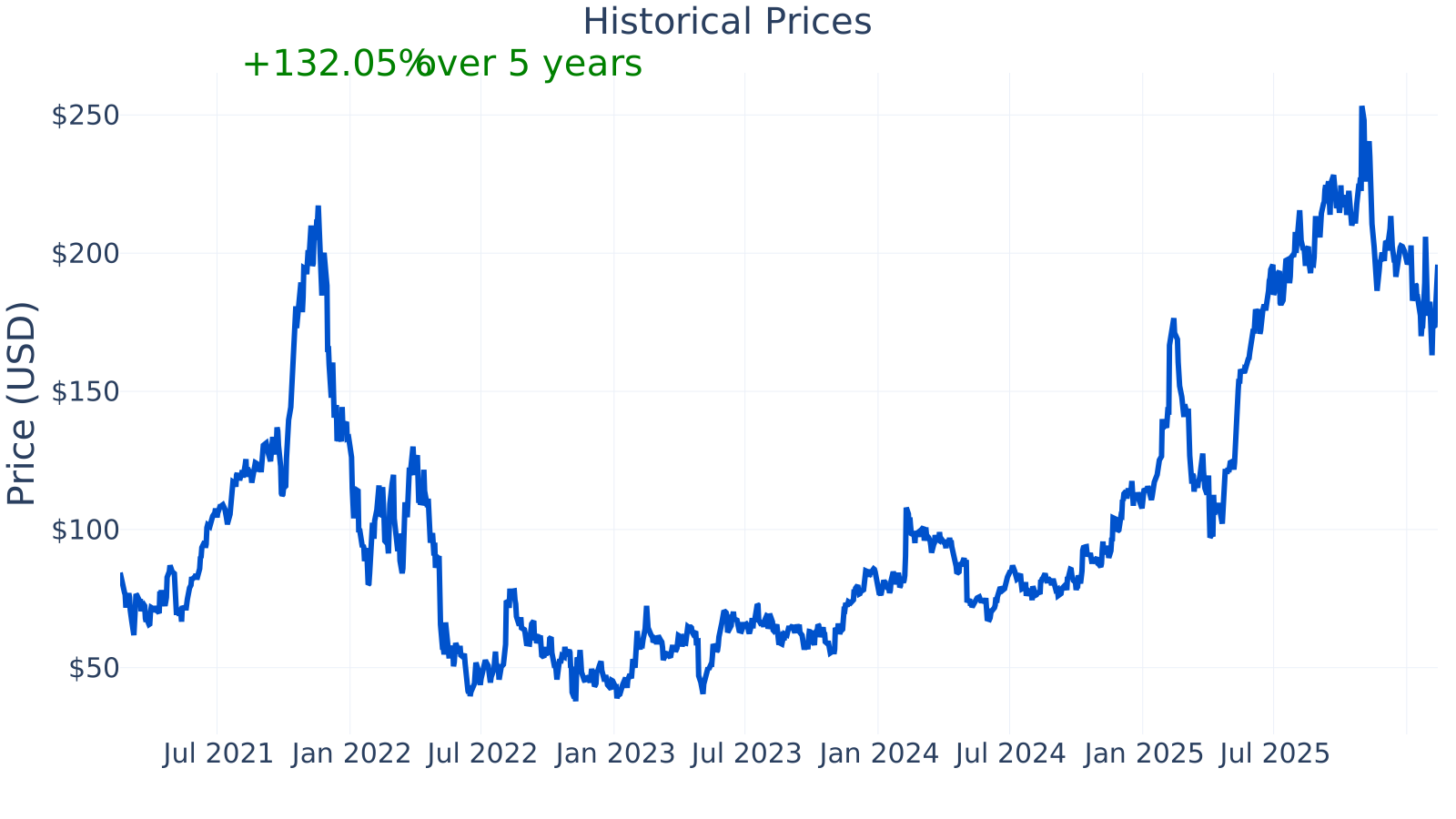
Cloudflare’s market capitalization is about $68.9B. The stock’s beta of ~1.98 indicates it has tended to move more than the broader market (higher volatility). Profitability is still a key discussion point: the latest profit margin shown is about -4.7% versus an industry median around +6.9%. Growth remains strong: year-over-year revenue growth is about 33.6% versus an industry median around 15.3%. The table also shows comparatively high leverage: debt-to-equity is about 241% versus an industry median around 20%. Free cash flow over the trailing twelve months is positive at about $332M, which can matter because it reflects cash generation after operating needs and capital spending.
Growth (high)
Cloudflare operates in markets tied to long-running trends: more business activity moving online, more applications delivered over the internet, and rising security needs as attacks become more frequent and complex. These trends can support demand for services that improve performance, reliability, and protection for internet-facing systems.
A central element of Cloudflare’s strategy is to build a broad platform on one global network, then sell multiple services to the same customers over time. This “land and expand” approach can make growth more efficient if customers adopt additional modules instead of switching providers for each new need. Another potential driver is the continued shift toward cloud-based architectures and distributed applications, which increases the value of being able to deliver and secure traffic closer to end users.
The revenue growth pattern shown indicates very strong growth earlier in the period (above 50% year-over-year in 2021–2022), followed by a moderation into the high-20% to low-30% range, and then an increase back to roughly 33.6% in the most recent point. Even with the slowdown from earlier extremes, the rate remains above the industry median shown in the metrics table.
Free cash flow improves meaningfully over time: it is negative in 2021 and 2022, turns positive in 2023, and rises to roughly $184M by 2025 (with the latest metric table showing about $332M on a trailing-twelve-month basis). This shift can be important because it suggests the company has been able to fund more of its operations and growth internally through cash generation, even while net income remains negative.
Risks (high)
Cloudflare’s results depend on continued customer adoption, renewals, and expansion. If customers reduce IT/security spending, consolidate vendors, or delay migrations, growth can slow. As a subscription business, changes in demand can show up through slower new customer adds, smaller expansions, or higher churn.
Competition is a major risk. Cloudflare operates in areas with strong and well-funded rivals, including large cloud platforms and security specialists. Common competitor groups include hyperscale cloud providers (that offer overlapping networking, security, and edge capabilities), content delivery and edge network providers, and cybersecurity vendors that sell adjacent products. This competitive landscape can pressure pricing and require sustained investment in product development and sales capacity.
Cloudflare does have potential competitive advantages that can matter over the long term: a large distributed network, a broad platform that spans performance and security, and the ability to add services without customers needing to rebuild their infrastructure. Whether it is “the leader” depends on the exact category being compared (CDN, edge computing, application security, enterprise access, etc.), since several segments have different leaders and strong incumbents.
The debt-to-equity ratio rises sharply after 2021 and remains elevated versus the industry median throughout the period shown, ending around 241% (versus an industry median near 15%–35% in many of the periods displayed). A higher ratio can increase financial risk, especially if operating performance weakens or if capital markets become less favorable.
Profit margin improves substantially over time (from roughly -26% to -40% in 2021–2022 to about -4.7% more recently), but it remains below the industry median, which trends positive in the later periods. This means Cloudflare is closer to break-even than in prior years, yet still not consistently profitable on a net income basis.
Valuation
For many companies, valuation discussions start with the price-to-earnings (P/E) ratio. Cloudflare’s P/E is not shown as meaningful in the chart provided (values are displayed as 0 when the ratio is not meaningful or not available under the stated rules), which commonly occurs when net earnings are negative or too small relative to price. In those situations, P/E is less informative and valuation is often discussed using other lenses such as revenue multiples, free-cash-flow generation, and the implied expectations for future margins.
The industry median P/E ratio shown sits around the high-20s to high-30s over time, but Cloudflare’s P/E does not appear as a stable, comparable metric on this display. As a result, a practical way to frame “expensive or not” becomes more qualitative: the current market value implies that investors are placing substantial weight on continued above-industry growth and on the company’s ability to convert scale into durable profitability over time. The improving profit margin trend and positive free cash flow support that narrative, while the still-negative net margin and higher leverage raise the bar for execution.
Conclusion
Cloudflare is a subscription-based software infrastructure company focused on making internet applications faster, more reliable, and more secure, using a global network platform. The company shows strong revenue growth (about 33.6% year-over-year in the latest point provided) and a notable improvement in profitability trends, alongside a clear shift toward positive and rising free cash flow.
The main long-term uncertainties come from a highly competitive environment, the need to sustain growth while continuing to improve margins, and a debt-to-equity level that is high compared with the industry median. Taken together, the facts point to a company with meaningful scale and growth momentum, but also with execution and financial-structure risks that remain important to monitor over time.
Sources:
- SEC EDGAR — Cloudflare, Inc. filings (Form 10-K, Form 10-Q)
- Cloudflare Investor Relations — Shareholder letters, quarterly results materials, and press releases
- Wikipedia — “Cloudflare” (company background overview)
This article is for informational purposes only and does not constitute financial advice. Some content is AI-generated. See Disclaimer


