Stock Analysis · Cloudflare Inc (NET)
Overview
Cloudflare Inc is a technology company that helps organizations run faster and safer online. In simple terms, it operates a large global network that sits between a company’s applications/websites and the broader internet. This can help with performance (speed and reliability) and security (blocking malicious traffic), and it can also help companies connect users, devices, and offices to applications in a more controlled way.
Cloudflare generally earns revenue by selling subscriptions to its platform. Customers typically pay recurring fees to use different parts of Cloudflare’s service portfolio, and the product set can expand over time as a customer adds more capabilities.
In its SEC filings, Cloudflare reports revenue as a single operating segment rather than breaking revenue into multiple product lines with public percentages. Practically, the business is commonly described through these main solution areas:
- Application services (performance and reliability): delivering websites and apps quickly and consistently to users
- Security services: protecting applications, APIs, and internet-facing systems from attacks and abuse
- Network services: connecting users and devices to applications with policy and access controls
- Developer and platform services: tools that let developers build and run applications closer to end users on the network
From a business-model perspective, the most important point for long-term analysis is that Cloudflare is built around recurring subscription revenue and a platform that can be expanded customer-by-customer over time.
Over the years shown, total revenue increases substantially (from about $656M in 2021 to about $2.17B in 2025). At the same time, operating costs remain high—particularly research and development and selling/general/administrative spending—so net income remains negative across the period.
Key Figures
| Metric | Value | Industry ⓘ |
|---|---|---|
| Date | Feb 16, 2026 | |
| Context | ||
| Sector | Technology | |
| Industry | Software - Infrastructure | |
| Market Cap ⓘ | $68.92B | |
| Beta ⓘ | 1.98 | |
| Fundamental | ||
| P/E Ratio ⓘ | N/A | 25.13 |
| Profit Margin ⓘ | -4.72% | 6.91% |
| Revenue Growth ⓘ | 33.60% | 15.25% |
| Debt to Equity ⓘ | 241.13% | 19.82% |
| PEG ⓘ | 2.35 | |
| Free Cash Flow ⓘ | $331.83M | |
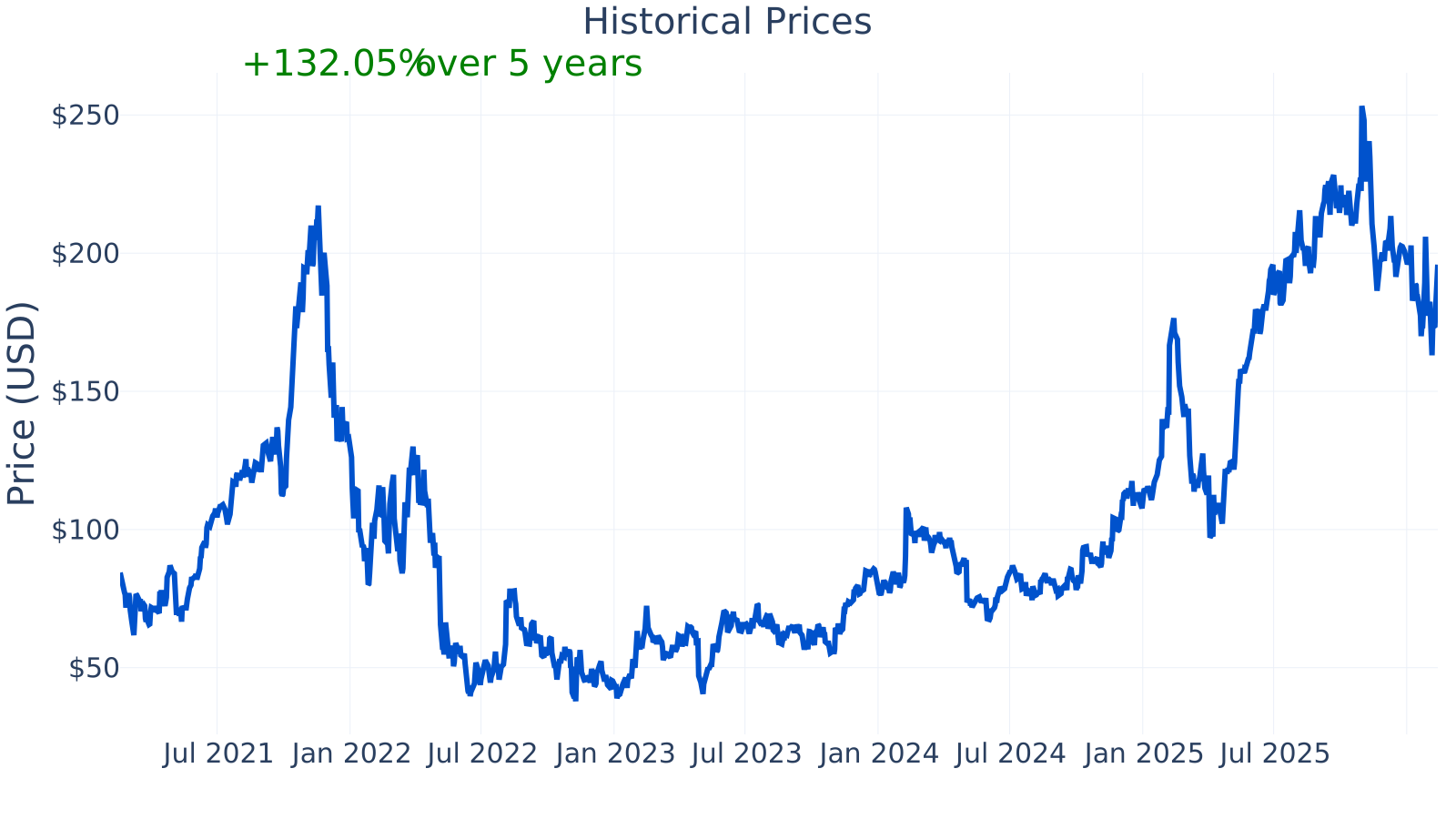
Cloudflare’s market capitalization is about $68.9B. The stock’s beta of ~1.98 indicates it has tended to move more than the broader market (higher volatility). Profitability is still a key discussion point: the latest profit margin shown is about -4.7% versus an industry median around +6.9%. Growth remains strong: year-over-year revenue growth is about 33.6% versus an industry median around 15.3%. The table also shows comparatively high leverage: debt-to-equity is about 241% versus an industry median around 20%. Free cash flow over the trailing twelve months is positive at about $332M, which can matter because it reflects cash generation after operating needs and capital spending.
Growth (high)
Cloudflare operates in markets tied to long-running trends: more business activity moving online, more applications delivered over the internet, and rising security needs as attacks become more frequent and complex. These trends can support demand for services that improve performance, reliability, and protection for internet-facing systems.
A central element of Cloudflare’s strategy is to build a broad platform on one global network, then sell multiple services to the same customers over time. This “land and expand” approach can make growth more efficient if customers adopt additional modules instead of switching providers for each new need. Another potential driver is the continued shift toward cloud-based architectures and distributed applications, which increases the value of being able to deliver and secure traffic closer to end users.
The revenue growth pattern shown indicates very strong growth earlier in the period (above 50% year-over-year in 2021–2022), followed by a moderation into the high-20% to low-30% range, and then an increase back to roughly 33.6% in the most recent point. Even with the slowdown from earlier extremes, the rate remains above the industry median shown in the metrics table.
Free cash flow improves meaningfully over time: it is negative in 2021 and 2022, turns positive in 2023, and rises to roughly $184M by 2025 (with the latest metric table showing about $332M on a trailing-twelve-month basis). This shift can be important because it suggests the company has been able to fund more of its operations and growth internally through cash generation, even while net income remains negative.
Risks (high)
This article is for informational purposes only and does not constitute financial advice. Some content is AI-generated. See Disclaimer