Stock Analysis · Clearwater Analytics Holdings Inc (CWAN)
Overview
Clearwater Analytics Holdings Inc (CWAN) provides a cloud-based software platform used by institutional investors (such as insurers, asset managers, corporations, and public sector organizations) to manage investment accounting, reporting, compliance, and performance measurement. In simple terms, the company helps organizations consolidate investment information across many portfolios and produce the reports they need for internal decision-making and external requirements.
The business is primarily a subscription software model, where customers pay recurring fees to access the platform and related services. This kind of model often emphasizes retention, expanding usage within existing customers, and adding new customers over time.
In company filings, revenue is commonly discussed in broad categories (such as subscription and professional services). A detailed percentage breakdown is not included here because it can vary by reporting period and disclosure format, but the main revenue sources typically follow this structure:
- Subscription revenue (recurring): Ongoing access to the platform and related modules.
- Professional services revenue (non-recurring or less recurring): Implementation, onboarding, and other services to help customers deploy and use the software.
From an overall business mix perspective, the company’s reported financials show a software profile with a meaningful gross profit base, while spending heavily on research and development and on sales and administration to support growth.
Over the last several years shown, total revenue has increased (from about $252.0M in 2021 to about $451.8M in 2024), while gross profit has grown as well (from about $184.2M in 2021 to about $328.8M in 2024). Operating income has moved between positive and negative across the period, reflecting continued investment in operating expenses, particularly research and development and selling/general/administrative costs.
Key Figures
| Metric | Value | Industry ⓘ |
|---|---|---|
| Date | Feb 07, 2026 | |
| Context | ||
| Sector | Technology | |
| Industry | Software - Application | |
| Market Cap ⓘ | $7.10B | |
| Beta ⓘ | 0.66 | |
| Fundamental | ||
| P/E Ratio ⓘ | 15.29 | 27.79 |
| Profit Margin ⓘ | 61.30% | 6.02% |
| Revenue Growth ⓘ | 77.10% | 15.80% |
| Debt to Equity ⓘ | 44.55% | 25.15% |
| PEG ⓘ | 9.88 | |
| Free Cash Flow ⓘ | $81.98M | |
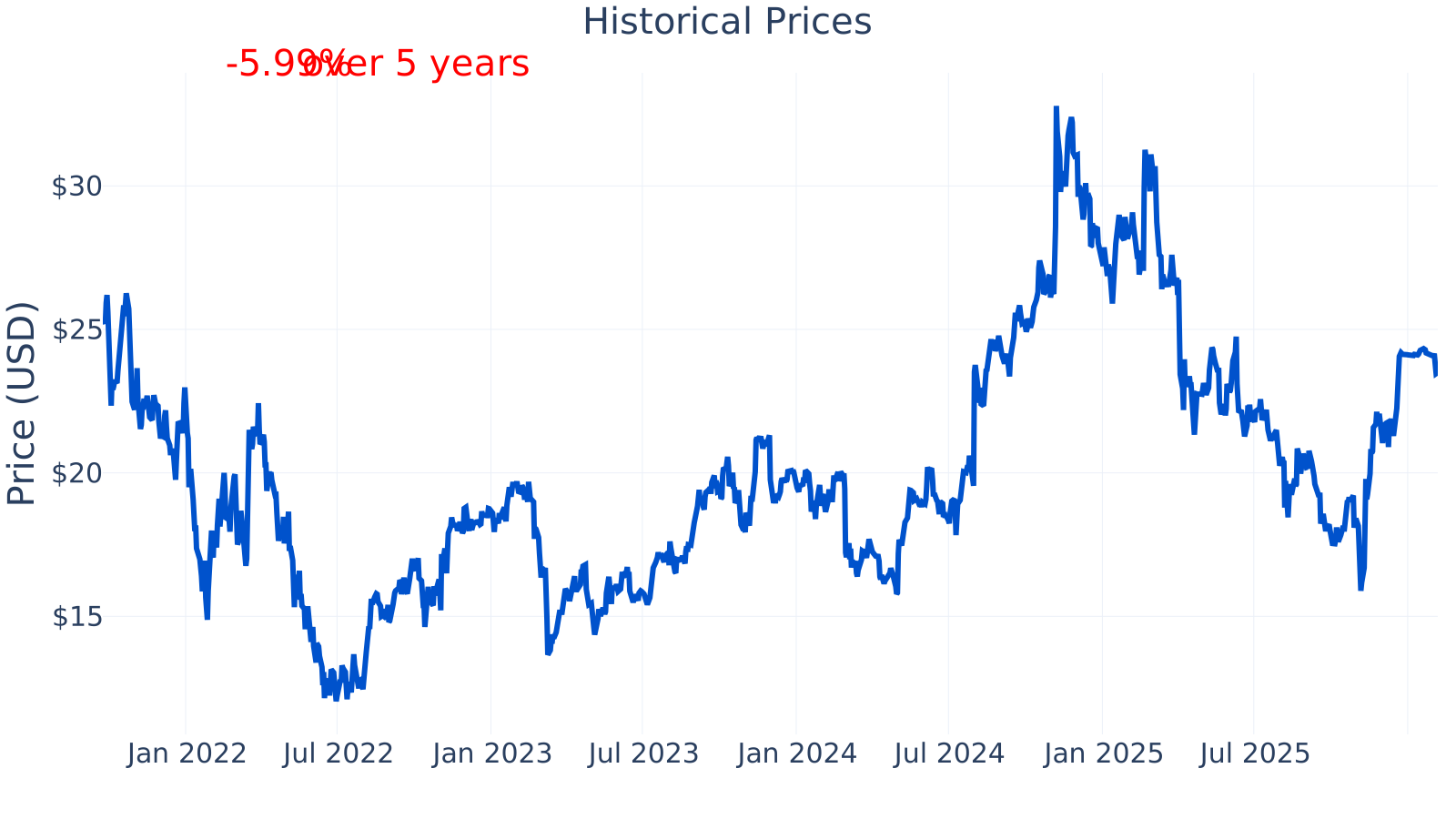
Clearwater Analytics’ market capitalization is about $7.10B, and the stock’s beta of 0.66 suggests it has historically moved less than the broader market on average (though beta can change over time).
The latest valuation snapshot shows a P/E ratio of ~15.29, compared with an industry median near 27.79. Profit margin is shown at about 61.25%, well above the industry median near 6.03%; however, margin readings can be affected by one-time items (for example, tax-related impacts) and may not reflect the ongoing, day-to-day profitability of the software operations.
Year-over-year revenue growth is shown at about 77.08% versus an industry median around 15.8%, indicating a period of unusually fast expansion relative to many application software peers. Free cash flow over the trailing twelve months is shown at about $82.0M, and debt-to-equity is about 44.55% versus an industry median near 25.15%.
Growth (medium)
Clearwater Analytics operates in enterprise application software for investment operations—an area supported by long-term drivers such as greater complexity in financial reporting, demand for timely portfolio visibility, and organizations modernizing legacy systems toward cloud-based platforms. In many industries that manage large investment portfolios (insurance in particular), reporting and data consolidation are ongoing needs rather than one-time projects, which can support recurring revenue models.
The company’s strategy (as described in filings and investor materials) typically centers on adding new customers, expanding product usage within existing customers, and building additional capabilities that increase platform value. In practical terms, future growth often depends on (1) continued new customer adoption, (2) retention, and (3) successful expansion into additional modules and use cases.
The year-over-year revenue growth trend is mostly around the high-teens to mid-20% range through much of 2022–2024, followed by a sharp acceleration in 2025 (reaching roughly 70%+ in the most recent periods shown). When revenue growth steps up this quickly, it can reflect meaningful business momentum, but it can also be influenced by acquisitions or one-time timing effects; understanding the drivers typically requires reading the most recent 10-Q/10-K discussion.
Trailing twelve-month free cash flow rises from about $22.7M (2022) to roughly $83.5M (2025). For a software company, improving free cash flow can be an important sign of scaling, although the durability of that trend depends on how much ongoing spending is required to maintain growth and competitiveness.
Risks (medium)
This article is for informational purposes only and does not constitute financial advice. Some content is AI-generated. See Disclaimer