Stock Analysis · Clear Channel Outdoor Holdings Inc (CCO)
Overview
Clear Channel Outdoor Holdings, Inc. (CCO) is an out-of-home (OOH) advertising company. In simple terms, it sells advertising space on physical displays that people see in public places—most commonly billboards, street furniture (such as bus shelters and kiosks), and displays in transit environments. Advertisers pay for campaigns that run for a set period, and pricing tends to reflect location quality, audience reach, and campaign length.
The company’s business is typically organized around two broad geographic areas described in its SEC filings: the Americas segment (primarily the U.S. and certain Latin American markets) and the Europe segment. Across these markets, Clear Channel sells both traditional “static” displays and digital displays. Digital displays matter because they can rotate multiple ads, change quickly, and often allow more flexible campaign buying than static signs.
Main sources of revenue are generally tied to selling advertising across these formats and regions, with revenue commonly discussed by segment (Americas vs. Europe) and by type (static vs. digital) in company filings:
- Outdoor advertising displays in the Americas segment (billboards and related formats; % varies by year in filings)
- Outdoor advertising displays in the Europe segment (street furniture, billboards, transit-related formats; % varies by year in filings)
- Digital vs. static inventory (a mix within the segments; specific % varies by year in filings)
From a profitability perspective, the company’s recent history shows that operating performance (profit from the core business) has improved compared to earlier years, but interest expense remains a large cost item—meaning debt financing costs can materially affect bottom-line results.
Across 2021–2024, total revenue declined from about $1.77B (2021) to $1.51B (2024), while operating income moved from a small loss in 2021 to positive results in 2022–2024. Over the same period, annual interest expense stayed very large (roughly $335M–$421M), which helps explain why net income remained negative in each of those years despite positive operating income in multiple years.
Key Figures
| Metric | Value | Industry ⓘ |
|---|---|---|
| Date | Feb 08, 2026 | |
| Context | ||
| Sector | Communication Services | |
| Industry | Advertising Agencies | |
| Market Cap ⓘ | $1.08B | |
| Beta ⓘ | 2.34 | |
| Fundamental | ||
| P/E Ratio ⓘ | N/A | 29.48 |
| Profit Margin ⓘ | -0.38% | 6.10% |
| Revenue Growth ⓘ | 8.10% | 8.10% |
| Debt to Equity ⓘ | -186.50% | 62.76% |
| PEG ⓘ | 16.57 | |
| Free Cash Flow ⓘ | -$26.18M | |
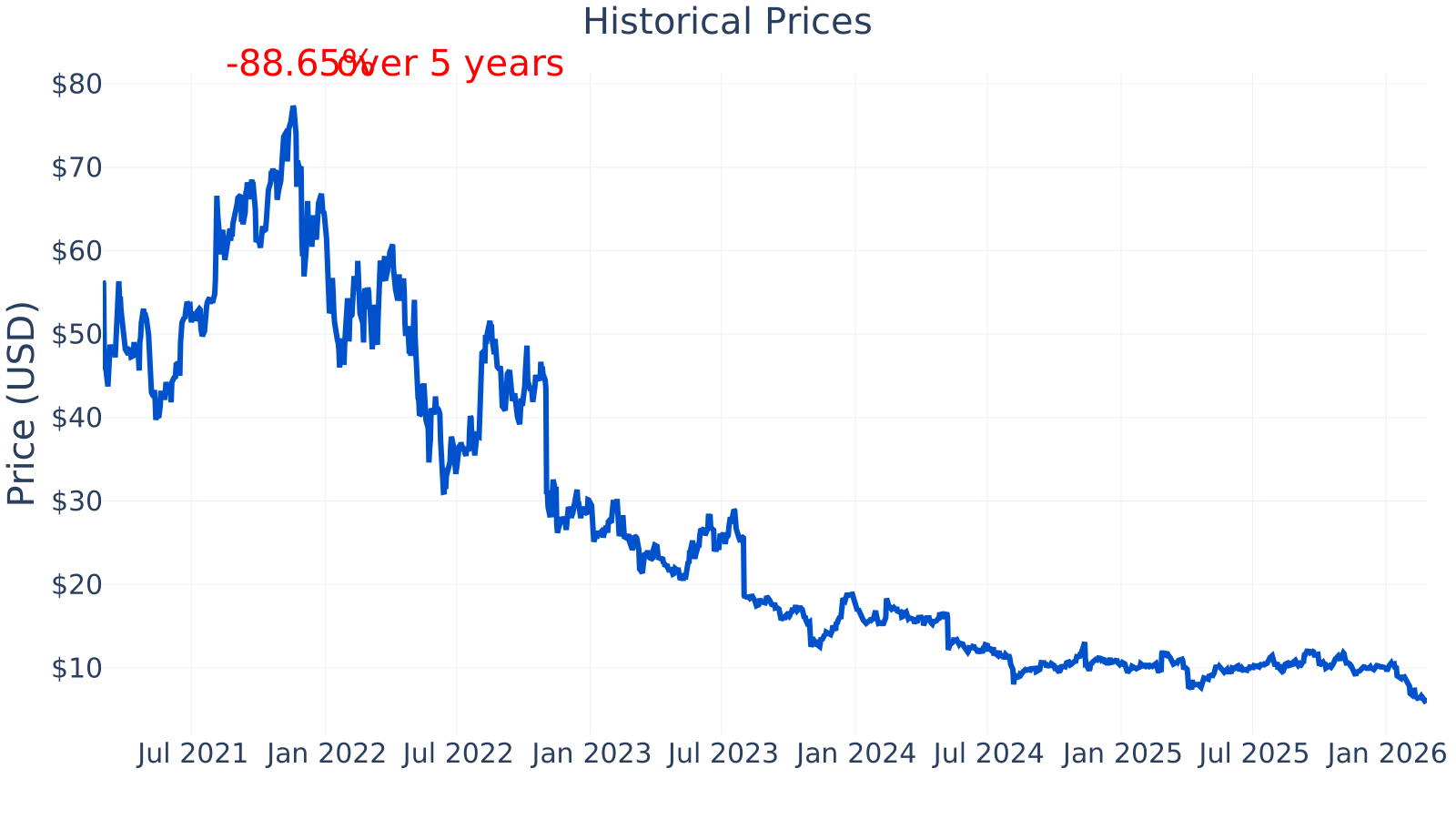
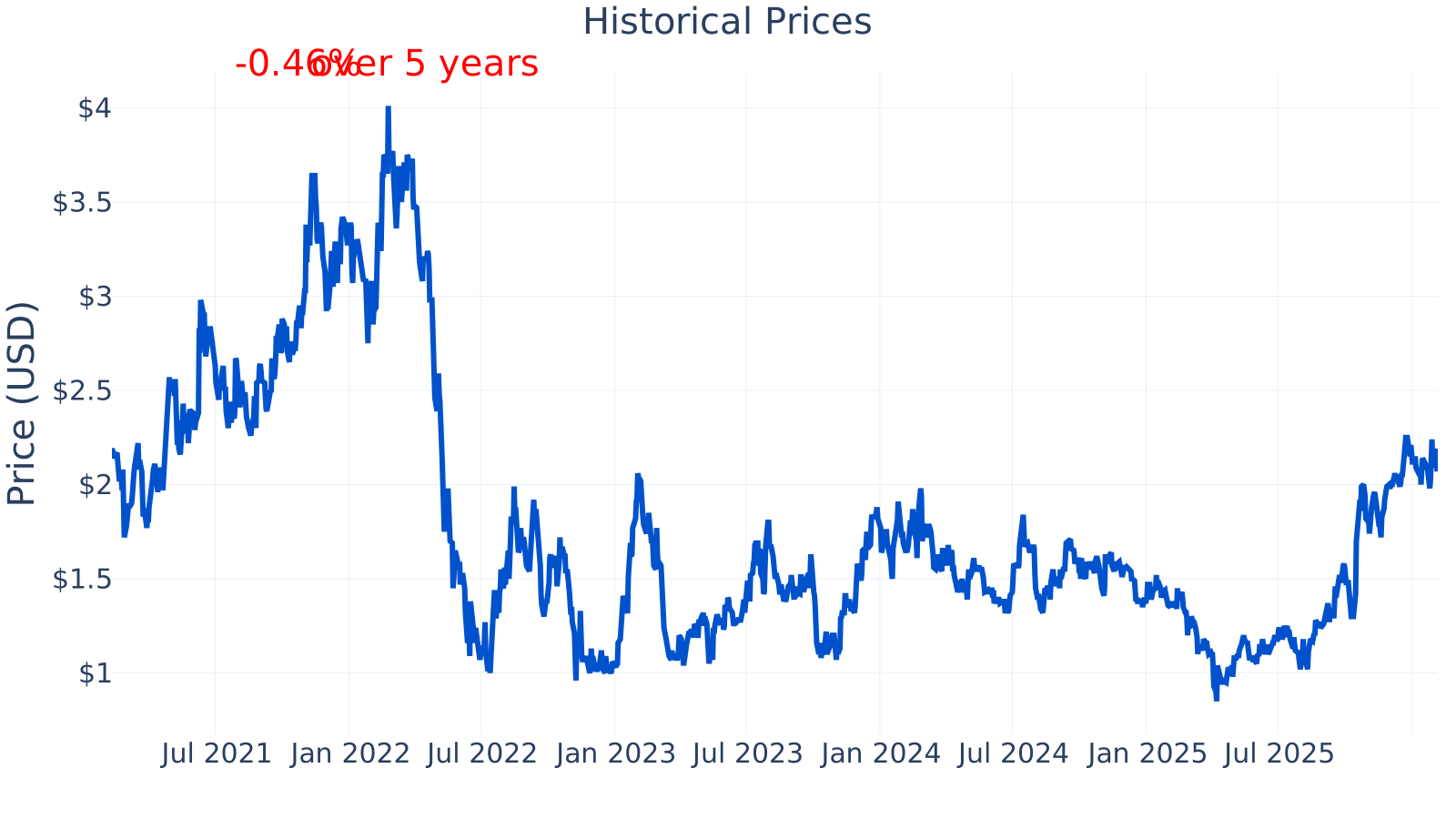
Clear Channel Outdoor’s market capitalization is about $1.08B, placing it in a smaller-cap range. The stock’s beta of ~2.34 suggests it has historically moved much more than the broader market (higher volatility). Profitability is currently thin: the latest profit margin shown is about -0.38% versus an industry median around 6.1%. Revenue growth year-over-year is about 8.1%, roughly in line with the industry median shown. Leverage-related indicators are notable: debt-to-equity is shown as -186%, which can happen when a company has negative total equity (an accounting outcome often linked to accumulated losses and/or large liabilities relative to assets), making simple comparisons to the industry median (~62.8%) less straightforward. Free cash flow over the last twelve months is shown at about -$26.2M, meaning cash generated after capital spending is slightly negative in the period displayed.
Growth (Medium)
Out-of-home advertising is a mature part of the broader advertising market, and growth often depends on overall economic activity and advertising budgets. Within OOH, digital billboards and digital street furniture are frequently positioned in company materials as a way to improve inventory utilization (show more ads on the same structure) and make campaigns easier to buy, change, and measure. That said, OOH remains more cyclical than many subscription-style businesses: when advertisers cut budgets, revenue can be pressured.
Clear Channel’s recent year-over-year revenue growth is positive in the most recent periods shown, but the longer pattern includes declines and rebounds. This is consistent with an advertising-driven business that can fluctuate with the macro environment, pricing, and the pace of demand recovery in different regions.
A potential growth catalyst for an OOH operator is the ability to expand and upgrade digital inventory while maintaining attractive locations and long-duration contracts/permits (where available). Another potential catalyst is improving operating performance (higher utilization and pricing), because incremental revenue on an established asset base can sometimes carry higher margins—though this depends on rent/lease costs, revenue share agreements with municipalities or partners, and operating expenses.
Free cash flow is important for long-term compounding because it can support debt reduction and reinvestment. In the periods shown, free cash flow is still negative overall, although it improved substantially versus earlier years.
Risks (High)
This article is for informational purposes only and does not constitute financial advice. Some content is AI-generated. See Disclaimer