Stock Analysis · Cinemark Holdings Inc (CNK)
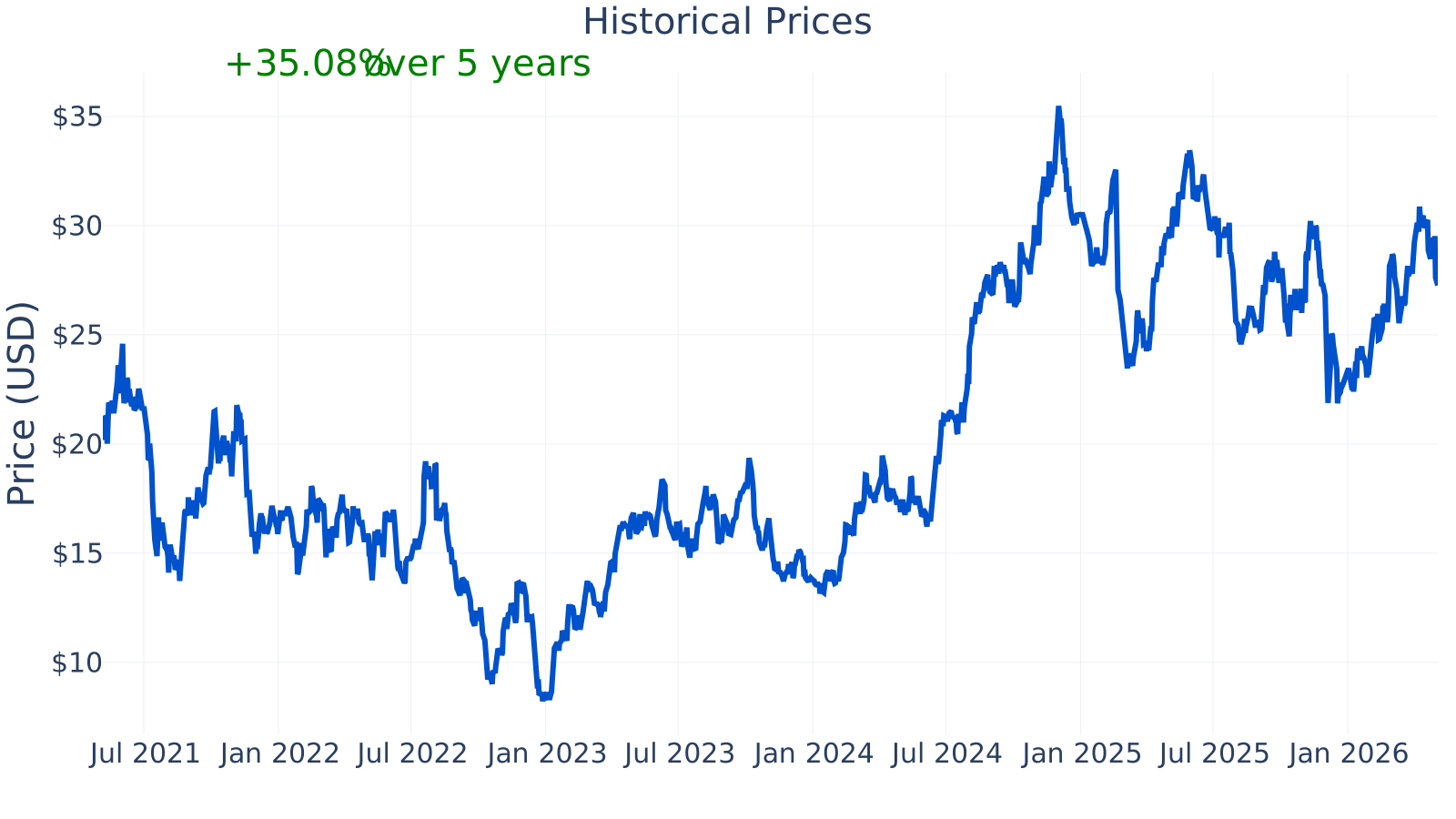
Overview
Cinemark Holdings, Inc. (CNK) is a movie-theater operator. In practical terms, it runs cinemas where customers pay to watch films on large screens, and it also sells food and beverages (the “concessions” business). The company’s performance is closely tied to movie attendance, the strength of the film release schedule, and how much guests spend per visit.
Cinemark’s revenue typically comes from a few main areas (as described in its SEC filings):
- Admissions (ticket sales)
- Concessions (food and beverage sales)
- Other theater-related revenue (items such as on-screen advertising, certain fees, and other in-theater programs)
Because Cinemark’s costs include both variable items (like film rental costs and concession products) and fixed items (like theater leases and staffing), changes in attendance can have an outsized effect on profitability from one period to the next.
Across the years shown, the most visible shift is that the company moved from sizeable losses (2021–2022) to positive net income (2023–2025). Interest expense remains a meaningful ongoing cost, which highlights why leverage and refinancing conditions matter for long-term results.
Key Figures
| Metric | Value | Industry ⓘ |
|---|---|---|
| Date | May 05, 2026 | |
| Context | ||
| Sector | Communication Services | |
| Industry | Entertainment | |
| Market Cap ⓘ | $3.18B | |
| Beta ⓘ | 1.09 | |
| Fundamental | ||
| P/E Ratio ⓘ | 26.47 | 51.79 |
| Profit Margin ⓘ | 5.31% | 3.44% |
| Revenue Growth ⓘ | 18.90% | 7.65% |
| Debt to Equity ⓘ | 519.94% | 69.42% |
| PEG ⓘ | 1.86 | |
| Free Cash Flow ⓘ | $260.30M | |
Cinemark’s market capitalization is about $3.18B, and its beta (~1.09) suggests the stock has tended to move somewhat more than the overall market. The company’s current P/E ratio (~26.47) is below the industry median shown (~51.79), while its profit margin (~5.31%) is above the industry median shown (~3.44%). Reported year-over-year revenue growth (~18.9%) is also above the industry median shown (~7.65%). A key standout is leverage: debt-to-equity (~520%) is far higher than the industry median shown (~69%), which can amplify both upside and downside depending on operating conditions and interest rates. Trailing twelve-month free cash flow is about $260.3M, indicating the business has recently generated cash after operating needs and capital spending.
Growth (Medium)
The movie exhibition industry is mature rather than structurally high-growth. Over long periods, demand tends to track consumer leisure spending, the appeal of theatrical releases, and the “theater window” (how long films remain exclusive to theaters before becoming available at home). That makes growth less about opening many new locations and more about driving higher revenue per guest and improving the efficiency of operations.
Cinemark’s strategy for growth typically emphasizes: premium formats and enhanced experiences, higher-margin concessions, loyalty/membership programs, and disciplined capital spending (all themes the company discusses in its filings). These approaches aim to raise per-visit spending and smooth demand through repeat visitation, rather than relying only on higher attendance.
The year-over-year revenue growth pattern has been uneven, with some negative quarters mixed in—consistent with a business influenced by the timing and strength of film releases. The most recent value shown is ~18.9% growth, which is a strong rebound versus the industry median shown in the table.
Free cash flow has improved meaningfully versus earlier periods shown, rising from ~$75M (2022) to around $260M most recently. For a theater operator, sustained positive free cash flow can be an important indicator because the business requires ongoing investment to maintain and upgrade locations, while also carrying meaningful fixed obligations.
Risks (High)
Cinemark faces several structural risks that are important for long-term shareholders to understand. Demand can fluctuate with the film slate, consumer spending, and competition for leisure time. The broader shift toward at-home streaming remains a persistent headwind, even if theatrical releases continue to play a major role for blockbuster titles. In addition, theaters have significant fixed costs (leases, labor, utilities), so weaker attendance can pressure earnings more quickly than in “asset-light” businesses.
A central company-specific risk is financial leverage. High debt levels can limit flexibility, increase exposure to interest rates, and make results more sensitive to downturns.
The company’s debt-to-equity ratio is ~520% in the latest period shown, far above the industry median of ~73%. While the ratio appears lower than some earlier peaks in the chart, it still indicates a capital structure that may remain more constrained than peers during periods of weaker box office trends or higher borrowing costs.
Profitability is another area to watch because it has historically swung from losses to profits as attendance recovered.
The margin trend shows a shift from deeply negative levels in 2021–2022 to positive profitability more recently. The latest profit margin is ~5.29%, modestly above the industry median shown (~4.43%). This improvement is notable, but the variability over time suggests profits may remain sensitive to the release calendar and cost pressures.
On competitive positioning, Cinemark is one of the largest movie-theater operators, but it is not the only scaled player. The competitive set includes other major exhibitors (notably AMC Entertainment and Regal/Cineworld’s U.S. operations under new ownership) as well as regional chains. Competition is not only about ticket price; it also includes location quality, premium screens, seating comfort, food and beverage offerings, and loyalty programs. Cinemark’s advantages tend to come from scale, established locations, and operational experience, but it does not operate a “winner-takes-all” model—local market dynamics can matter as much as national branding.
Valuation
Valuation for a theater operator is often discussed in the context of earnings normalization (because results can swing with attendance) and the balance sheet (because debt can materially change risk). A P/E ratio can be useful when earnings are positive and relatively stable, but it can be less informative during periods of recovery or unusual film slates.
The P/E ratio shown for recent periods sits in a range that is generally below the industry median displayed on the chart. The latest P/E is about 26.42 versus an industry median near 44.63. This gap can reflect differences in leverage, perceived stability, and expectations for future growth. In Cinemark’s case, the combination of improved profitability and cash generation may support earnings-based valuation measures, while the company’s above-industry leverage can weigh on how the market prices those earnings.
Conclusion
Cinemark is a scaled movie-theater operator whose results are driven by attendance, the film slate, and per-guest spending (tickets and concessions). The company has demonstrated a clear recovery from earlier losses to positive profitability, with recent margins above the industry median shown and trailing free cash flow that has improved compared with earlier periods.
At the same time, the long-term profile includes meaningful uncertainties: the industry’s mature nature, continued competition for consumer time and spending (including streaming), and—most importantly—a balance sheet that remains far more leveraged than the industry median shown. In valuation terms, the stock’s P/E ratio appears lower than the industry median displayed, which may be consistent with a market view that improved earnings are tempered by higher financial risk and cyclicality.
Sources:
- SEC EDGAR — Cinemark Holdings, Inc. Form 10-K (Annual Report)
- SEC EDGAR — Cinemark Holdings, Inc. Form 10-Q (Quarterly Reports)
- Cinemark Investor Relations — SEC Filings & Investor Materials (company-hosted)
- Wikipedia — “Cinemark Theatres” (basic company background)
This article is for informational purposes only and does not constitute financial advice. Some content is AI-generated. See Disclaimer


