Stock Analysis · Cinemark Holdings Inc (CNK)
Overview
Cinemark Holdings, Inc. (CNK) is a movie theater operator. It generates revenue by showing films in its theaters and selling higher-margin food and beverages to guests. The business is highly tied to movie attendance: when more people go to theaters, ticket sales rise and concession spending usually rises as well.
In its public filings, Cinemark typically describes its revenue in two main buckets: admissions (movie tickets) and concessions (food and beverage), with additional smaller revenue lines that can include screen advertising and other theater-related income. Percentages can change year to year depending on attendance, ticket pricing, and consumer spending in theaters.
Main sources of revenue (largest to smallest, as commonly presented in filings):
- Admissions (movie tickets)
- Concessions (food and beverage)
- Other revenues (often including on-screen advertising and miscellaneous theater revenue)
Business snapshot from recent years: the company moved from pandemic-era losses back to profitability as the box office recovered, but results can still vary with the movie release schedule and consumer demand.
The multi-year income picture shows a shift from losses (2021–2022) to positive net income (2023–2025). A recurring cost that remains meaningful across the period is interest expense, reflecting the importance of debt levels for the overall bottom line.
Key Figures
| Metric | Value | Industry ⓘ |
|---|---|---|
| Date | Feb 24, 2026 | |
| Context | ||
| Sector | Communication Services | |
| Industry | Entertainment | |
| Market Cap ⓘ | $3.04B | |
| Beta ⓘ | 1.12 | |
| Fundamental | ||
| P/E Ratio ⓘ | 23.55 | 53.25 |
| Profit Margin ⓘ | 4.44% | 4.43% |
| Revenue Growth ⓘ | -4.70% | 5.50% |
| Debt to Equity ⓘ | 933.56% | 83.94% |
| PEG ⓘ | 1.72 | |
| Free Cash Flow ⓘ | $177.20M | |
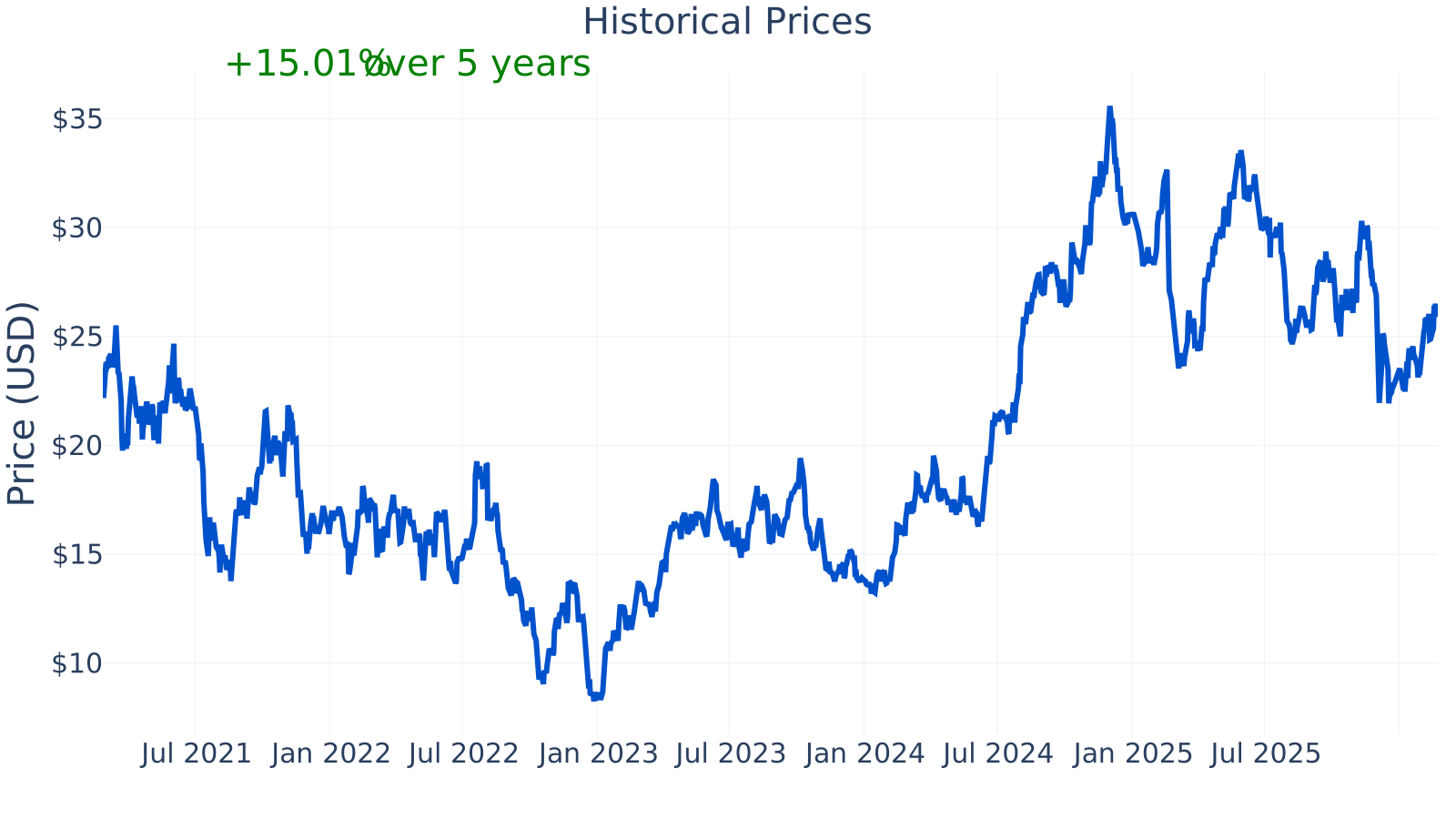
Cinemark’s market capitalization is about $3.0B and its beta of 1.12 suggests the stock has tended to be somewhat more volatile than the broader market. The latest P/E ratio is ~23.5 versus an industry median near 53.3, while the profit margin is ~4.44%, roughly in line with the industry median (~4.43%). Recent year-over-year revenue growth is -4.7%, compared with an industry median of about +5.5%. The latest debt-to-equity is ~933%, far above the industry median (~84%), highlighting a more leveraged balance sheet. Trailing twelve-month free cash flow is about $177M.
Growth (Medium)
The movie exhibition industry is mature, and long-term growth tends to be driven more by moviegoing demand, the quality and quantity of film releases, and theaters’ ability to improve per-guest spending than by rapid unit expansion. Streaming remains a structural alternative for at-home viewing, which can limit the industry’s growth rate over time. That said, theaters can still grow cash generation by increasing concession attachment rates, improving premium formats, optimizing costs, and strengthening loyalty and pricing strategies.
Recent revenue growth has been uneven, including periods of strong rebound followed by softer quarters. The latest year-over-year figure shown is -4.7%, which indicates that near-term momentum can move both directions depending on the film slate and attendance patterns.
Free cash flow has improved materially from deeply negative levels in 2021 (about -$506M trailing twelve months at that point) to positive levels in subsequent years, reaching roughly $267M in 2024 and about $177M most recently. For a theater operator, sustained positive free cash flow matters because it can support reinvestment in theaters and help manage debt over time.
Potential catalysts tend to be industry-driven rather than company-specific: a stronger and more consistent film release pipeline, a continued shift toward premium formats and higher concession spend per guest, and further normalization of attendance compared with the disruption period earlier in the decade.
Risks (High)
This article is for informational purposes only and does not constitute financial advice. Some content is AI-generated. See Disclaimer