Stock Analysis · Choice Hotels International Inc (CHH)
Overview
Choice Hotels International Inc. (CHH) is a hotel franchising company. Instead of owning most of the physical hotels, it primarily licenses its brands to independent hotel owners. In return, Choice provides brand standards, marketing, distribution (including its website and reservation systems), and a customer loyalty program. This “asset-light” approach generally means the company’s results depend more on hotel demand and franchisee health than on the day-to-day costs of operating buildings.
Choice operates a portfolio of brands that spans economy, midscale, and upscale segments (for example, Comfort, Quality Inn, Sleep Inn, Clarion, Cambria, and others). The company is known for a large North American presence and a business model focused on franchising and fees.
In its reporting, Choice generally groups revenue into categories tied to its franchise system and platform. The main sources typically include:
- Royalties and franchise fees (ongoing fees, often linked to hotel room revenue)
- Marketing and reservation-related fees (system and platform fees paid by franchisees)
- Other revenue (which can include items such as certain services provided to franchisees and other business lines disclosed in filings)
Exact percentages can vary by year and are detailed in the company’s annual report, but the largest component is commonly recurring franchise royalties and related fees, reflecting the franchising-heavy structure.
Across the years shown, total revenue increases overall from about $1.07B (2021) to about $1.60B (2025). Over the same period, net income also rises overall (about $289M to about $370M), while interest expense trends higher (about $47M to about $91M), which can matter when borrowing costs change.
Key Figures
| Metric | Value | Industry ⓘ |
|---|---|---|
| Date | Feb 23, 2026 | |
| Context | ||
| Sector | Consumer Cyclical | |
| Industry | Lodging | |
| Market Cap ⓘ | $5.10B | |
| Beta ⓘ | 0.77 | |
| Fundamental | ||
| P/E Ratio ⓘ | 13.59 | 30.60 |
| Profit Margin ⓘ | 37.73% | 14.61% |
| Revenue Growth ⓘ | 2.40% | 7.00% |
| Debt to Equity ⓘ | 1111.35% | 44.41% |
| PEG ⓘ | 1.62 | |
| Free Cash Flow ⓘ | $210.53M | |
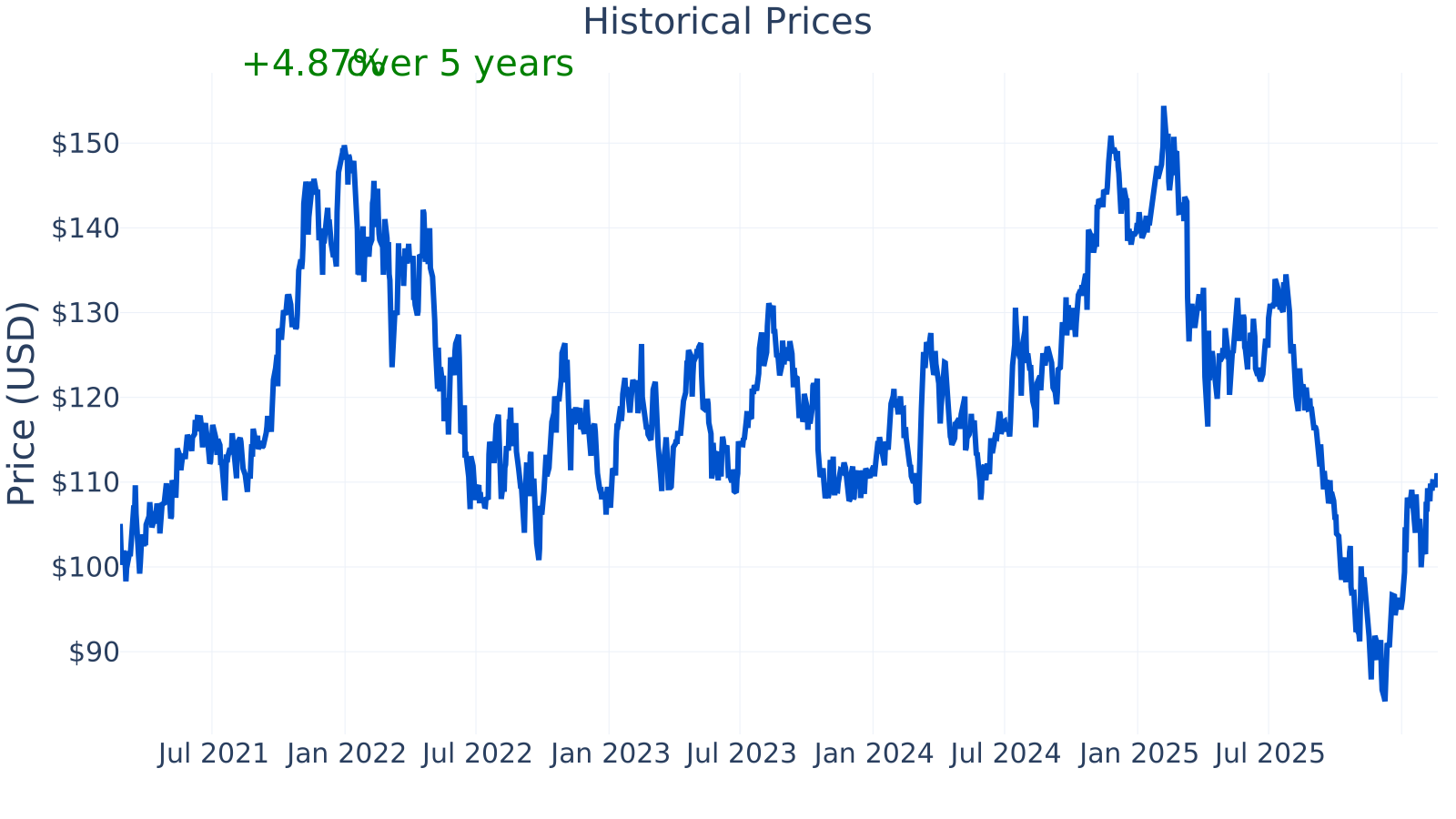
Choice’s market capitalization is about $5.1B, and its beta of 0.77 suggests the stock has historically moved less than the overall market on average. The P/E ratio is ~13.6, below the lodging industry median (~30.6). Profit margin is reported at about 37.7%, above the industry median (~14.6%), while year-over-year revenue growth is about 2.4%, below the industry median (~7.0%). The company shows a very high debt-to-equity (~1,111%) versus the industry median (~44%), and trailing twelve-month free cash flow is about $211M.
Growth (medium)
The lodging industry is tied to travel demand—both leisure and business—and is therefore cyclical. Over long periods, demand tends to expand with population, income growth, and travel trends, but results can fluctuate meaningfully during recessions or periods of reduced travel.
Choice’s strategy is often described as “asset-light,” with a focus on franchising and recurring fee revenue rather than owning large numbers of hotels. In simple terms: when franchisees’ hotels perform well, fee revenue can rise without Choice needing to build or buy many properties. This model can support scalability, but it also makes growth dependent on (1) adding new franchised rooms (unit growth) and (2) improving performance at existing franchised hotels (occupancy and room rates).
Potential catalysts, as described in company materials, often include new hotel openings under existing brands, brand expansion into additional segments, improvements in the distribution/loyalty platform that help franchisees drive demand, and acquisitions or integration activities when applicable. The strength of these factors tends to show up over time in system size, royalty fee streams, and cash generation.
Revenue growth surged in 2021–2022 (recovering from pandemic-era travel disruption) and then cooled substantially. More recently, quarterly year-over-year revenue growth has been low and sometimes slightly negative, ending near 0%–2% in the most recent points shown. This pattern suggests that the post-recovery “rebound” phase has largely passed, and ongoing growth may depend more on steady unit additions and operational gains than on a broad bounce-back.
Free cash flow over the trailing twelve months is positive throughout the period shown, but it declines from a higher level in 2022 (~$352M) to lower levels afterward (around $156M–$210M in the later points shown). Positive free cash flow can support reinvestment, debt service, and shareholder returns, but the downward trend is something long-term owners typically monitor because it can reflect higher costs, timing effects, or slower underlying momentum.
Risks (high)
This article is for informational purposes only and does not constitute financial advice. Some content is AI-generated. See Disclaimer