Stock Analysis · Chipotle Mexican Grill Inc (CMG)
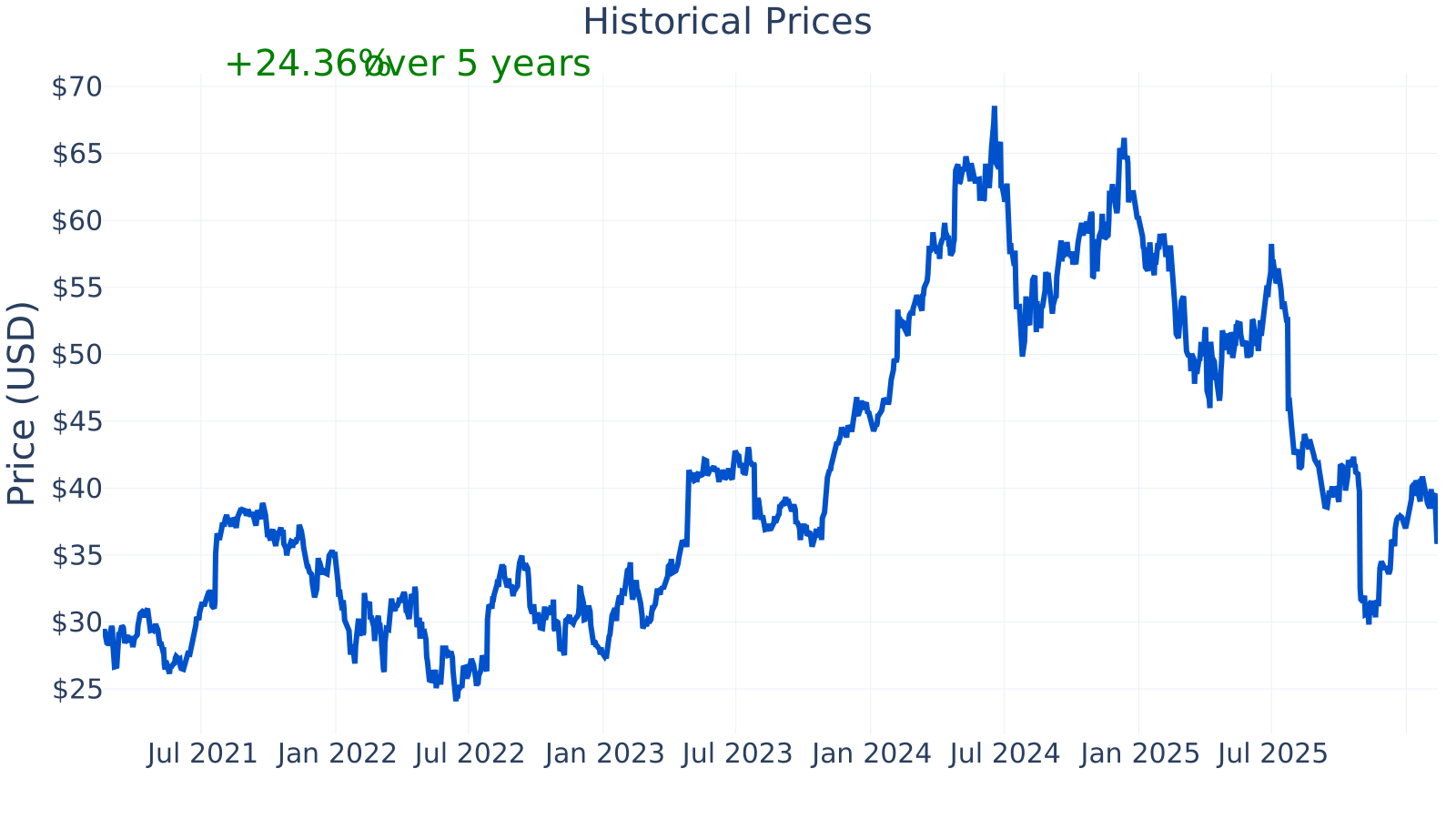
Overview
Chipotle Mexican Grill, Inc. operates fast-casual restaurants focused on made-to-order Mexican-inspired food, typically served in burritos, bowls, tacos, and salads. The company’s model emphasizes high restaurant throughput (serving many guests quickly), a simplified menu that supports operational consistency, and a brand position built around ingredient quality and food preparation standards.
Chipotle’s revenue is primarily generated from selling food and beverages through company-owned restaurants, with additional contribution from its digital channel (ordering via app/website for pickup or delivery). The business is largely U.S.-based, and it also earns smaller amounts from areas such as gift card breakage and other minor items reported in filings.
In practice, the revenue mix is heavily weighted to restaurant sales, with digital sales acting as a key ordering channel rather than a separate business line. Public filings commonly describe revenue primarily as “restaurant sales,” with smaller “other revenue,” rather than giving a detailed percentage split for categories like dine-in vs. digital.
Over the 2021–2025 period shown above, total revenue rises from about $7.5B (2021) to about $11.9B (2025). Net income also increases materially (about $653M in 2021 to about $1.54B in 2025), although year-to-year profitability can still move with food, wage, and occupancy costs.
Key Figures
| Metric | Value | Industry ⓘ |
|---|---|---|
| Date | Feb 16, 2026 | |
| Context | ||
| Sector | Consumer Cyclical | |
| Industry | Restaurants | |
| Market Cap ⓘ | $48.00B | |
| Beta ⓘ | 1.00 | |
| Fundamental | ||
| P/E Ratio ⓘ | 31.84 | 27.62 |
| Profit Margin ⓘ | 12.88% | 7.98% |
| Revenue Growth ⓘ | 4.90% | 7.40% |
| Debt to Equity ⓘ | 347.96% | 59.83% |
| PEG ⓘ | 1.91 | |
| Free Cash Flow ⓘ | $1.45B | |
Chipotle’s market capitalization is about $48.0B, and the stock’s beta is about 1.00, which indicates price movement that has been broadly in line with the overall market historically. The P/E ratio is about 31.8 versus an industry median around 27.6, implying the market is valuing Chipotle at a higher earnings multiple than the typical restaurant peer group.
Profitability (net profit margin) is about 12.9%, above the industry median near 8.0%, which suggests stronger conversion of sales into profit than many competitors. Recent year-over-year revenue growth is about 4.9%, below the industry median around 7.4% in the table, which may reflect a normalization from prior faster growth periods or differences in how peers are growing at the moment.
Debt-to-equity is listed around 348% (versus an industry median near 60%), which is a notable outlier and worth understanding in context (including how the company reports equity and lease-related obligations). Free cash flow over the trailing twelve months is about $1.45B, indicating meaningful cash generation after operating needs and capital spending.
Growth (Medium)
The restaurant industry is mature, but fast-casual concepts with strong brand recognition and efficient operations can still grow for long periods through new unit openings, higher same-store sales, and improved restaurant-level economics. Chipotle’s growth approach has historically combined new restaurant development with operational initiatives intended to increase capacity and convenience (including digital ordering and pickup formats).
The chart shows revenue growth that was very strong in 2021 (well above 20% at times), then generally moderated through 2022–2025, reaching mid-single-digit growth by late 2025 (about 4.9% in the latest period). For long-term business building, a key question is whether moderation is temporary (for example, due to comparisons versus unusually strong prior years) or more structural (for example, intensifying competition or consumer spending pressure).
Cash generation has trended upward over the period shown, from roughly $405M (TTM in early 2021) to roughly $1.49B (TTM in early 2025). Rising free cash flow can matter because it can fund new restaurant openings, technology investments, and other operational priorities without depending heavily on external financing.
Potential catalysts for future growth typically include the pace and success of new restaurant openings, sustained traffic and same-store sales performance, and continued improvement in restaurant efficiency (including labor scheduling, ingredient throughput, and digital order management). In addition, menu innovation and pricing power can influence sales, though both can carry trade-offs with customer perception and cost inflation.
Risks (Medium)
Chipotle operates in a highly competitive segment where consumers have many alternatives and can shift spending quickly based on price, convenience, and perceived value. The business is also exposed to cost swings in key inputs (food ingredients, packaging, and wages). Because restaurants have significant fixed costs (labor and occupancy), a downturn in traffic can pressure margins.
Food safety and brand reputation are especially important for restaurant operators, and incidents can lead to lost traffic, higher costs, and increased regulatory attention. Operational execution risk also matters: maintaining speed, accuracy, and customer experience across a growing store base is difficult, particularly during periods of labor constraint.
Competition comes from large quick-service brands and other fast-casual chains. This includes major U.S. players such as Taco Bell (Yum! Brands), Qdoba (private), Moe’s Southwest Grill (private), and broader fast-casual competitors (for example, chains focused on bowls, salads, or sandwiches). Relative positioning often comes down to brand strength, menu simplicity, ingredient perception, restaurant convenience, and price/value. Chipotle’s competitive advantages are generally associated with brand recognition, scale purchasing, a focused operating model, and strong digital ordering adoption; however, these advantages do not eliminate competitive pressure.
The debt-to-equity series is consistently above the industry median and rises sharply in the latest point shown (to roughly 348%). In restaurants, this metric can be influenced by accounting factors (including how equity and lease obligations are reflected), but the magnitude still flags that capital structure and balance-sheet presentation deserve careful reading in the company’s filings.
Net profit margin improves from roughly 6% in 2021 to around 13% in 2024–2025 and remains well above the industry median through most of the period shown. This suggests the company has recently operated with stronger profitability than many peers, but margins can be cyclical and sensitive to food and wage inflation, promotional intensity, and traffic trends.
Valuation
Chipotle’s valuation can be framed simply as how much the market is paying for each dollar of earnings, compared with peers and compared with the company’s own history. The latest P/E ratio in the table is about 31.8, above the restaurant industry median around 27.6, which indicates a premium relative to the typical peer group at the same point in time.
Historically, the chart shows Chipotle traded at much higher earnings multiples earlier in the period (often well above the industry median), and the multiple has generally come down over time toward the high-20s by late 2025. This can happen when earnings grow faster than the stock price, when market expectations normalize, or both.
Whether the current price level is “expensive” depends on how durable the company’s higher profit margin proves to be and whether growth re-accelerates through unit expansion and same-store sales over time. The PEG ratio (about 1.9) is one way markets summarize “valuation versus growth expectations,” and a higher figure typically implies investors are paying more per unit of expected growth, although PEG is sensitive to how growth is estimated and can change quickly.
Conclusion
Chipotle is a scaled fast-casual restaurant operator with most revenue coming from company-owned restaurant sales and a business model that has recently produced profit margins above the industry median. Over the 2021–2025 period shown, revenue and net income increased substantially, and free cash flow also rose, which points to improving cash generation capacity.
At the same time, recent year-over-year revenue growth has moderated into the mid-single digits, and the company’s debt-to-equity figure stands out as unusually high versus the industry median, making the balance-sheet presentation and underlying obligations an important area to review in filings. Competitive intensity, food and labor costs, and operational execution remain central ongoing risks.
On valuation, Chipotle appears priced at a higher earnings multiple than the restaurant industry median, while also trading at a much lower multiple than earlier years in the period shown. The long-term outcome is likely to depend on whether the company can sustain above-peer profitability while maintaining steady growth through new restaurants, strong operations, and customer demand.
Sources:
- SEC EDGAR — Chipotle Mexican Grill, Inc. Form 10-K (Annual Report)
- SEC EDGAR — Chipotle Mexican Grill, Inc. Form 10-Q (Quarterly Reports)
- Chipotle Mexican Grill, Inc. — Investor Relations materials (press releases and shareholder communications)
- Wikipedia — “Chipotle Mexican Grill” (company overview and history)
This article is for informational purposes only and does not constitute financial advice. Some content is AI-generated. See Disclaimer


