Stock Analysis · Chewy Inc (CHWY)
Overview
Chewy, Inc. is an online retailer focused on pet products and pet health. The company sells pet food, treats, supplies, and other items primarily through its e-commerce platform, and it also offers pet pharmacy services. A major part of Chewy’s model is repeat purchasing: many customers reorder essential items (like food and litter) on a recurring schedule, supported by subscription-style programs and a broad product catalog.
Chewy’s revenue is primarily generated from product sales to pet owners through its digital storefront. In its SEC filings, Chewy generally describes revenue as coming from the sale of pet products and services, without routinely breaking out revenue by category as fixed percentages in the primary financial statements. Based on how the business is described in filings, revenue is commonly discussed in these broad sources (largest to smaller, without fixed percentages):
- Consumables (recurring essentials such as pet food and treats)
- Hardgoods (supplies and durable items like crates, toys, and accessories)
- Health-related offerings (including pharmacy and other pet health services discussed by the company)
From a business-model perspective, Chewy’s economics depend on (1) keeping customers engaged for repeat purchases, (2) shipping and fulfillment efficiency for bulky, low-margin items, and (3) expanding higher-value services over time.
Over the periods shown, total revenue increased materially, while operating income moved from negative to positive. This suggests that scale and cost discipline have improved profitability, even though operating costs (especially selling, general, and administrative expenses) remain a large portion of the cost structure for an e-commerce business.
Key Figures
| Metric | Value | Industry ⓘ |
|---|---|---|
| Date | Apr 07, 2026 | |
| Context | ||
| Sector | Consumer Cyclical | |
| Industry | Internet Retail | |
| Market Cap ⓘ | $11.06B | |
| Beta ⓘ | 1.61 | |
| Fundamental | ||
| P/E Ratio ⓘ | 51.04 | 29.26 |
| Profit Margin ⓘ | 1.77% | 6.54% |
| Revenue Growth ⓘ | 0.50% | 12.15% |
| Debt to Equity ⓘ | 111.83% | 25.93% |
| PEG ⓘ | 0.93 | |
| Free Cash Flow ⓘ | $562.40M | |
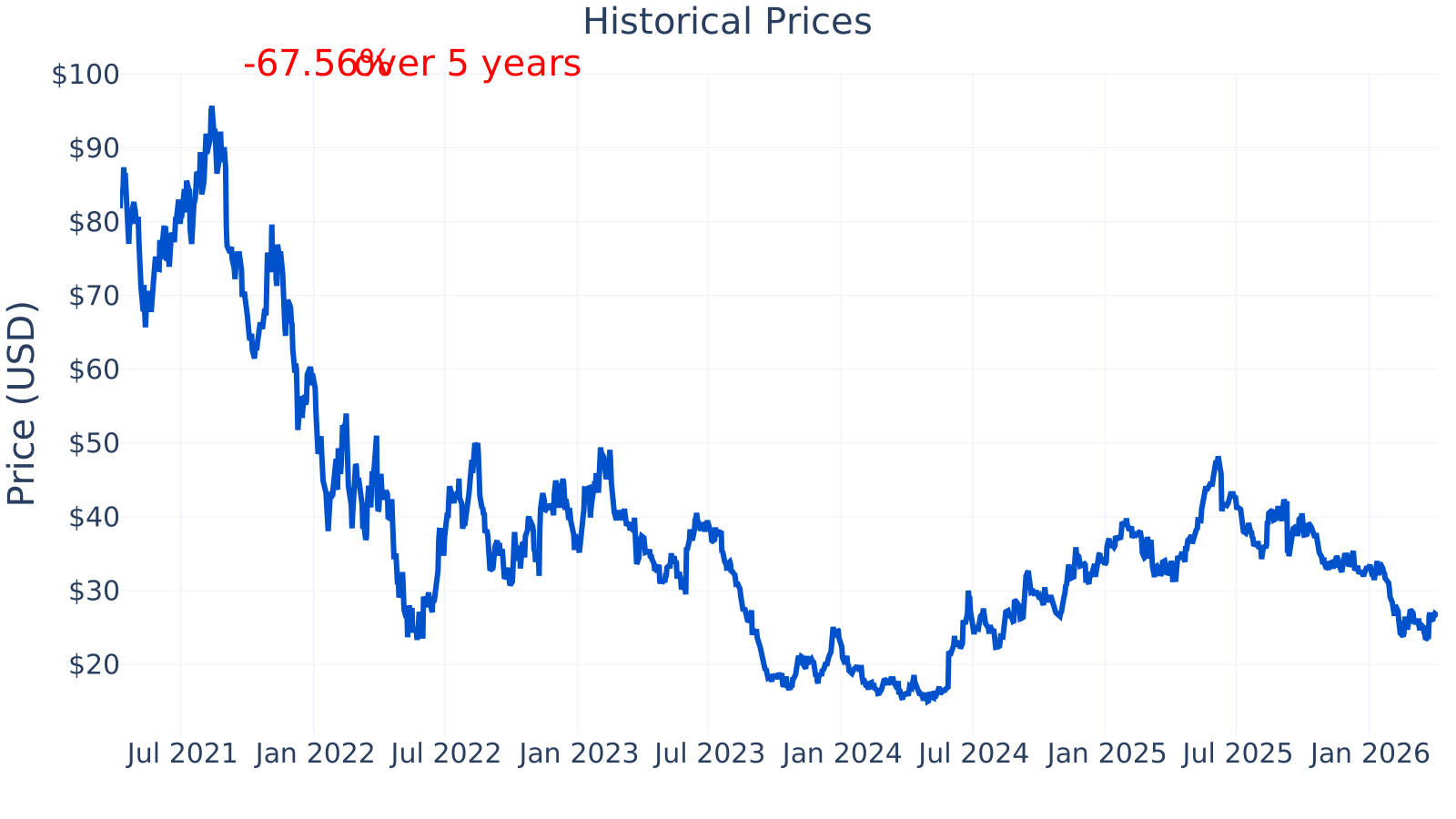
Chewy’s market capitalization is about $11.1B. The stock’s beta (1.61) indicates it has historically moved more than the broader market, which can mean larger price swings in both directions.
On profitability and growth, the latest profit margin is about 1.77% versus an industry median around 6.54%, while year-over-year revenue growth is about 0.53% versus an industry median around 12.15%. Leverage looks higher than the industry median: debt-to-equity is about 111.8% compared with an industry median around 25.9%. At the same time, trailing twelve-month free cash flow is about $562.4M, indicating the business has recently generated meaningful cash after operating needs and capital spending.
Growth (Medium)
The pet industry is often considered relatively resilient because many pet expenses are recurring and prioritized in household budgets. For an online-focused retailer like Chewy, long-term growth typically depends on maintaining customer loyalty in recurring categories (especially consumables) while improving profitability through better fulfillment efficiency and mix-shift into higher-margin offerings.
The pattern shown indicates Chewy’s revenue growth was much higher earlier in the period and then slowed significantly in the most recent point (about 0.53% year over year). That deceleration matters for a business that must continually invest in marketing, customer service, and logistics. For long-term outcomes, the key question becomes whether growth can re-accelerate through customer retention, increased spend per customer, and expansion of health-related services, rather than relying only on adding new customers.
Free cash flow increased from a low base to roughly $562M in the most recent trailing twelve months shown. Sustained positive free cash flow can provide flexibility to reinvest in operations, strengthen the balance sheet, or fund new initiatives—though the durability of that cash generation depends on maintaining margins in a competitive environment.
Risks (High)
Chewy operates in a competitive retail landscape where pricing and delivery expectations are set by large, well-funded competitors. A major ongoing risk is margin pressure: pet consumables can be heavy to ship and often face intense price competition, which can limit profitability. Changes in shipping rates, carrier relationships, fulfillment costs, and promotional intensity can have an outsized impact on earnings.
The latest debt-to-equity level is about 111.8%, above the industry median (about 37.2% at the most recent point shown). While the chart suggests leverage has come down dramatically from earlier extremes, it remains elevated relative to peers. Higher leverage can reduce flexibility during periods of slower growth or weaker margins, particularly if operating conditions deteriorate.
Profitability improved from negative levels earlier in the timeline to positive levels more recently, but the latest profit margin (about 1.77%) is still below the industry median (about 6.26%). This gap highlights that even with operational improvements, the business may still be more sensitive to cost inflation, promotional activity, and shifts in customer demand than more profitable peers.
In terms of competitive position, Chewy is a well-known online-first brand in pet retail, but it competes with multiple strong alternatives. The most prominent competitive pressures typically come from:
- Large e-commerce marketplaces with broad selection, fast shipping, and aggressive pricing
- Big-box and specialty pet retailers that combine physical stores with online ordering and pickup
- Direct-to-consumer brands (especially in food and specialty health categories)
Chewy’s differentiation is often associated with its pet-focused assortment and service experience, and its ability to drive repeat orders. Whether these advantages translate into durable above-average economics depends on execution and the competitive response.
Valuation
Chewy’s latest P/E ratio is about 51.0, which is above the industry median around 29.3. Over the history shown, Chewy’s P/E has also been volatile, sometimes rising far above the industry median and at other times moving closer to it. A higher P/E typically implies the market is assigning a larger value to each dollar of earnings, which can be consistent with expectations of improving profitability and/or renewed growth—but it can also leave less room for error if growth slows or margins compress.
Given the combination of slowing recent revenue growth, profit margins below the industry median, and higher leverage than peers, a valuation premium would generally require confidence in continued margin improvement and sustained cash generation. The rising free cash flow trend is a constructive fundamental signal, but the overall valuation context remains closely tied to whether profitability improvements can persist while growth normalizes.
Conclusion
Chewy is a pet-focused online retailer with a business model centered on repeat purchases and operational scale. Financially, the company shows meaningful progress on cash generation and improved profitability compared with earlier periods, alongside a clear slowdown in recent year-over-year revenue growth.
For long-term, fundamentals-oriented analysis, the central points to weigh are the durability of free cash flow, the company’s ability to expand margins in a competitive market with significant shipping and fulfillment complexity, and the balance-sheet profile relative to peers. With the stock trading at a P/E ratio above the industry median, the valuation appears more dependent on continued execution than on near-term rapid revenue expansion.
Sources:
- SEC EDGAR — Chewy, Inc. Form 10-K (Annual Report)
- SEC EDGAR — Chewy, Inc. Form 10-Q (Quarterly Report)
- Chewy Investor Relations — SEC Filings (company-hosted filing access)
- Wikipedia — “Chewy (company)”
This article is for informational purposes only and does not constitute financial advice. Some content is AI-generated. See Disclaimer


