Stock Analysis · The Cheesecake Factory (CAKE)
Overview
The Cheesecake Factory Incorporated (CAKE) operates full-service restaurants, with its flagship brand known for a large menu and on-premise dining experience. The company also runs other restaurant concepts and sells branded cheesecakes and other baked goods through consumer packaged goods and foodservice channels. In practice, the business is built around three pillars: operating restaurants, growing off-premise sales (pickup/delivery), and leveraging the brand through licensing and retail distribution.
Based on the company’s segment reporting in its filings, revenue is primarily generated from:
- The Cheesecake Factory restaurants (the largest share of total revenue)
- Other restaurant brands (a smaller but meaningful contribution)
- Bakery and external sales (cheesecakes and other products sold outside the restaurants)
At a high level, this mix means results are still dominated by restaurant traffic and guest spending, while the bakery/brand extension activities provide some diversification compared with a pure restaurant operator.
One notable recent pattern is that total revenue increased from about $2.93B (2021) to $3.58B (2024), while profitability also improved (net income rose from about $72M to about $157M). This points to a period of revenue recovery/expansion alongside better operating performance, although restaurant cost pressures remain a central factor for the model.
Key Figures
| Metric | Value | Industry ⓘ |
|---|---|---|
| Date | Feb 08, 2026 | |
| Context | ||
| Sector | Consumer Cyclical | |
| Industry | Restaurants | |
| Market Cap ⓘ | $3.15B | |
| Beta ⓘ | 0.98 | |
| Fundamental | ||
| P/E Ratio ⓘ | 19.22 | 29.16 |
| Profit Margin ⓘ | 4.33% | 7.98% |
| Revenue Growth ⓘ | 4.80% | 6.90% |
| Debt to Equity ⓘ | 502.90% | 69.29% |
| PEG ⓘ | 1.31 | |
| Free Cash Flow ⓘ | $158.89M | |
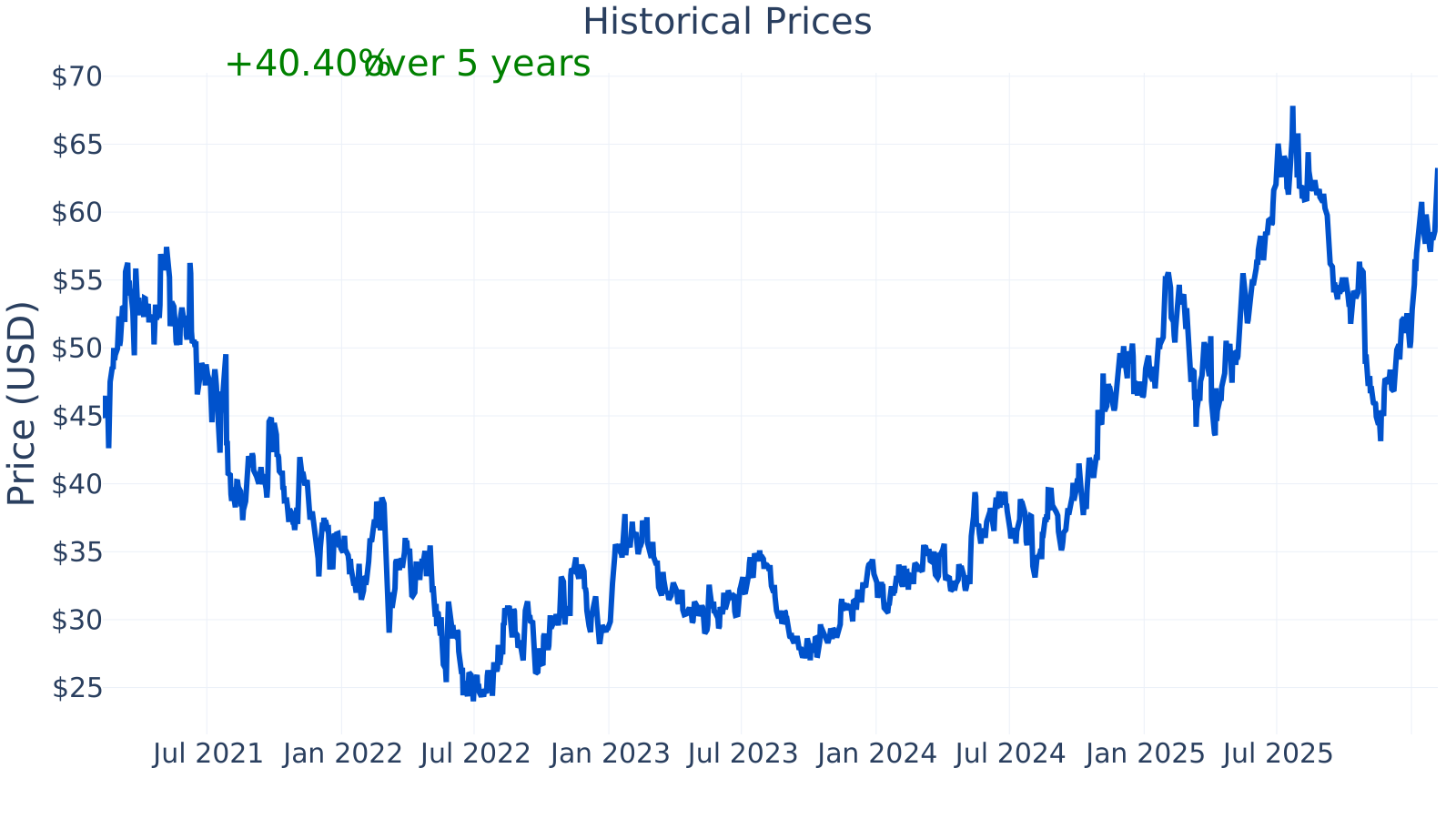
The company’s equity value is about $3.15B, placing it in the mid-cap range. The stock’s beta of ~0.98 suggests its price has historically moved broadly in line with the overall market rather than behaving like a highly defensive or highly volatile name.
On valuation and profitability, the latest P/E ratio is ~19.2, below the restaurant industry median of ~29.2 in the provided peer set. Profitability is positive but comparatively thinner: the latest profit margin is ~4.33% versus an industry median of ~7.98%. Recent year-over-year revenue growth is ~4.8%, somewhat below the industry median of ~6.9%.
A key balance-sheet feature is leverage: debt-to-equity is ~503% compared with an industry median of ~69%. Free cash flow over the last twelve months is about $158.9M, which matters because cash generation is what ultimately supports debt service, reinvestment in restaurants, and potential shareholder returns.
Growth (Medium)
The company operates in the U.S. restaurant industry, which tends to grow over time with population, income, and dining-out habits, but it is also highly competitive and sensitive to consumer confidence. For a mature full-service brand, long-term expansion typically comes from a mix of new unit openings, same-restaurant sales improvement (traffic and pricing), and off-premise/digital initiatives.
Recent year-over-year revenue growth has been positive in the mid-single digits (about 4.8% most recently), after the unusually large swings seen during the post-pandemic recovery period. For long-term readers, this chart is useful because it shows whether growth is driven by a one-time rebound or by steadier, repeatable momentum.
Cash generation has been meaningfully positive in recent periods, with trailing twelve-month free cash flow rising to about $158.9M (up from roughly $67.7M in the 2024 period shown and about $113.8M in early 2025). In restaurant businesses, sustained free cash flow can indicate improving unit economics, disciplined capital spending, or both—though it can also fluctuate with remodel timing and working-capital swings.
Potential catalysts in this type of business model typically include improved restaurant-level profitability (through labor scheduling, menu engineering, and easing input costs), continued off-premise sales that do not cannibalize dine-in traffic, and brand/format expansion via other concepts and bakery distribution. The magnitude and durability of these drivers tends to be incremental rather than “hyper-growth,” which is why the overall growth profile is best viewed as moderate.
Risks (High)
This article is for informational purposes only and does not constitute financial advice. Some content is AI-generated. See Disclaimer