Stock Analysis · CAVA Group Inc (CAVA)
Overview
CAVA Group Inc is a U.S. restaurant company focused on Mediterranean-inspired food, primarily serving guests through its CAVA branded restaurants. The company also operates a smaller legacy restaurant concept (Zoës Kitchen, which has been largely transitioned over time) and sells certain consumer packaged goods (CPG) items such as dips and spreads through retail channels. Its positioning emphasizes customizable bowls and pitas, fresh ingredients, and an operating model designed for both in-restaurant and digital/off-premise orders.
In its filings, CAVA describes revenue as coming mainly from operating company-owned restaurants, along with smaller contributions from other channels. Based on how the business is typically reported, the main sources of revenue are:
- Company-owned restaurant sales (the largest source)
- Other revenue, which can include items such as CPG/licensing and similar streams (smaller contribution)
Percentages can vary by year and reporting line items; the annual report and quarterly filings provide the most reliable breakdown when available.
From 2021 to 2024, total revenue increased materially (about $500.1M in 2021 to about $963.7M in 2024). Over the same period, operating income moved from losses (2021–2022) to positive results (2023–2024), and net income also turned positive. The pattern suggests a business that has been scaling up while improving profitability, although year-to-year results can be influenced by one-time items and accounting effects.
Key Figures
| Metric | Value | Industry ⓘ |
|---|---|---|
| Date | Feb 07, 2026 | |
| Context | ||
| Sector | Consumer Cyclical | |
| Industry | Restaurants | |
| Market Cap ⓘ | $8.11B | |
| Beta ⓘ | 2.43 | |
| Fundamental | ||
| P/E Ratio ⓘ | 60.31 | 29.16 |
| Profit Margin ⓘ | 12.14% | 7.98% |
| Revenue Growth ⓘ | 19.90% | 6.90% |
| Debt to Equity ⓘ | 57.65% | 69.29% |
| PEG ⓘ | N/A | |
| Free Cash Flow ⓘ | $25.38M | |
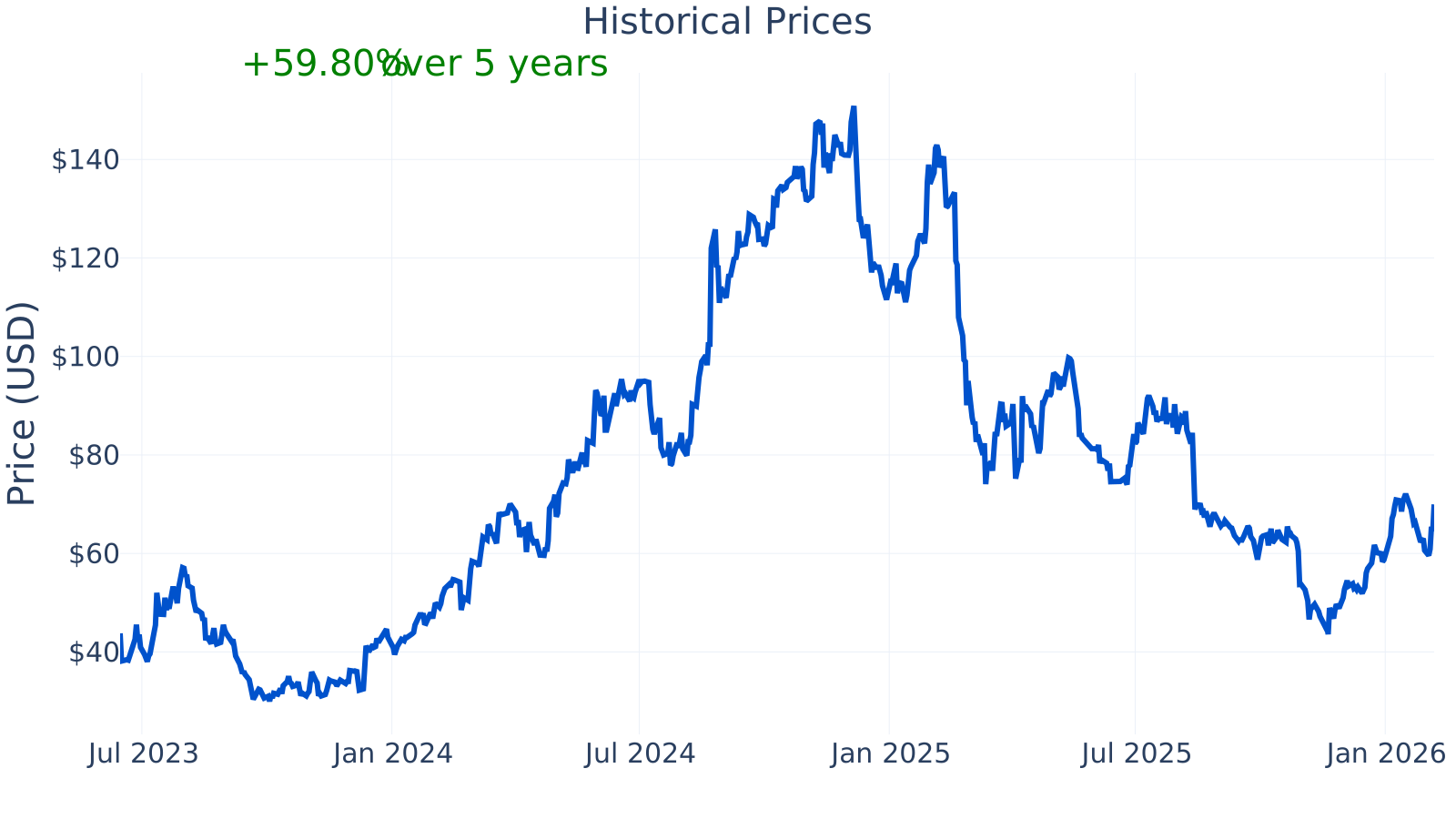
CAVA’s latest market capitalization is about $8.1B. The stock’s beta of ~2.43 indicates it has tended to move much more than the broader market, which can matter for long-term holders who prefer steadier price behavior. Profitability and growth metrics stand out versus the restaurant peer group median in this dataset: profit margin ~12.1% versus an industry median near 8.0%, and year-over-year revenue growth ~19.9% versus an industry median near 6.9%. Leverage appears somewhat lower than the industry median, with debt-to-equity ~57.7% versus a median near 69.3%. The P/E ratio ~60.3 is notably above the industry median near 29.2, meaning the market price embeds higher expectations for future performance.
Growth (Medium)
CAVA operates in the U.S. restaurant industry, which is large but competitive. Within it, “fast-casual” concepts that combine speed with perceived quality and customization have been an important category, and Mediterranean flavors have been a differentiated menu theme versus more saturated segments. CAVA’s long-term growth logic in filings is typically built around opening new restaurants, increasing sales at existing restaurants, expanding digital/off-premise throughput, and building brand awareness.
The year-over-year revenue growth trend shown remains positive, though it moderates from very high levels (roughly the high-20% to high-30% range in 2024) toward about ~20% in more recent periods displayed. This type of deceleration can be normal as a company grows larger, but it also raises the importance of execution: keeping new restaurant openings productive and maintaining strong performance at existing locations.
Trailing free cash flow shifts from negative (about -$38.9M at 2023 year-end and -$20.7M in early 2024) to positive (about +$50.9M by early 2025), which may indicate improving unit economics and/or operating leverage, though restaurant expansion can create volatility because new store openings often require substantial upfront investment.
Potential catalysts that can influence longer-term outcomes (positively or negatively) include the pace and returns of new restaurant openings, changes in guest traffic and spending, the ability to protect restaurant-level margins as food and labor costs move, and the consistency of brand execution as the footprint expands.
Risks (High)
This article is for informational purposes only and does not constitute financial advice. Some content is AI-generated. See Disclaimer


