Stock Analysis · Caseys General Stores Inc (CASY)
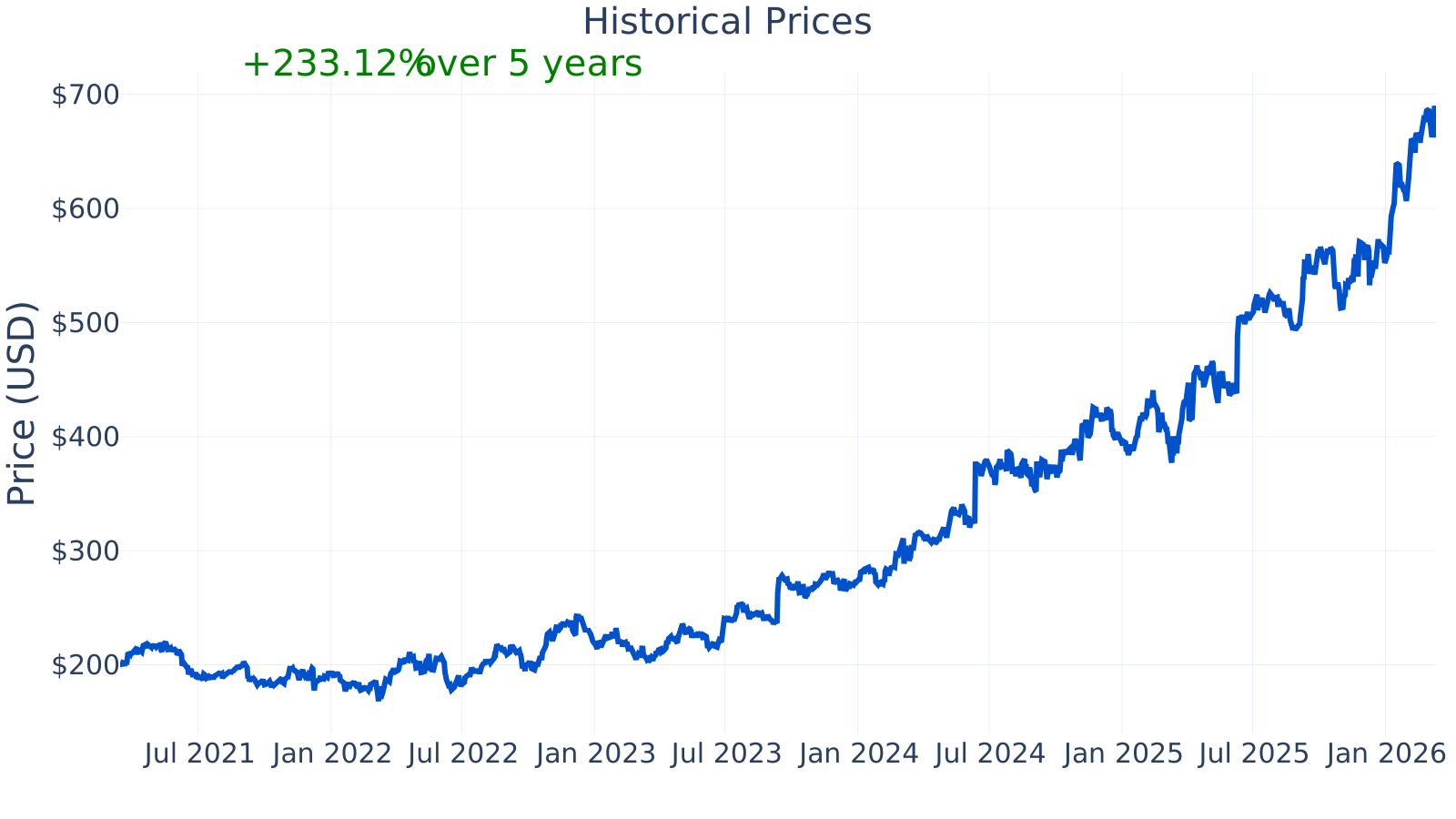
Overview
Casey’s General Stores, Inc. operates a large network of convenience stores in the United States, with a footprint that is concentrated in the Midwest and other smaller communities. Its stores typically combine three everyday needs in one stop: fuel, prepared food (including its well-known pizza program), and inside-the-store convenience merchandise such as beverages, snacks, and tobacco products. This “one-stop” model is designed for repeat visits and steady traffic, which can help make results less dependent on a single product category.
From a business-model perspective, Casey’s tends to generate a large portion of its sales dollars from fuel, while inside sales (especially prepared food) are often important for profitability because margins can be higher than on fuel. In its SEC filings, Casey’s breaks revenue into broad categories that commonly include fuel, grocery & general merchandise, and prepared food & fountain.
Main revenue streams (typical categories disclosed in filings):
- Fuel (gasoline and diesel sold at the pump)
- Grocery & general merchandise (snacks, beverages, tobacco, packaged items, and other in-store products)
- Prepared food & fountain (pizza and other hot foods, plus fountain drinks)
Over the most recent multi-year period shown, total revenue increased overall (with a dip in one year), while operating income and net income rose to higher levels by the latest year. Interest expense also increased notably in the latest period shown, which can matter when evaluating how much of operating profit ultimately remains for shareholders.
Key Figures
| Metric | Value | Industry ⓘ |
|---|---|---|
| Date | Mar 13, 2026 | |
| Context | ||
| Sector | Consumer Cyclical | |
| Industry | Specialty Retail | |
| Market Cap ⓘ | $24.98B | |
| Beta ⓘ | 0.65 | |
| Fundamental | ||
| P/E Ratio ⓘ | 41.52 | 22.01 |
| Profit Margin ⓘ | 3.83% | 6.27% |
| Revenue Growth ⓘ | 0.30% | 4.60% |
| Debt to Equity ⓘ | 76.59% | 103.28% |
| PEG ⓘ | 2.05 | |
| Free Cash Flow ⓘ | $667.33M | |
Casey’s is a large public company with a market capitalization of about $25.0B. Its reported beta of ~0.65 suggests the share price has historically moved less than the broader market on average (though any single stock can still be volatile).
On valuation and profitability measures shown in the table, the company’s P/E ratio is ~41.5, above the industry median of ~22.0, while profit margin is ~3.83% versus an industry median of ~6.27%. Revenue growth year-over-year in the table is about 0.3%, below the industry median of ~4.6%. Financial leverage (debt relative to equity) is about 76.6%, which is lower than the industry median (~103.3%). The trailing twelve-month free cash flow is about $667M, indicating meaningful cash generation after operating needs and capital spending.
Growth (Medium)
Convenience retail is generally tied to everyday consumption and travel, which can be steady over time, but it is not always a fast-growing industry. For a company like Casey’s, long-term growth typically comes from a mix of: (1) adding stores, (2) increasing sales at existing locations, and (3) improving product mix—especially expanding higher-margin prepared food and inside-the-store purchases.
The year-over-year revenue growth shown is volatile across the period, including very high growth in earlier years and periods of flat or negative growth later on, with the most recent point close to flat (~0.3%). This pattern can happen when fuel prices swing: because fuel is a large sales category, changes in pump prices can move reported revenue up or down even if gallons sold and customer traffic are steadier.
Free cash flow increased overall from earlier periods to the latest value of about $667M. For long-term business development, consistently positive and rising free cash flow can support store upgrades, new store builds, and balance-sheet flexibility, but it can still fluctuate based on fuel margins, operating costs, and capital spending cycles.
Risks (Medium)
A central risk for Casey’s is that fuel is typically a high-volume but lower-margin category, and fuel profitability can change quickly due to wholesale costs, retail pricing competition, and timing differences in inventory costs. Because fuel is such a large part of sales dollars, reported revenue can be noisy, and short-term results can be sensitive to changes in fuel margins even if the underlying customer count is stable.
Another key risk is operating-cost pressure. Convenience stores depend on labor availability and wage rates, and prepared food programs require staffing and execution. Inflation in wages, utilities, and food ingredients can weigh on profitability unless the company offsets it with pricing, productivity improvements, or a stronger mix of higher-margin items.
The debt-to-equity ratio has moved over time and is currently around 76.6%, below the industry median in the table. That said, the series shows a noticeable rise from the lows reached in 2024 before trending down somewhat more recently. Higher leverage can reduce flexibility during weaker economic periods, and rising interest costs can matter when debt is refinanced or when variable-rate exposure exists.
Profit margin has improved gradually over the period shown, reaching about 3.83% most recently. Even with that improvement, the company’s margin remains below the industry median in the table, which highlights that Casey’s operates in a relatively thin-margin retail environment where small changes in costs or pricing can have outsized effects on profits.
Competitive positioning is also an important consideration. Casey’s competes with other convenience-store and fuel retailers (including large national and regional chains) as well as local independent operators. In many markets, competition is based on location convenience, pricing (especially on fuel), store cleanliness, and the strength of inside offerings. Casey’s differentiated prepared-food program can be a competitive advantage where it drives frequent visits and stronger inside margins, but competitors can respond with their own food initiatives and promotions.
Valuation
The valuation multiples shown indicate that Casey’s has traded at P/E levels that have generally risen over the period displayed, and the latest P/E in the table is about 41.5. The industry median P/E shown is lower (about 22.0), meaning the market is valuing Casey’s earnings at a higher multiple than many peers in the same industry classification.
When a company trades at a higher P/E than its industry median, it often reflects expectations for stronger or more reliable future earnings, a perceived competitive edge, or a business mix that investors view as higher quality. At the same time, a higher multiple can also imply that future performance needs to remain solid to justify the valuation, especially since the table also shows lower profit margin than the industry median and recent revenue growth that is near flat. In practical terms, that combination places more importance on continued margin improvement, steady inside-sales execution, and disciplined expansion to support earnings growth over time.
Conclusion
Casey’s operates a scaled convenience-store model combining fuel, in-store merchandise, and prepared food, with a footprint that can support repeat purchasing behavior. The company has shown meaningful absolute growth in revenue and profits over the multi-year view, and free cash flow has increased to a sizable level in the latest period shown.
At the same time, the financial profile reflects typical convenience-retail realities: thin net margins, sensitivity to fuel-margin cycles, and exposure to operating-cost inflation. Leverage is below the industry median in the table, but interest expense has risen in the latest period shown, which makes financing costs worth monitoring.
The valuation indicators presented show Casey’s trading at a higher earnings multiple than the industry median, which suggests the market is pricing in continued execution and resilience. How that valuation holds up over the long term depends on fundamentals such as sustained free cash flow, stable fuel economics, and the company’s ability to grow higher-margin inside categories while managing costs.
Sources:
- SEC EDGAR — “Casey’s General Stores, Inc. Form 10-K”
- SEC EDGAR — “Casey’s General Stores, Inc. Form 10-Q”
- Casey’s Investor Relations — “SEC Filings”
- Wikipedia — “Casey’s General Stores”
This article is for informational purposes only and does not constitute financial advice. Some content is AI-generated. See Disclaimer


