Stock Analysis · Caseys General Stores Inc (CASY)
Overview
Casey’s General Stores, Inc. (CASY) is a U.S. convenience store and fuel retailer, known for operating small-format stores that combine a gas station with a convenience store and prepared food. The company’s footprint is largely in the Midwest and other parts of the United States, where many locations serve communities with limited nearby retail options.
Its business is built around frequent, everyday purchases (fuel, snacks, drinks) plus higher-margin prepared food and beverages. In its SEC filings, Casey’s typically discusses results through three operating buckets: Fuel, Grocery & General Merchandise (in-store items), and Prepared Food & Fountain (made-to-order and ready-to-eat items). In simple terms, fuel tends to represent a large share of sales dollars, while inside-store categories tend to contribute a larger share of profit because margins are usually higher than fuel.
Main sources of revenue (from largest to lowest, based on the company’s segment reporting structure in filings):
- Fuel (gasoline and diesel sales)
- Grocery & General Merchandise (tobacco and nicotine products, packaged beverages, snacks, and other convenience items)
- Prepared Food & Fountain (pizza and other prepared foods, bakery, hot/cold beverages, and fountain drinks)
Over the last several fiscal years, the company’s total revenue and operating profit have generally trended upward, while the cost of goods sold remains the largest cost line (typical for fuel-heavy retailers). Net income has also increased over time, although interest expense has risen as well, which matters when borrowing costs are higher.
From fiscal 2021 to fiscal 2025 (as shown in the flow of revenue to profit), total revenue increased from about $8.7B to about $15.9B. Over the same span, operating income increased from about $454M to about $796M, and net income rose from about $313M to about $547M. Interest expense also increased (from about $47M to about $97M), which is a reminder that financing decisions and interest rates can influence bottom-line results.
Key Figures
| Metric | Value | Industry ⓘ |
|---|---|---|
| Date | Feb 07, 2026 | |
| Context | ||
| Sector | Consumer Cyclical | |
| Industry | Specialty Retail | |
| Market Cap ⓘ | $24.50B | |
| Beta ⓘ | 0.68 | |
| Fundamental | ||
| P/E Ratio ⓘ | 40.65 | 23.78 |
| Profit Margin ⓘ | 3.58% | 6.27% |
| Revenue Growth ⓘ | 14.20% | 5.20% |
| Debt to Equity ⓘ | 76.59% | 103.28% |
| PEG ⓘ | 2.42 | |
| Free Cash Flow ⓘ | $682.18M | |
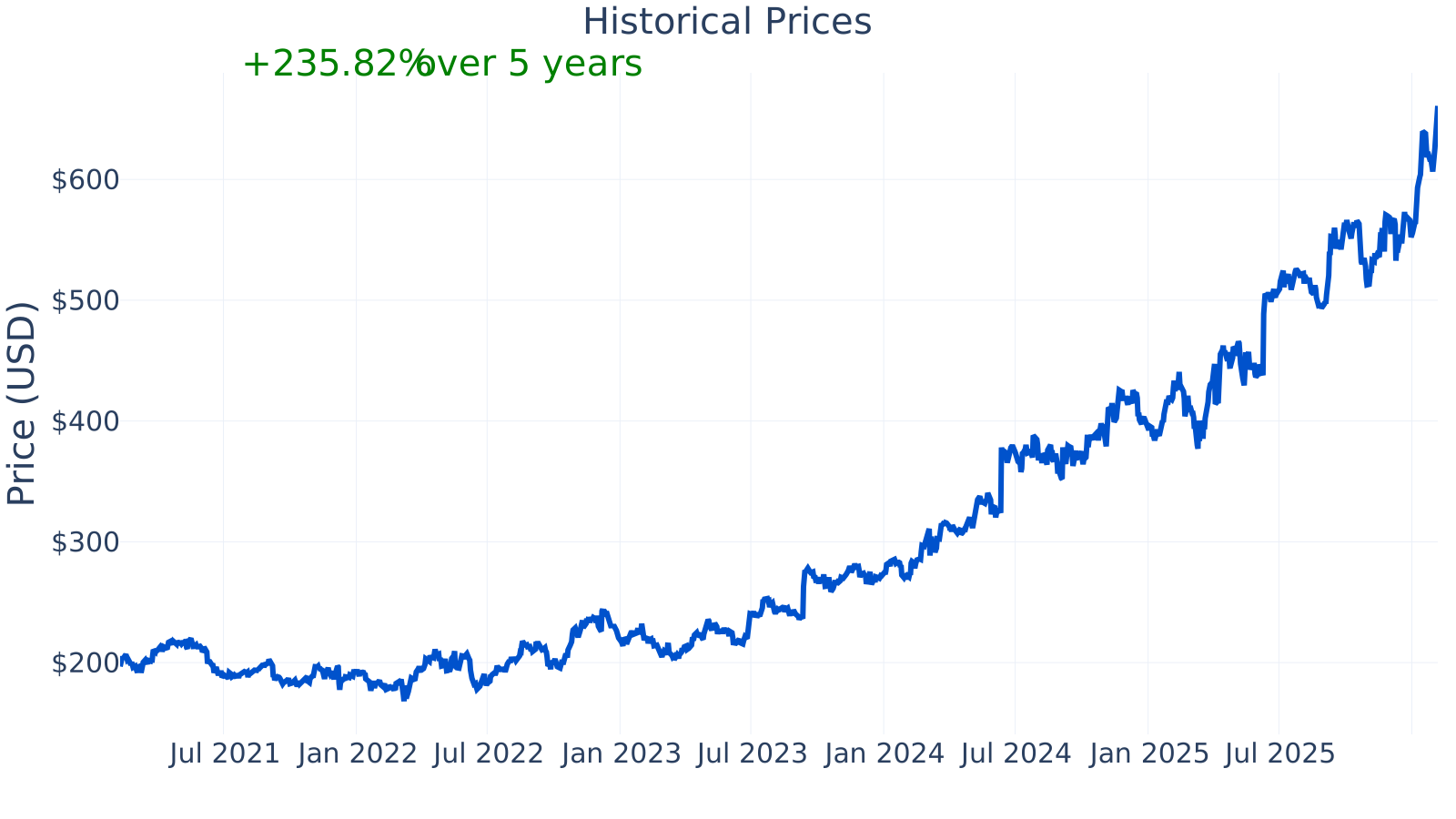
Casey’s market capitalization is about $24.5B, and the stock’s beta (~0.68) suggests it has historically moved less than the overall market on average (beta is a backward-looking measure). The company’s P/E ratio is ~40.6, above the industry median (~23.8), meaning the stock is priced at a higher multiple of earnings than many peers in the same broad industry grouping.
Profitability is modest on a net basis: the profit margin is ~3.6% versus an industry median ~6.3%. At the same time, the company’s year-over-year revenue growth (~14.2%) is above the industry median (~5.2%), indicating stronger recent top-line growth than the typical peer set. Debt relative to equity is about 76.6%, below the industry median (~103.3%). Trailing twelve-month free cash flow is ~$682M, which is a key indicator of how much cash the business generates after operating needs and capital spending.
Growth (Medium)
Convenience retail and fuel retail are generally mature industries, but they can still grow through store expansion, improved merchandise mix, and operational execution. Casey’s has historically emphasized expanding its store base (including acquisitions), improving inside-store sales, and increasing the contribution from prepared food and beverages—categories that can be more profitable than fuel on a per-dollar-of-sales basis.
Revenue growth has been uneven over time, which is common for a company with a meaningful fuel component because reported revenue is heavily influenced by fuel prices and volumes. The more recent readings shown (around the mid-teens year-over-year) are stronger than the levels seen in some earlier periods, following stretches where growth was near zero or negative.
Free cash flow has been positive and, over the multi-year window shown, generally higher than earlier periods (despite some variability). This matters for long-term business flexibility because it can help fund new stores, remodels, distribution capabilities, and other reinvestment needs, while also supporting debt service.
Potential catalysts that can support longer-run growth (described at a high level in company communications and filings) include: expanding the store count in existing and adjacent regions, driving higher inside-store traffic through food and beverage offers, and continuing operational initiatives that protect margins (for example, improvements in sourcing, distribution, and labor productivity). The durability of these drivers depends on execution and on the broader consumer environment.
Risks (Medium)
This article is for informational purposes only and does not constitute financial advice. Some content is AI-generated. See Disclaimer