Stock Analysis · Carvana Co (CVNA)
Overview
Carvana Co (CVNA) is an online-focused used-car retailer. It sells used vehicles directly to consumers through its website and app, and it supports that online experience with services such as vehicle inspection/reconditioning, delivery/pickup logistics, and customer financing. In simple terms, it aims to make buying a used car feel more like e-commerce: browse, finance, purchase, and receive the car with limited in-person dealership interaction.
In its SEC filings, Carvana describes revenue primarily coming from retail vehicle sales, with additional revenue streams tied to financing and related products. In general, the business model is driven by selling cars, while financing and ancillary products can add incremental profit per sale.
Main revenue sources commonly described in company filings include:
- Used vehicle sales (retail) — the largest revenue driver
- Wholesale vehicle sales — sales of vehicles not kept for retail (often through auctions/wholesale channels)
- Other revenue — primarily financing-related income and sale of related products (such as vehicle service contracts), as described in filings
One way to understand Carvana is that it is both a retailer (selling the car) and a scaled operations/logistics company (sourcing inventory, reconditioning it, and delivering it). Over time, its results can be heavily influenced by used-car supply, consumer demand, credit availability, and how efficiently it runs those operations.
Across the years shown, the company’s total revenue and gross profit expand meaningfully from 2023 to 2025, while operating income moves from negative (2021–2022) to positive (2023–2025). Interest expense remains a noticeable cost item, which is important because financing costs can matter a lot for businesses that rely on funding to carry inventory and support growth.
Key Figures
| Metric | Value | Industry ⓘ |
|---|---|---|
| Date | Feb 23, 2026 | |
| Context | ||
| Sector | Consumer Cyclical | |
| Industry | Auto & Truck Dealerships | |
| Market Cap ⓘ | $72.98B | |
| Beta ⓘ | 3.57 | |
| Fundamental | ||
| P/E Ratio ⓘ | 76.33 | 19.15 |
| Profit Margin ⓘ | 6.92% | 2.54% |
| Revenue Growth ⓘ | 58.00% | 3.90% |
| Debt to Equity ⓘ | 18.40% | 157.49% |
| PEG ⓘ | -0.13 | |
| Free Cash Flow ⓘ | $889.00M | |
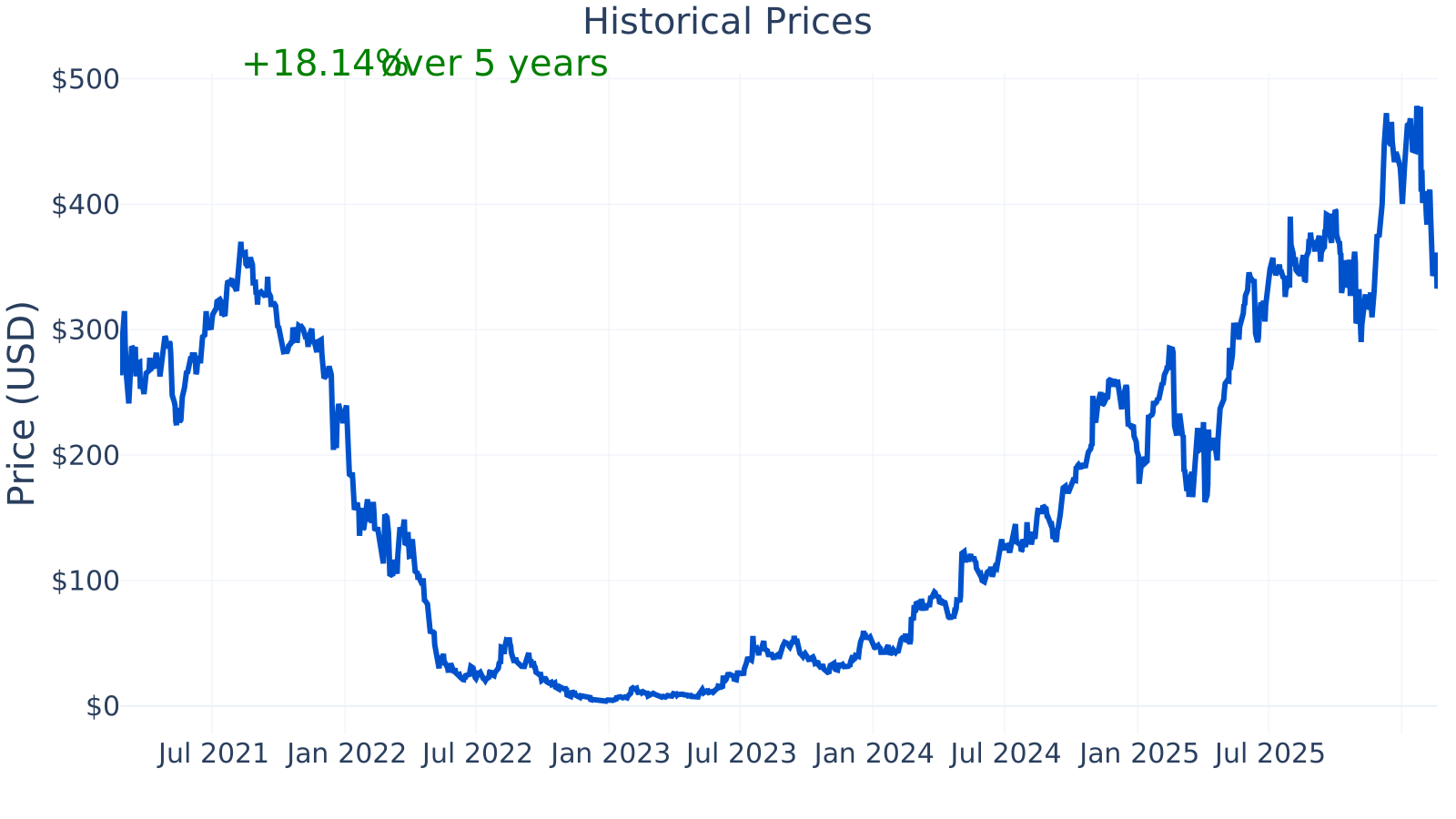
Carvana’s market cap is about $73.0B, and the stock has shown high volatility (beta about 3.57, which is well above the overall market). The company’s latest P/E ratio is ~76.3 versus an industry median near 19.1, which indicates the stock is priced at a substantially higher multiple than many peers. Profitability (profit margin) is reported around 6.9%, above the industry median near 2.5%, and recent year-over-year revenue growth is shown at about 58%, far above the industry median near 3.9%. Debt-to-equity is shown near 18%, below the industry median near 157%. Trailing twelve-month free cash flow is shown around $889M.
Growth (Medium)
The used-car market is large, but it is also cyclical: demand and pricing often rise and fall with interest rates, consumer confidence, employment, and vehicle supply. Within that market, Carvana’s long-term growth idea is tied to online adoption (more consumers becoming comfortable completing large purchases digitally) and the company’s ability to run reconditioning and logistics efficiently at scale.
Strategically, the approach can support growth if Carvana can keep improving key operational metrics: buying cars at the right prices, turning inventory quickly, keeping reconditioning costs under control, and maintaining a smooth customer experience. The company’s filings emphasize operational execution and unit economics (profit per vehicle and cost per vehicle) as important drivers of sustainable performance.
The revenue growth trend shown is notable for its sharp swing: very strong growth in 2021, followed by contraction through much of 2022–2023, and then a return to strong positive growth across 2024–2025 (reaching about 58% year-over-year most recently). For long-term observers, this pattern highlights both the size of potential rebounds and the sensitivity of results to market conditions.
Free cash flow (a rough gauge of cash generated after operating needs and capital spending) shifts from materially negative in 2021–2023 to positive in 2024–2025 (around $0.9B in the most recent periods shown). For a business model that can require significant capital to fund inventory and operations, this move toward positive cash generation can be an important signal—though durability across different market environments remains a key question.
Risks (High)
This article is for informational purposes only and does not constitute financial advice. Some content is AI-generated. See Disclaimer