Stock Analysis · Carters Inc (CRI)
Overview
Carter’s, Inc. (CRI) is a children’s apparel company focused on clothing for babies and young children. It designs and markets products under well-known brands (including Carter’s and OshKosh B’gosh) and sells them through a mix of company-operated stores, eCommerce, and wholesale partners.
Revenue is primarily generated by selling children’s apparel through these main channels (from largest to smaller, exact percentages vary by period and are detailed in company filings):
- Wholesale: selling to large retailers and other partners who then sell to consumers.
- Retail: sales through Carter’s-owned stores and outlets.
- eCommerce: online sales through the company’s websites and digital channels.
From a high-level financial view, the recent pattern has been a smaller revenue base compared with earlier years, and profitability has tightened as operating costs have taken a larger share of sales.
Across recent years, total revenue moved down from about $3.49B (2021) to about $2.84B (2024). Over the same period, operating income declined from about $499M to about $286M, and net income decreased from about $340M to about $186M. Selling, general, and administrative costs stayed relatively high in absolute dollars, which matters because, in apparel retail, small changes in demand and promotions can materially affect profits.
Key Figures
| Metric | Value | Industry ⓘ |
|---|---|---|
| Date | Feb 08, 2026 | |
| Context | ||
| Sector | Consumer Cyclical | |
| Industry | Apparel Retail | |
| Market Cap ⓘ | $1.34B | |
| Beta ⓘ | 1.06 | |
| Fundamental | ||
| P/E Ratio ⓘ | 14.96 | 17.99 |
| Profit Margin ⓘ | 3.15% | 8.42% |
| Revenue Growth ⓘ | -0.10% | 7.30% |
| Debt to Equity ⓘ | 136.29% | 104.73% |
| PEG ⓘ | 1.81 | |
| Free Cash Flow ⓘ | $91.97M | |
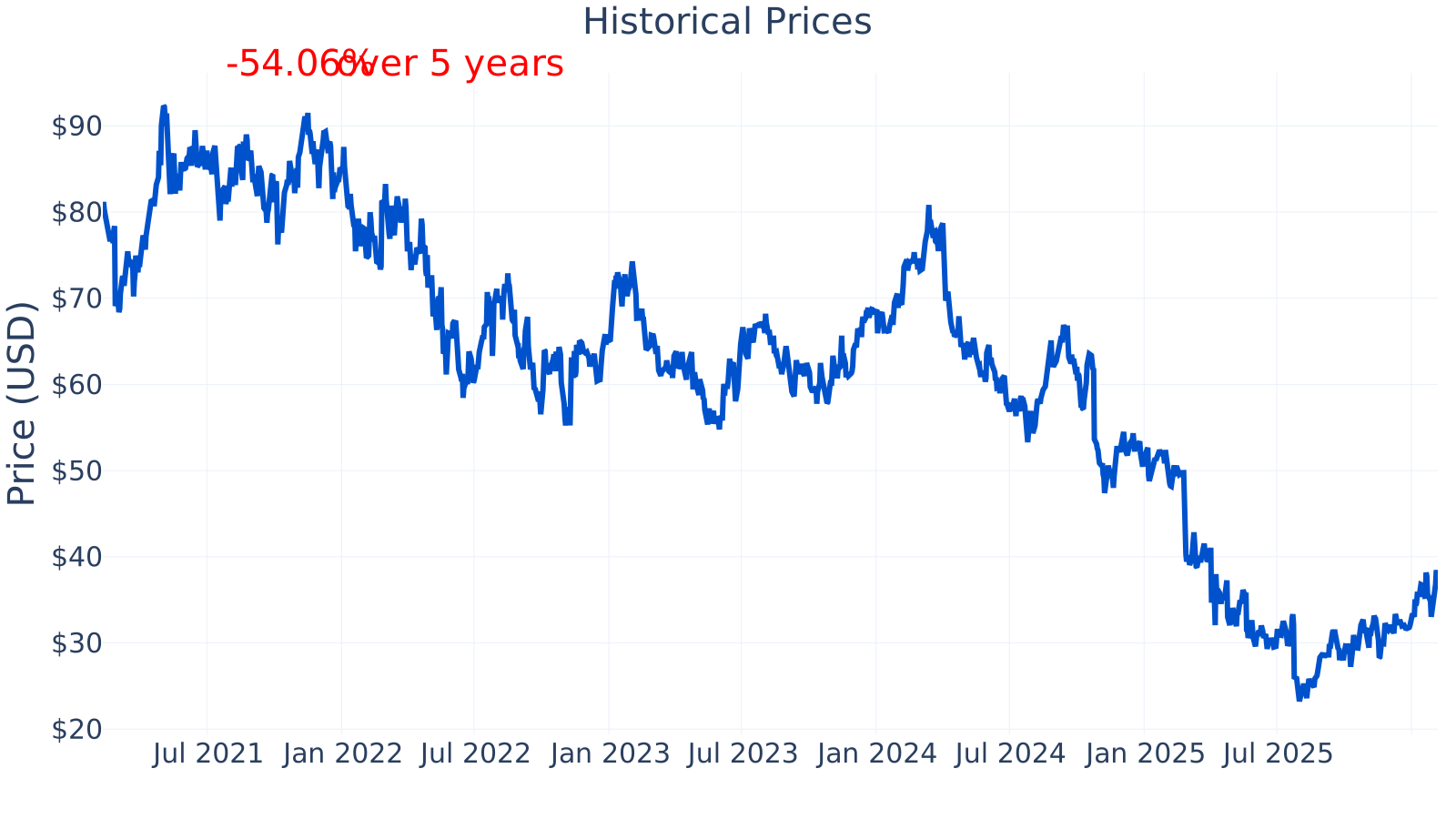
Carter’s current market capitalization is about $1.34B, and the stock’s beta (~1.06) suggests price moves broadly in line with the overall market. The latest P/E ratio (~15.0) is below the industry median (~18.0), while the latest profit margin (~3.15%) is notably below the industry median (~8.42%). Year-over-year revenue growth is roughly flat (~-0.10%) compared with a positive industry median (~7.3%). Leverage is higher than the industry median, with debt-to-equity ~136% versus ~105% for the median peer set. Trailing twelve-month free cash flow is about $92.0M.
Growth (Medium)
Carter’s operates in children’s apparel, a category that tends to be steadier than many discretionary fashion segments because children outgrow sizes regardless of the economic cycle. That said, the category is still sensitive to consumer budgets, promotions, and retailer inventory swings. In mature markets, growth often depends less on broad “industry expansion” and more on gaining share, improving product mix, expanding digital sales, and managing pricing and costs.
Recent revenue growth has been uneven. After strong growth earlier in the period shown, year-over-year revenue changes turned negative for multiple quarters, with only brief returns to slightly positive territory. This pattern typically points to a combination of softer demand, channel inventory adjustments, and/or heavier discounting, all of which can limit near-term expansion even if the brand remains well-known.
Free cash flow (cash generated after operating needs and capital spending) has also been volatile. It was much higher in 2021, dropped sharply in 2022, recovered in 2023 and 2024, and then declined again into 2025. For long-term business progress, sustained free cash flow matters because it helps fund store investments, digital capabilities, debt reduction, and shareholder returns without relying on additional borrowing.
Potential catalysts (in a neutral, business-sense way) typically include improved product assortments, better inventory and promotions management, and continued development of direct-to-consumer channels. However, the financial trend in recent years shows that execution and consumer demand conditions have been challenging.
Risks (High)
This article is for informational purposes only and does not constitute financial advice. Some content is AI-generated. See Disclaimer