Stock Analysis · Carnival Plc ADS (CUK)
Overview
Carnival Plc ADS (CUK) is part of the Carnival Corporation & plc group, one of the world’s largest cruise companies. It operates a portfolio of cruise brands that sell vacation trips on ships, typically bundling transportation, lodging, dining, and onboard entertainment into one experience. The business is global, with passengers sourced from multiple countries and itineraries spanning North America, Europe, and other regions.
Most revenue is generated when guests pay for cruise tickets and then spend additional money onboard. In general terms, the revenue mix is commonly described in two broad buckets in company reporting: passenger ticket revenue (the cruise fare) and onboard & other revenue (spending on items like beverages, specialty dining, shore excursions, internet, casino, spa, and other services). Exact percentages can vary by year and itinerary, and are detailed in the company’s annual reporting.
Across the periods shown, total revenue rises sharply from the post-pandemic low levels, while profitability improves from large losses to positive net income. Interest expense remains a meaningful cost line, which is consistent with a business carrying elevated debt from the industry downturn.
Key Figures
| Metric | Value | Industry ⓘ |
|---|---|---|
| Date | Mar 31, 2026 | |
| Context | ||
| Sector | Consumer Cyclical | |
| Industry | Travel Services | |
| Market Cap ⓘ | $33.07B | |
| Beta ⓘ | 2.46 | |
| Fundamental | ||
| P/E Ratio ⓘ | 10.52 | 23.63 |
| Profit Margin ⓘ | 11.48% | 8.78% |
| Revenue Growth ⓘ | 6.10% | 12.00% |
| Debt to Equity ⓘ | 204.18% | 93.66% |
| PEG ⓘ | 0.83 | |
| Free Cash Flow ⓘ | $2.99B | |
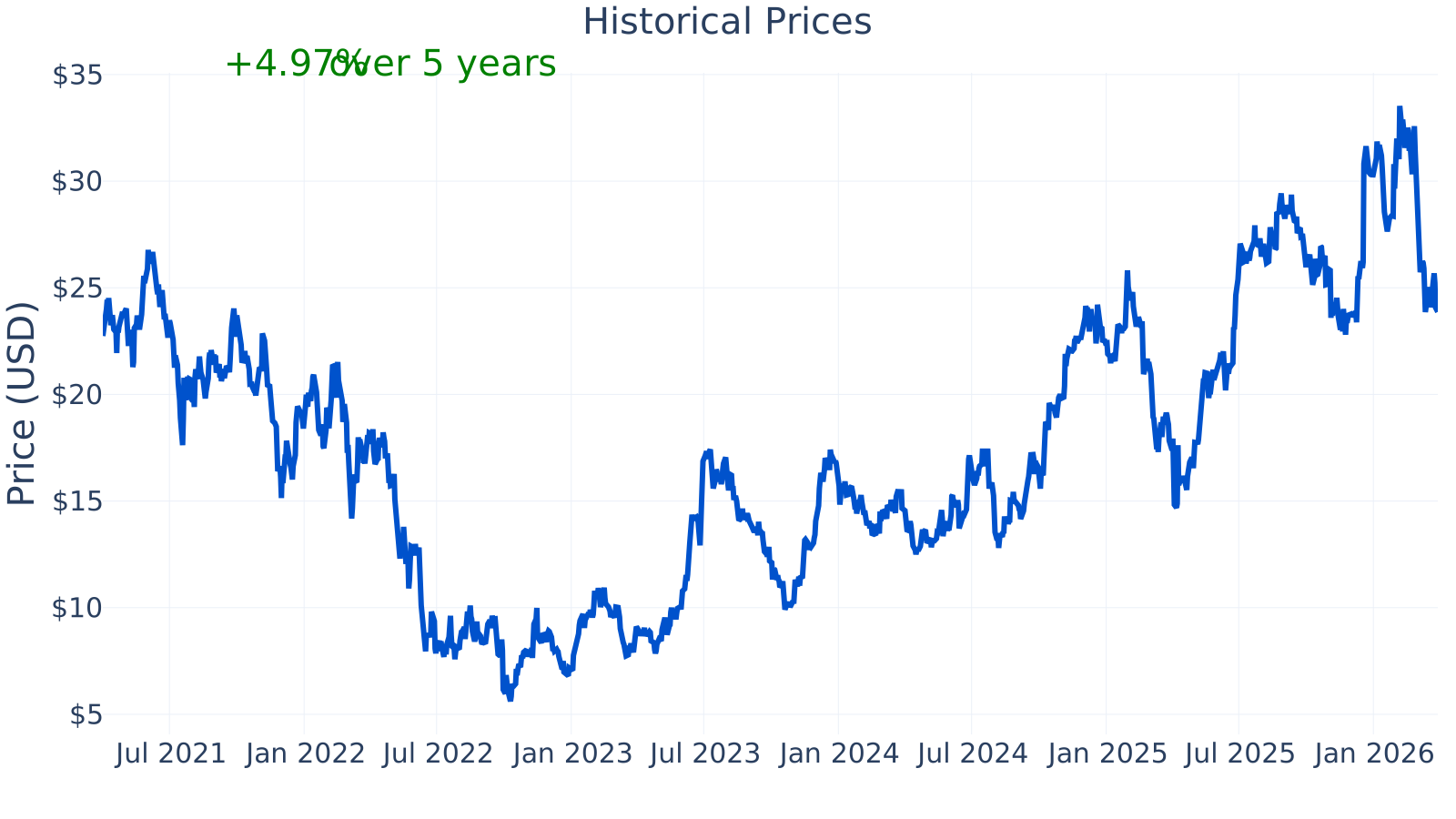
Carnival’s market capitalization is about $33.1B. The stock shows a high beta (2.46), which generally means larger price swings than the broader market.
On valuation and profitability metrics, the company shows a P/E ratio of ~10.5 versus an industry median near 23.6, while the profit margin is ~11.5% versus an industry median near 8.8%. Growth is more mixed: year-over-year revenue growth is ~6.1%, below the industry median shown (~12%).
Balance sheet leverage stands out: debt-to-equity is ~204%, above the industry median near 94%. Free cash flow over the last twelve months is ~$3.0B, which is a notable improvement versus the negative levels seen earlier in the recovery period.
Growth (Medium)
The cruise industry tends to be cyclical: demand can be strong when consumers feel confident and have discretionary income, and weaker when budgets tighten. Over long periods, cruising has historically benefited from expanding vacation options, new ship launches, and broader consumer awareness of cruise products, but it is also sensitive to macroeconomic conditions.
Carnival’s recent trajectory reflects a recovery phase: revenue has returned to much higher levels than the pandemic-impacted period, and profitability has improved. From a business-strategy standpoint, the most important long-term growth drivers typically include (1) maintaining high occupancy, (2) improving pricing and onboard spending per guest, and (3) controlling operating costs such as fuel, food, labor, and port expenses. Another structural factor for future results is reducing interest cost over time through refinancing and debt paydown, where possible.
The year-over-year revenue growth rate shown cools substantially from the earlier rebound period to a more “normalized” pace more recently (about 6% most recently). That pattern often indicates the company is transitioning from recovery-driven growth to a steadier operating environment.
Free cash flow improves from deeply negative levels in 2022 to positive territory, reaching about $3.0B most recently. For a capital-intensive business like cruising (ships are expensive to build, maintain, and upgrade), sustained positive free cash flow can matter because it supports liquidity, reinvestment in the fleet, and potential deleveraging.
Risks (High)
The cruise business has several recurring risks that can affect results quickly. Demand is discretionary, so weaker consumer spending, higher unemployment, or recessionary conditions can pressure bookings and pricing. The cost structure is also exposed to volatile inputs (notably fuel) and to operational disruptions (weather, itinerary changes, port constraints, or unexpected events affecting travel sentiment).
Leverage is a central risk factor. Cruises are capital-intensive even in normal times, and the industry took on substantial debt during the downturn. Higher leverage can amplify outcomes: it may help results improve faster in strong periods, but it can also increase vulnerability during weaker demand periods because interest and required repayments do not fall as quickly as revenue.
The debt-to-equity ratio trends down from very elevated levels earlier in the period, but remains high at roughly 204% most recently, compared with an industry median near 143% on the same chart and about 94% in the latest snapshot table. This highlights that balance sheet rebuilding is still an important ongoing topic.
Profitability has improved, which reduces some operating risk, but margins can still be pressured by higher costs or weaker pricing.
The profit margin moves from large negatives to positive territory and reaches roughly 11.5% most recently, above the industry median shown in the latest metrics. This demonstrates a meaningful operational turnaround, while also underscoring that maintaining margins is a key execution variable.
On competitive position, Carnival is one of the largest global cruise operators with multiple brands and broad geographic reach, which can provide scale benefits in purchasing, marketing, and operations. However, competition is intense among major cruise groups and other vacation alternatives. Key publicly listed competitors in cruising include Royal Caribbean Group and Norwegian Cruise Line Holdings. Competition generally shows up through itinerary offerings, ship hardware (newer ships and onboard amenities), service levels, and pricing.
Valuation
Valuation is often discussed using earnings-based ratios, but for cyclical companies it can be important to remember that earnings can swing materially across the cycle. With that caveat, Carnival’s latest P/E ratio (~10.5) is below the industry median shown in the table (~23.6). The company also reports a PEG ratio (~0.83), which relates valuation to growth expectations; this metric can move significantly depending on assumptions about future earnings growth.
The historical P/E series shown becomes meaningful only once profits return (earlier periods are not displayed). Over the displayed window, the multiple compresses from higher levels toward the mid-teens, while the industry median remains higher for much of the period shown. In plain terms, the market’s pricing of the shares relative to current earnings appears lower than the industry median, while the company still carries higher leverage than many peers—two factors that often get weighed together when comparing valuation across the sector.
Conclusion
Carnival is a large, global cruise operator whose business model is driven by cruise fares and onboard spending. The company’s recent operating picture shows a strong recovery: revenue is far above the downturn period, profit margin has turned positive and improved, and free cash flow has moved into solidly positive territory.
At the same time, the company’s elevated leverage remains a key constraint and risk factor, and the overall industry is sensitive to consumer demand and cost volatility. From a long-term perspective, the main factual points to monitor are whether free cash flow stays consistently positive, whether debt and interest costs keep trending downward, and whether profitability holds up through a weaker part of the travel cycle.
Sources:
- SEC EDGAR — Carnival Corporation & plc filings (Form 10-K / Annual Report)
- Carnival Corporation & plc — Investor Relations (press releases and presentations)
- Carnival Corporation & plc — Earnings call materials hosted by the company (where available)
- Wikipedia — “Carnival Corporation & plc” (basic company background)
This article is for informational purposes only and does not constitute financial advice. Some content is AI-generated. See Disclaimer