Stock Analysis · Carnival Corporation (CCL)
Overview
Carnival Corporation (CCL) is a global cruise company. It operates multiple cruise brands and sells vacation experiences that bundle transportation (the cruise itself), onboard amenities, and optional add-ons. Its business is highly operational: it owns and operates ships, markets itineraries, fills cabins, runs onboard services, and manages port logistics worldwide.
In simple terms, Carnival earns money in two main ways: (1) selling cruise tickets (the fare paid to travel) and (2) selling onboard and other add-ons (things people purchase before or during the trip). In its reporting, revenue is typically grouped into passenger ticket revenue and onboard and other revenue.
Main revenue sources (largest to smallest; the exact split can vary by year):
- Passenger ticket revenue (cruise fares)
- Onboard and other revenue (casino, beverages, specialty dining, excursions, internet, spa, retail, and other onboard services)
Over the last few years, the company has been moving from pandemic-era losses back to profitability. The pattern visible in the operating breakdown is a rebound in total revenue (from about $1.9B in FY2021 to about $26.6B in FY2025), with net income turning positive again (about $2.76B in FY2025). A notable ongoing cost line is interest expense (about $1.35B in FY2025), reflecting the company’s relatively high debt load.
Key Figures
| Metric | Value | Industry ⓘ |
|---|---|---|
| Date | Feb 07, 2026 | |
| Context | ||
| Sector | Consumer Cyclical | |
| Industry | Travel Services | |
| Market Cap ⓘ | $46.98B | |
| Beta ⓘ | 2.44 | |
| Fundamental | ||
| P/E Ratio ⓘ | 16.83 | 21.78 |
| Profit Margin ⓘ | 10.37% | 10.37% |
| Revenue Growth ⓘ | 6.60% | 10.60% |
| Debt to Equity ⓘ | 227.88% | 96.47% |
| PEG ⓘ | 1.41 | |
| Free Cash Flow ⓘ | $2.61B | |
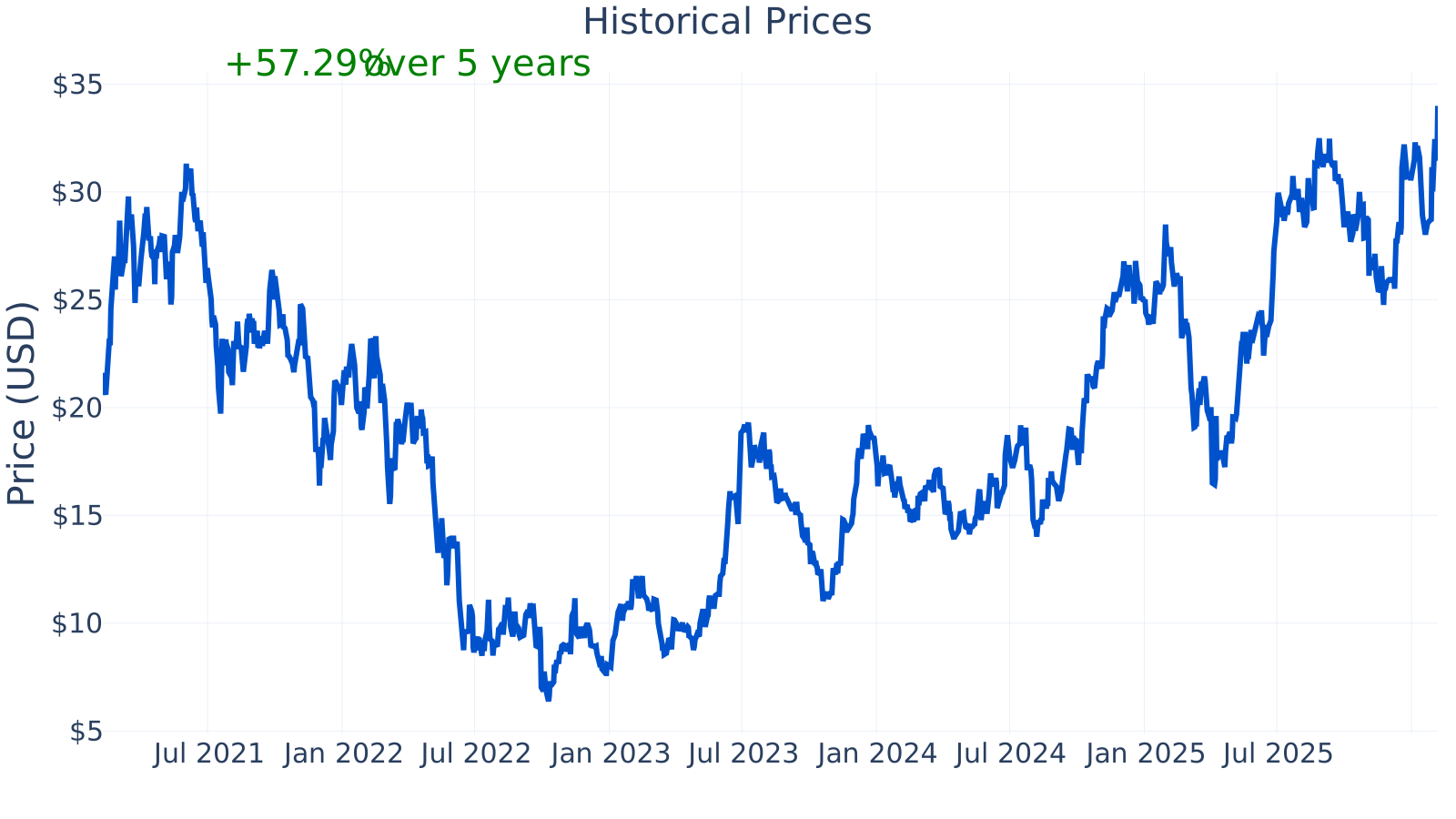
Carnival’s market capitalization is about $47.0B. The stock’s beta of ~2.44 indicates it has historically been much more volatile than the broader market. The current P/E ratio is ~16.8, below the industry median shown here (~21.8). Profit margin is about 10.37%, in line with the industry median shown. Revenue growth year-over-year is about 6.6%, below the industry median shown (~10.6%). Debt-to-equity is about 227.9%, well above the industry median shown (~96.5%). Trailing twelve-month free cash flow is about $2.61B.
Growth (Medium)
The cruise industry is part of the broader travel and leisure market, which tends to be cyclical: demand often strengthens when consumers feel confident and weakens when budgets tighten. For long-term growth, a key structural driver is that cruise companies can increase revenue by improving occupancy, raising pricing (especially during strong demand periods), growing onboard spending per guest, and adding or upgrading ships to expand capacity or improve guest experience.
Strategically, Carnival’s path to growth and resilience typically depends on (a) keeping ships well utilized, (b) managing pricing and onboard revenue, and (c) improving operating efficiency so more revenue becomes profit and cash flow. Another important long-term lever is reducing financing costs by lowering debt over time, because interest expense can materially affect net income and cash generation.
Revenue growth has normalized after the extreme post-pandemic rebound: it remains positive in the most recent period shown (~6.6% year-over-year), but below the industry median displayed. This pattern can be consistent with a business moving from “recovery growth” toward a more mature, cycle-driven growth profile.
Free cash flow has improved substantially over the period shown, moving from deeply negative levels (for example, around -$12.8B in early 2021) to positive (around $1.3B in early 2024 and about $2.0B in early 2025). Sustained positive free cash flow can support investments in the fleet and help reduce debt, although results can vary with fuel costs, demand, and financing conditions.
Potential catalysts for future growth and earnings durability—based on how cruise economics work—include continued normalization of travel patterns, higher onboard spending, improved itinerary/ship mix, and balance-sheet repair that lowers interest expense over time.
Risks (High)
This article is for informational purposes only and does not constitute financial advice. Some content is AI-generated. See Disclaimer


