Stock Analysis · CarMax Inc (KMX)
Overview
CarMax, Inc. is a U.S. retailer focused on used vehicles. It operates a nationwide network of stores and a digital platform where customers can browse inventory, get an appraisal offer for a trade-in, arrange financing, and complete a purchase with online and in-store steps. Alongside retailing used cars, CarMax also supports customers with financing solutions and protection products tied to vehicle purchases.
In simple terms, CarMax’s business combines (1) selling used cars, (2) helping customers finance those cars, and (3) offering add-on products and services that can come with a purchase. Because used-vehicle retail is a high-dollar, high-volume business, the company’s results are heavily influenced by how many vehicles it sells and the profit it earns per vehicle, as well as credit conditions that affect financing demand and loan performance.
Main sources of revenue (typical categories disclosed in company filings) include:
- Used vehicle sales (the largest portion of revenue)
- Wholesale vehicle sales (vehicles sold via wholesale channels, often including vehicles not retailed)
- Other revenue (primarily financing-related income and vehicle protection products, as described in filings)
The company’s recent income structure shows how thin margins can be in auto retail: revenue is large, but costs (especially vehicle acquisition costs) take up most of it, leaving a smaller portion to cover operating expenses and interest.
Across the periods shown, total revenue trends downward (from about $33.2B in fiscal 2022 to about $25.9B in fiscal 2026), while operating expenses remain sizable. Net income also declines meaningfully over the same span (about $1.15B in fiscal 2022 to about $247M in fiscal 2026), highlighting how sensitive results can be to unit volume, gross profit per vehicle, and expense levels.
Key Figures
| Metric | Value | Industry ⓘ |
|---|---|---|
| Date | Apr 20, 2026 | |
| Context | ||
| Sector | Consumer Cyclical | |
| Industry | Auto & Truck Dealerships | |
| Market Cap ⓘ | $5.80B | |
| Beta ⓘ | 1.30 | |
| Fundamental | ||
| P/E Ratio ⓘ | 24.33 | 21.63 |
| Profit Margin ⓘ | 0.89% | 2.54% |
| Revenue Growth ⓘ | -1.20% | 3.90% |
| Debt to Equity ⓘ | 47.01% | 127.90% |
| PEG ⓘ | 0.65 | |
| Free Cash Flow ⓘ | $1.24B | |
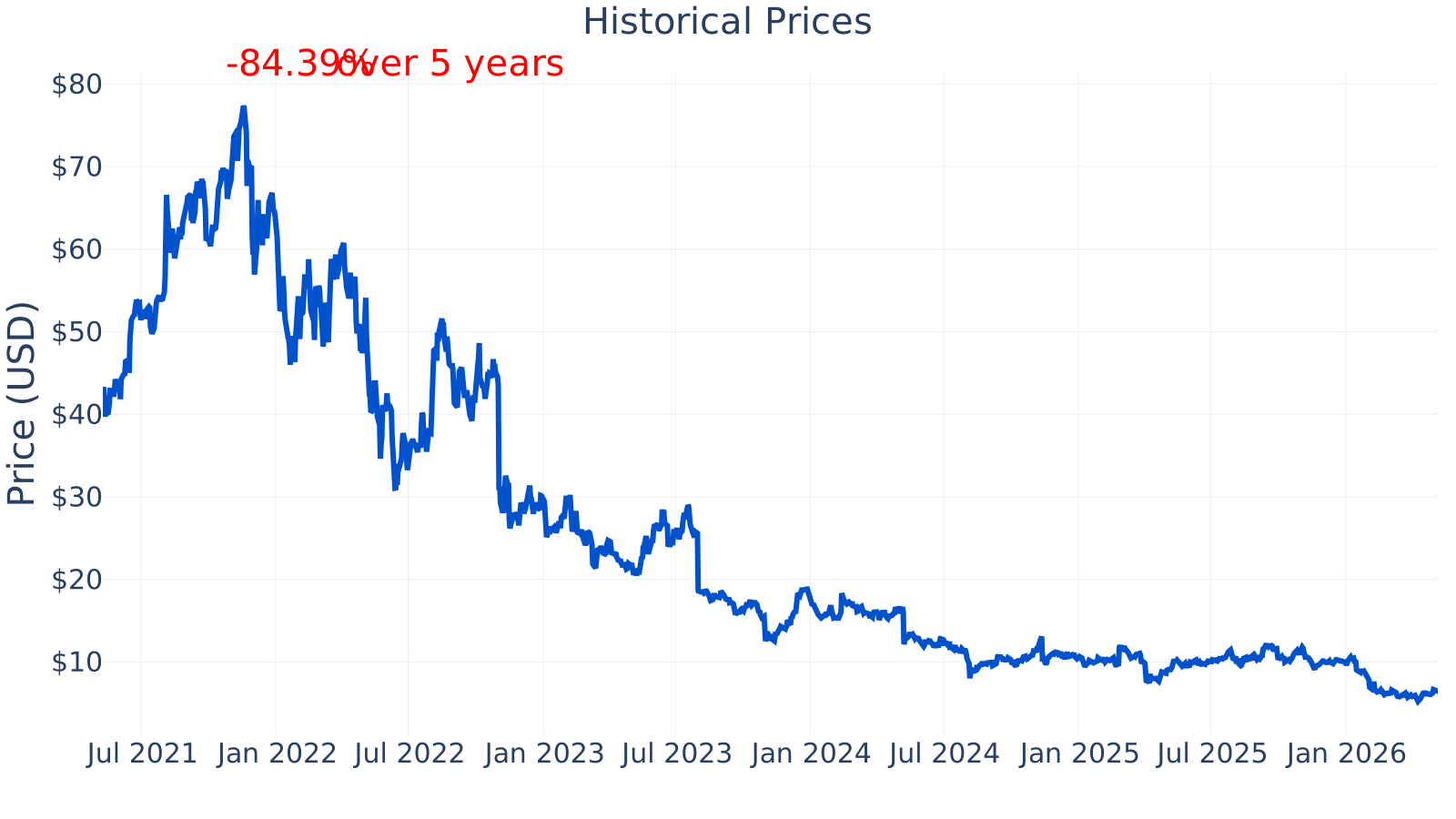
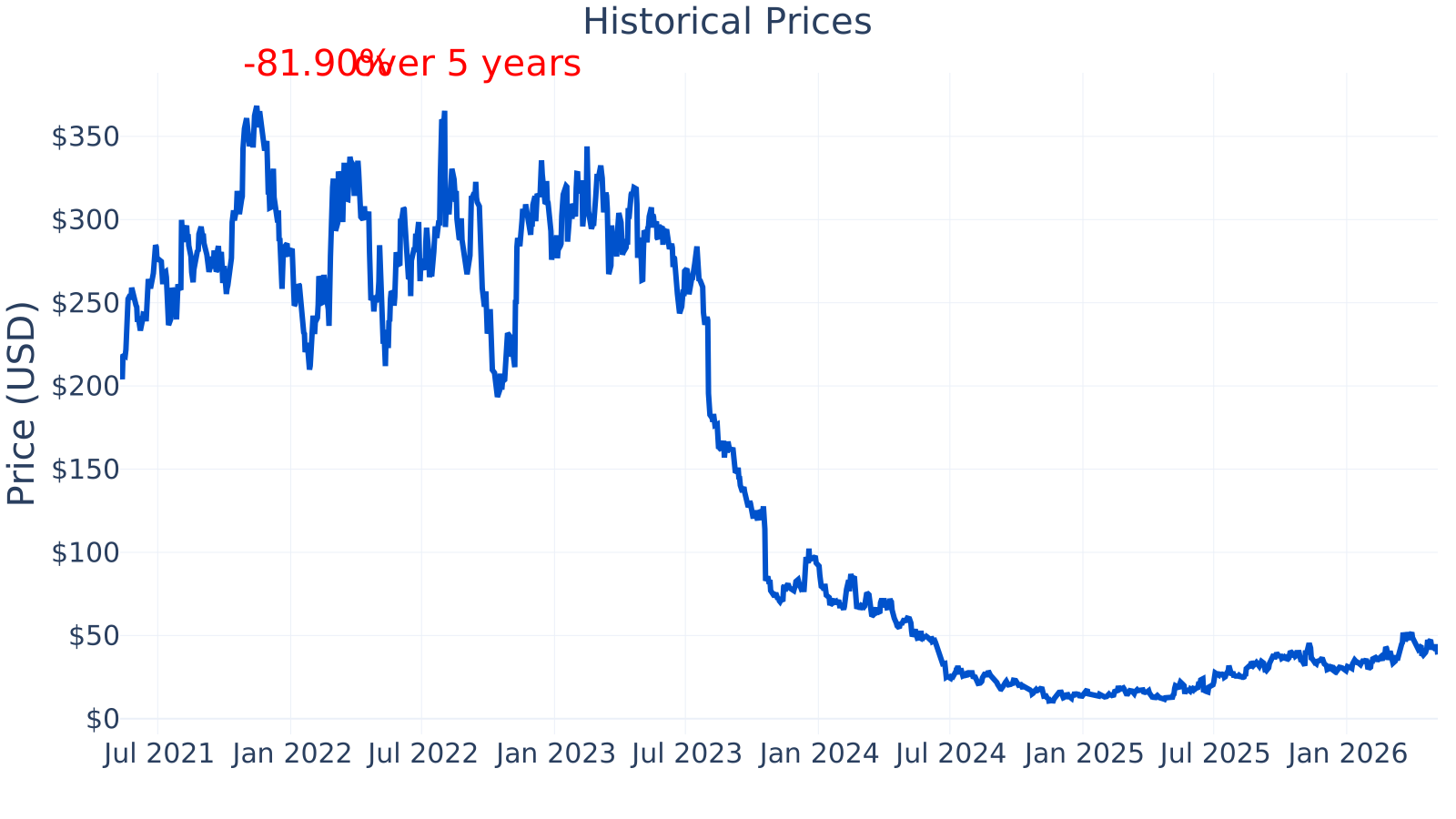
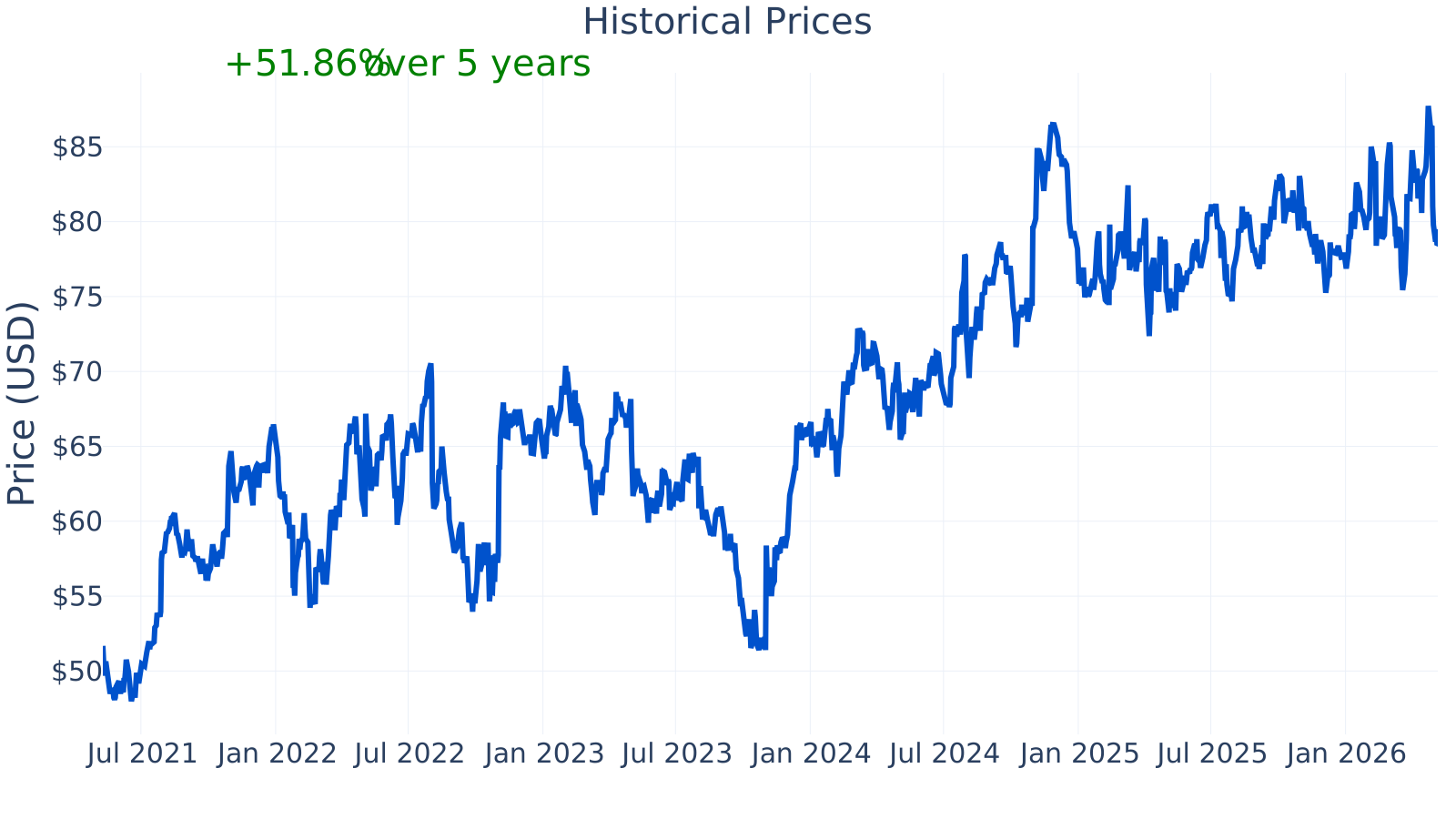
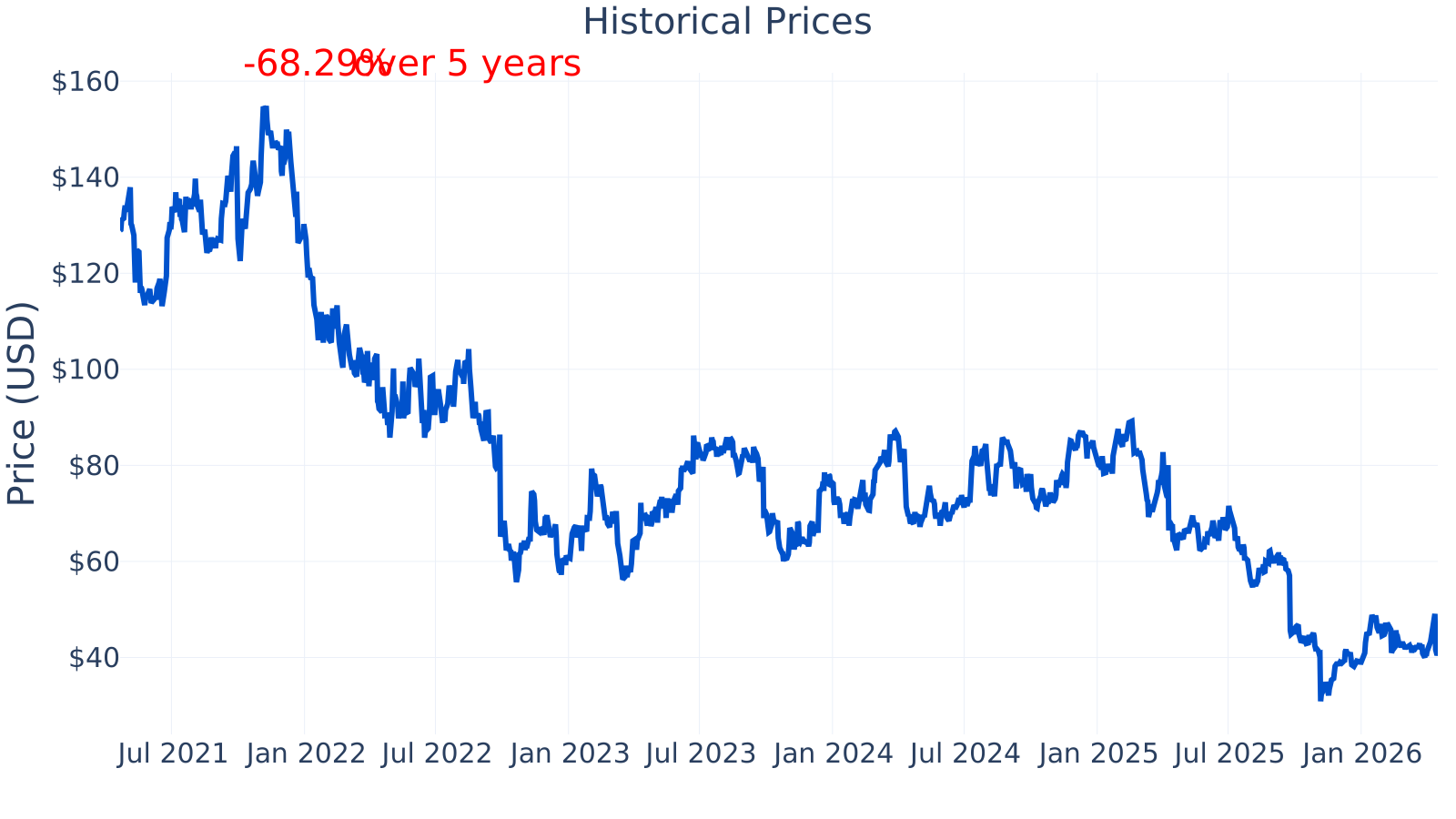
At the latest point shown, CarMax has a market capitalization of about $5.8B and a beta of ~1.30, which indicates the stock has tended to move more than the overall market. The P/E ratio is ~24.3 versus an industry median ~21.6, while the profit margin is ~0.9% versus an industry median ~2.5%. Year-over-year revenue growth is slightly negative (-1.2% versus an industry median of +3.9%). Debt-to-equity is about 47%, below the industry median of about 128%. Free cash flow over the trailing twelve months is about $1.24B.
Growth (Medium)
CarMax operates in the auto dealership industry, where long-term demand is tied to broad factors like household budgets, employment, interest rates, and the need to replace aging vehicles. Used vehicles are often a lower-price alternative to new vehicles, which can support demand during tougher affordability periods. At the same time, used-car retail remains cyclical: sales volumes and profitability can rise and fall with economic conditions and credit availability.
Strategically, CarMax’s omnichannel model (blending online and in-store) is designed to meet customers where they are and reduce friction in the buying process. Scale matters in used cars: large purchasing volumes, reconditioning capabilities, national inventory logistics, and brand recognition can support selection and customer experience. In addition, CarMax’s financing-related activities can benefit when origination volumes are healthy, but they also introduce exposure to loan performance and funding costs.
The year-over-year revenue growth trend shown is volatile. After very strong growth earlier in the period, growth turns negative for multiple periods and ends at a notably weak level (around -30% in the latest point shown). That pattern suggests the business has been moving through a tougher demand and/or pricing environment recently.
Free cash flow swings from deeply negative to positive across the periods shown, ending at about $1.24B. In retail businesses like used autos, cash flow can change significantly as inventory levels rise or fall and as financing-related working capital needs shift. A return to strongly positive free cash flow can improve flexibility, but it is important to understand whether that improvement is driven by sustainable operating performance, inventory normalization, or other balance-sheet movements described in filings.
Risks (High)
CarMax’s results are exposed to the economic cycle. Higher interest rates can reduce affordability and demand, while also increasing financing costs and pressuring credit performance. Used-vehicle pricing can also move quickly: if vehicle values fall after inventory is acquired, margins can be compressed. In addition, because many costs (store operations, logistics, reconditioning) are relatively fixed in the short run, profitability can drop sharply when volumes weaken.
Competition is another meaningful risk. CarMax competes with:
- Franchised new-car dealers that also sell used vehicles
- Large used-car retailers (including national and regional chains)
- Online-focused used-vehicle platforms and marketplaces
CarMax is one of the best-known large-scale used-vehicle retailers in the U.S., and its brand, store footprint, and reconditioning/logistics capabilities can be advantages. However, the competitive landscape is intense, and pricing is transparent to consumers, which can limit how much any one retailer can raise margins without losing volume.
The debt-to-equity ratio trends very high for much of the period (around 3.1–3.7x) and then drops sharply to about 47% at the latest point shown, which is below the industry median (about 128%). Large shifts like this can reflect balance-sheet changes that are important to understand in context (for example, changes in equity levels, debt levels, or classification), so investors typically corroborate the drivers in the most recent 10-K/10-Q.
Profit margin declines materially over time in the series shown, ending near 1.0% (below the industry median near 2.3%). This highlights a key point for long-term shareholders: small margin changes can have an outsized effect on earnings in a high-revenue, low-margin retail model.
Valuation
At the latest point shown, CarMax trades at a P/E of about 24.3, slightly above the industry median of about 21.6. Historically in the chart, CarMax’s P/E has moved through a wide range (roughly low teens to low 30s), which is common for cyclical businesses where earnings rise and fall over time.
Interpreting valuation for CarMax requires pairing the P/E with business conditions. The company is showing lower profit margins and recently negative revenue growth in the metrics provided, which can make a higher multiple harder to justify unless profitability and growth improve. On the other hand, the company’s scale, brand, and the return to strong trailing free cash flow can be supportive factors. In practice, the key question for valuation is how normalized earnings and margins compare to today’s levels—something management discussion and filings typically address through unit economics, credit performance, and cost structure commentary.
Conclusion
CarMax is a large, scaled used-vehicle retailer with an established brand and an omnichannel selling model. Its results reflect the realities of used-auto retail: very large revenue, relatively thin margins, and meaningful sensitivity to the economy, interest rates, used-vehicle pricing, and financing conditions.
The information shown points to a business that has faced a tougher recent period (declining revenue trend over several years and a notably lower profit margin), while also showing improved trailing free cash flow and a debt-to-equity level that is currently below the industry median. For a long-term, fundamentals-focused view, the main items to track over time are retail unit volumes, gross profit per vehicle, SG&A discipline, and credit performance in the financing-related activities, because these tend to drive whether earnings power strengthens or weakens across the cycle.
Sources:
- SEC EDGAR — CarMax, Inc. Form 10-K (Annual Report)
- SEC EDGAR — CarMax, Inc. Form 10-Q (Quarterly Reports)
- CarMax Investor Relations — SEC filings and investor materials (company-hosted)
- Wikipedia — “CarMax” (basic company background)
This article is for informational purposes only and does not constitute financial advice. Some content is AI-generated. See Disclaimer