Stock Analysis · CarGurus (CARG)
Overview
CarGurus, Inc. operates an online automotive marketplace that helps people research and shop for new and used vehicles and helps dealers market their inventory to in-market shoppers. In simple terms, it runs consumer-facing car shopping websites and tools, while charging car dealers and other partners for access to advertising, listings, and software designed to generate leads and improve sales efficiency. The company operates primarily in the United States and also has international operations (notably in Canada and the United Kingdom), with products that connect consumers, dealerships, and, in some cases, financing-related partners.
CarGurus’ revenue is largely tied to services provided to auto dealers and related partners. Based on the company’s segment reporting in its SEC filings, the business is typically described in two main parts: (1) a marketplace offering for dealers (U.S. and International Marketplace), and (2) “Digital Wholesale,” which has historically included wholesale auction-related products.
Main sources of revenue (high level, as reported through company segments):
- U.S. Marketplace (dealer subscriptions, advertising, and related marketplace products)
- International Marketplace (similar marketplace products outside the U.S.)
- Digital Wholesale (wholesale-related digital products, where applicable)
Exact percentages by segment can vary by year and are best read directly from the company’s latest Form 10-K segment note, since mix can shift with strategy and portfolio changes.
One notable pattern over the most recent years shown is that revenue can fluctuate materially year to year, while spending on product development and operating costs has remained meaningful. The combination makes profitability more sensitive to marketplace demand and management’s cost discipline than in a simple “steady growth” subscription model.
Key Figures
| Metric | Value | Industry ⓘ |
|---|---|---|
| Date | Feb 23, 2026 | |
| Context | ||
| Sector | Consumer Cyclical | |
| Industry | Auto & Truck Dealerships | |
| Market Cap ⓘ | $2.99B | |
| Beta ⓘ | 1.37 | |
| Fundamental | ||
| P/E Ratio ⓘ | 20.39 | 19.15 |
| Profit Margin ⓘ | 17.19% | 2.54% |
| Revenue Growth ⓘ | 5.50% | 3.90% |
| Debt to Equity ⓘ | 51.00% | 157.49% |
| PEG ⓘ | 1.22 | |
| Free Cash Flow ⓘ | $271.45M | |
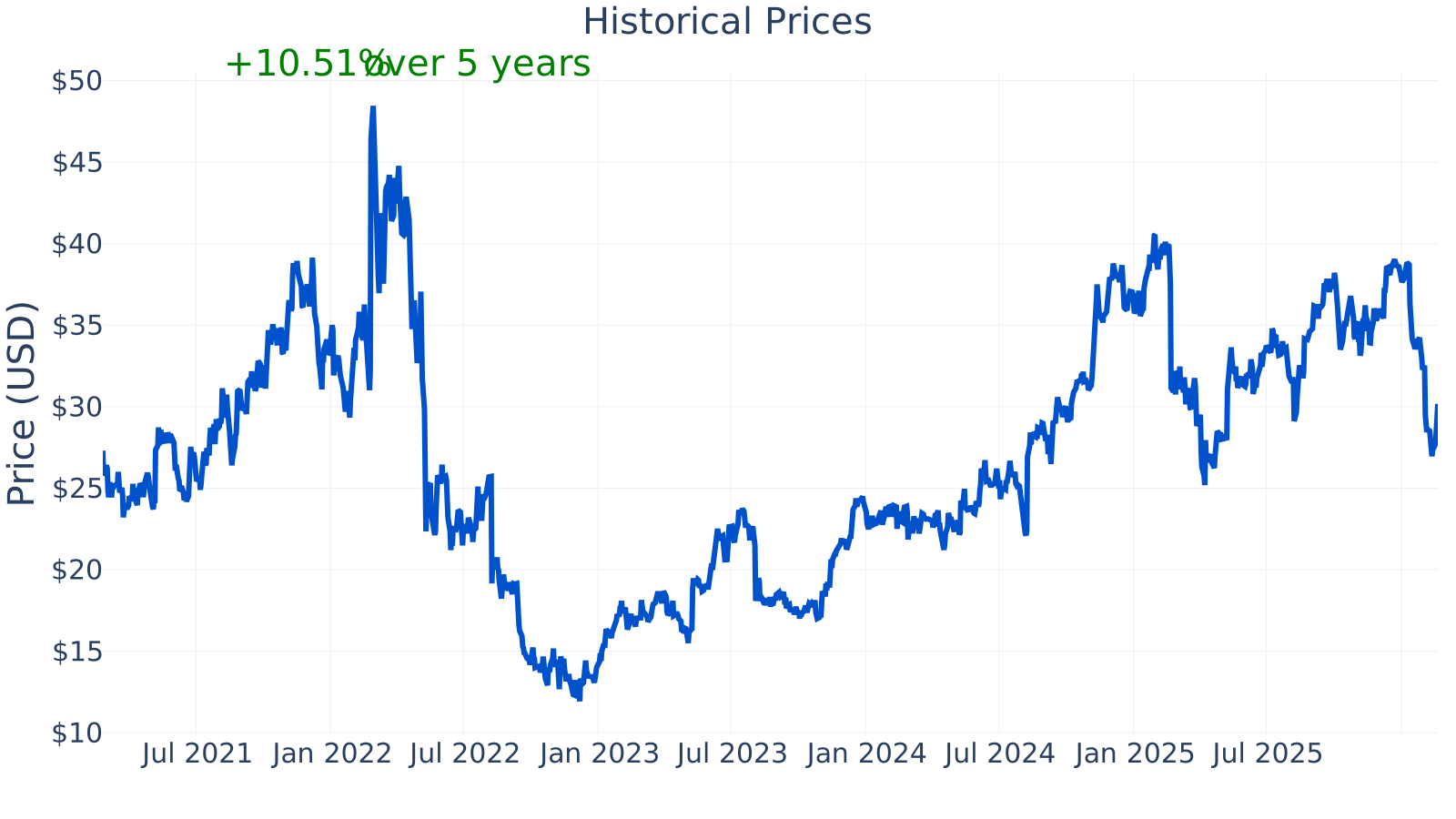
At a market capitalization of about $3.0B, CarGurus is a mid-sized public company. The stock’s beta (~1.37) suggests it has historically moved more than the overall market (higher ups and downs than a broad index). The company’s P/E ratio (~20.4) is close to the industry median shown (~19.1), while its profit margin (~17.2%) is substantially higher than the industry median listed (~2.5%). Revenue growth is positive in the latest metric (~5.5% year over year) and slightly above the industry median (~3.9%). Leverage appears lower than many peers in the same industry grouping, with debt-to-equity ~51% versus an industry median near 157%. Free cash flow over the trailing twelve months is shown at about $271M, which indicates the business has recently generated meaningful cash after operating costs and capital spending.
Growth (Medium)
CarGurus participates in a long-running shift in automotive retail: shoppers increasingly start (and often stay) online for discovery, price comparison, vehicle history context, and dealer selection. That structural shift supports the long-term relevance of digital marketplaces. However, demand for vehicles and dealer advertising budgets are still influenced by the broader auto cycle (inventory levels, pricing, interest rates, and consumer confidence), so the growth profile may not be smooth.
Strategically, the company’s growth logic is straightforward: attract high-intent shoppers, provide tools that help them compare options, and monetize dealer demand for qualified leads and visibility. Over time, improving consumer experience and dealer tools can reinforce each other (more shoppers can attract more dealers, and vice versa). Continued investment in product development can be consistent with this strategy, but it also means results depend on execution—especially the ability to demonstrate clear return on investment to paying dealers.
The year-over-year revenue growth pattern shown is uneven across the period, including stretches of negative growth and more recent quarters showing modest positives. That kind of volatility often indicates sensitivity to market conditions and/or business mix changes, rather than a purely linear expansion trend.
Free cash flow has also moved around significantly across the period shown, including a notably low point around 2024 before improving again by 2025. For long-term business durability, investors often watch whether cash generation remains resilient during weaker industry conditions, since that can influence the company’s ability to keep investing without needing external financing.
Risks (High)
This article is for informational purposes only and does not constitute financial advice. Some content is AI-generated. See Disclaimer


