Stock Analysis · Cadence Design Systems Inc (CDNS)
Overview
Cadence Design Systems is a software company that helps other companies design electronic products, especially semiconductors (chips) and the circuit boards and systems they go into. In simple terms, when a chip company wants to create a new processor for a smartphone, data center, car, or AI server, it needs specialized tools to design the chip, check that it works, and predict how it will behave in the real world. Cadence provides those tools, along with related technology and services.
Cadence’s business is generally described as “electronic design automation” (EDA). Its software is used throughout the chip development process: from early design and verification (finding errors before manufacturing), to physical implementation (laying out a chip’s structures), and into advanced simulation for areas like power, speed, and signal integrity. Because chip designs are increasingly complex and expensive to manufacture, customers often rely on these tools for many years and across multiple product cycles.
Based on how the company reports its operations in its filings, revenue mainly comes from two large buckets:
- Core EDA software (software licenses and related maintenance/support), typically the largest contributor
- System design and analysis (tools that simulate and analyze complete electronic systems and advanced packaging), plus related services
Many software arrangements in this industry are multi-year, which can make revenue more predictable than purely project-based sales, although the exact mix depends on contract structure and timing.
Over recent years, total revenue increased from about $3.0B (2021) to about $5.3B (2025), while the largest operating expense line is consistently research & development, reflecting an ongoing focus on product improvement. Operating income rose over the same period, indicating that growth has not required operating expenses to rise at the same pace as revenue.
Key Figures
| Metric | Value | Industry ⓘ |
|---|---|---|
| Date | Feb 23, 2026 | |
| Context | ||
| Sector | Technology | |
| Industry | Software - Application | |
| Market Cap ⓘ | $80.73B | |
| Beta ⓘ | 1.00 | |
| Fundamental | ||
| P/E Ratio ⓘ | 76.36 | 25.48 |
| Profit Margin ⓘ | 20.93% | 7.23% |
| Revenue Growth ⓘ | 6.20% | 15.70% |
| Debt to Equity ⓘ | 45.31% | 25.08% |
| PEG ⓘ | 3.08 | |
| Free Cash Flow ⓘ | $1.59B | |
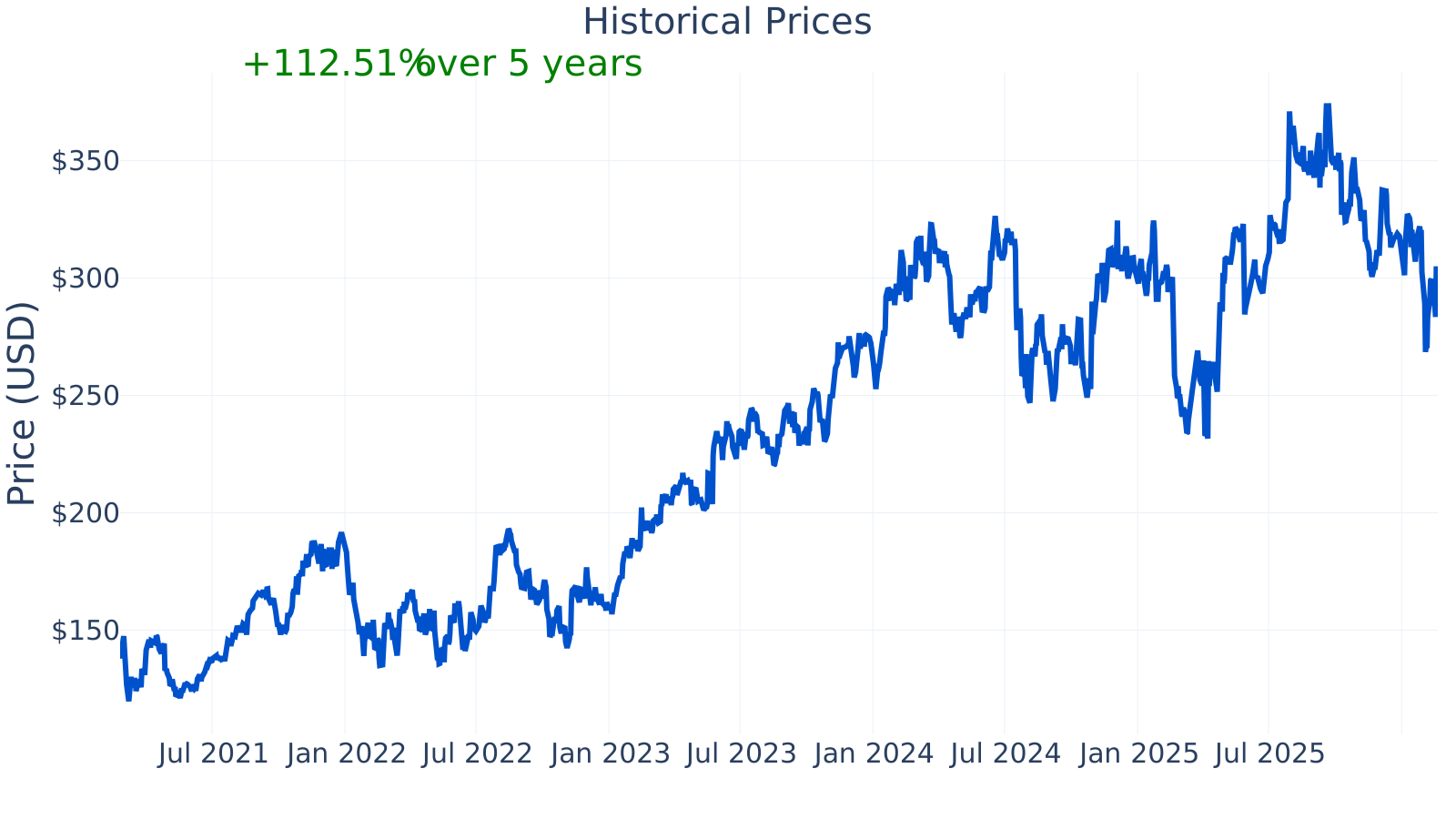
Cadence’s market capitalization is about $80.7B. The stock’s beta is ~1.0, which indicates price moves have been broadly in line with the overall market on average. The company shows a profit margin of ~20.9%, well above the listed industry median (~7.2%), which is consistent with a scaled software business. Year-over-year revenue growth is currently shown at about 6.2%, below the industry median shown (~15.7%), reflecting a slower growth point in the cycle versus some peers. Debt-to-equity is about 45% versus an industry median around 25%. Trailing twelve-month free cash flow is about $1.59B, indicating meaningful cash generation relative to its size.
Growth (Medium)
Cadence operates in a part of the technology stack that tends to benefit from long-term trends: more chips in more products, rising chip complexity, and higher performance requirements (including AI-related compute). As chips become harder and more expensive to design and manufacture, the value of software that reduces errors and shortens development time generally increases.
Strategically, Cadence’s focus on broad coverage across the chip design workflow and deeper simulation/analysis for entire systems aligns with how product development is evolving. Modern devices often depend not only on the chip itself, but also on how it interacts with packaging, memory, power delivery, and high-speed connections. Tools that model these interactions can become increasingly important as performance targets rise and physical constraints tighten.
Revenue growth has been positive for most quarters shown, with a notable slowdown in early 2024 (including a slightly negative quarter) followed by a rebound later in 2024 and into 2025. The most recent point shown is about 6% year-over-year, which is lower than the stronger periods (often in the teens or above). This pattern suggests growth can vary with contract timing, customer project cycles, and broader semiconductor investment conditions.
Free cash flow has generally trended upward over the period shown, from roughly $0.81B (TTM in 2021) to about $1.38B (TTM in 2025), with the latest metric table listing about $1.59B. For long-duration software businesses, sustained cash generation can matter because it supports reinvestment in product development and flexibility across industry cycles.
Risks (Medium)
This article is for informational purposes only and does not constitute financial advice. Some content is AI-generated. See Disclaimer


