Stock Analysis · CTS Corporation (CTS)
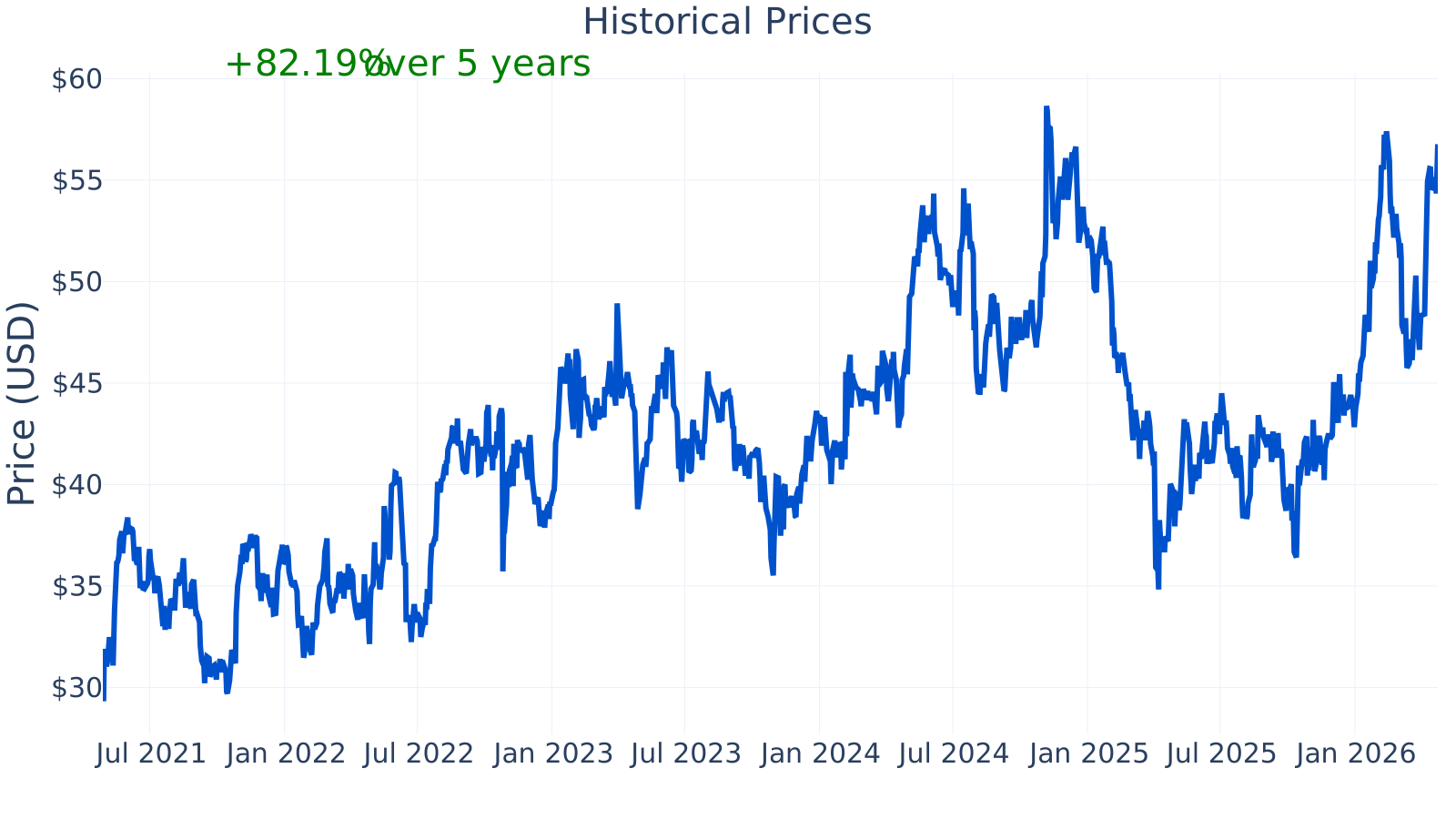
Overview
CTS Corporation is a technology and manufacturing company that designs and produces sensors, connectivity components, and related electronic products. In simple terms, it sells parts that help machines “sense” the world (like motion, pressure, or position) and parts that help electronics connect and communicate reliably. These components are typically built into other companies’ products rather than sold directly to consumers.
Its end-markets are largely industrial and transportation-related applications (including automotive), where customers tend to value durability, long product life cycles, and consistent quality. CTS also sells components used in communications and other electronic systems, depending on the product line.
CTS reports revenue by business segments in its SEC filings. In recent years, the company has primarily operated with two main segments (commonly described as sensors and electronic components/connecting devices). For exact, current segment revenue percentages, the most reliable reference is the latest annual report (Form 10-K), where the segment footnote details how revenue is split.
Typical revenue sources (listed from largest to smaller buckets, as generally presented by CTS’s segment reporting) include:
- Sensors (used in industrial and transportation applications)
- Electronic components / connectivity (components used to connect, filter, or protect signals in electronic systems)
One notable operating pattern over the past several years is that the company’s profitability improved materially after 2021. Revenue has fluctuated, but net income and operating income have remained positive in the more recent periods shown below, which suggests improved cost structure and/or product mix compared with the loss-making period in 2021.
Key Figures
| Metric | Value | Industry ⓘ |
|---|---|---|
| Date | Apr 27, 2026 | |
| Context | ||
| Sector | Technology | |
| Industry | Electronic Components | |
| Market Cap ⓘ | $1.63B | |
| Beta ⓘ | 0.93 | |
| Fundamental | ||
| P/E Ratio ⓘ | 25.92 | 45.47 |
| Profit Margin ⓘ | 12.07% | 6.11% |
| Revenue Growth ⓘ | 8.50% | 17.40% |
| Debt to Equity ⓘ | 22.09% | 41.32% |
| PEG ⓘ | 1.47 | |
| Free Cash Flow ⓘ | $86.37M | |
CTS’s market capitalization is about $1.63B, which places it in the small-to-mid cap range. The stock’s beta of 0.93 suggests price moves that have been roughly in line with (slightly less volatile than) the overall market historically, though beta can change over time.
On profitability, CTS shows a 12.07% profit margin, which is notably higher than the industry median of 6.11% listed for its peer set. On balance sheet leverage, the company’s debt-to-equity is about 22.1% versus an industry median around 41.3%, indicating CTS has used less debt than many peers in the same industry grouping.
Growth metrics look more moderate: the most recent year-over-year revenue growth is 8.5%, below the industry median of 17.4% shown. Free cash flow over the trailing twelve months is about $86.4M, which is an important support metric because it reflects cash generation after operating needs and capital spending.
Growth (Medium)
CTS operates in electronic components and sensing technologies—areas that are supported over the long run by trends such as automation in industrial settings, increased electronics content in vehicles and equipment, and demand for reliable connectivity and signal integrity in complex electronic systems. These are broad, multi-year themes, but the path is rarely straight: industrial and automotive-related demand can be cyclical, and customer inventory cycles can create uneven quarterly and annual revenue patterns.
A key question for long-term growth is whether CTS can keep expanding content per system (selling more value per end product), defend pricing through differentiation and reliability, and extend relationships with large customers who qualify suppliers carefully. Because components are often designed into a customer’s product, wins can last for years—but new programs also take time to ramp.
The revenue growth pattern shown is uneven: after very strong growth earlier in the period, it moved through a stretch of negative year-over-year comparisons before turning positive again more recently (ending around +7.8%). This kind of pattern is consistent with end-market cyclicality and comparisons against stronger prior periods.
Free cash flow has been positive across the periods shown, ranging from roughly $77M to $98M on a trailing-twelve-month basis. While it dipped from the 2023 level, the continued cash generation can matter because it provides flexibility for internal investment (like engineering and capacity), debt management, and potential acquisitions—subject to what management chooses to do and what market conditions allow.
Potential catalysts that can influence growth (without assuming outcomes) include: new program launches in sensors and connectivity products, content gains in transportation platforms, and operational execution that sustains margins through demand cycles.
Risks (Medium)
CTS’s main risks look typical for a specialized electronic components manufacturer serving industrial and transportation markets. Demand can weaken during economic slowdowns, and customer ordering patterns can shift quickly as inventories rise or fall. In addition, component businesses can face pricing pressure, especially where products are more standardized.
Another important risk is customer and end-market concentration. When a meaningful portion of sales ties to specific large customers or to a few end markets (for example, transportation and industrial), revenue can be sensitive to changes in those customers’ production plans, platform decisions, or supplier strategies. Operational risks also matter: manufacturing quality, yield, and supply chain continuity can affect profitability and customer relationships.
The debt-to-equity trend shown stays relatively low, generally in the 16%–26% range over time and ending near 22%. Compared with the peer median line (often higher), this suggests a comparatively conservative leverage profile, which can reduce financial stress risk during downturns. Even so, interest expense has increased across the multi-year view, which implies the cost of debt and/or total borrowing has risen, making financing conditions a factor to monitor.
Profitability improved significantly from negative margins earlier in the period to consistently positive levels later, ending around 12.06%. The peer median profit margin shown is lower in many periods, so CTS appears to have operated with above-median margins recently. A key risk is whether those margins prove durable if volumes soften, input costs change, or competitive intensity increases.
In terms of competitive positioning, CTS participates in markets with many established component suppliers. Competitive advantages in this type of business are often based on specialized know-how, long customer qualification cycles, reliability track records, and the ability to manufacture consistently at scale. CTS is not the only significant player; it competes against other sensor and electronic component manufacturers, including large diversified suppliers and more focused specialists. Competitive pressure can show up in pricing, lead times, and the ability to win new design opportunities.
Valuation
Valuation is often summarized through earnings multiples, but those multiples need to be read alongside growth consistency, margin stability, and cyclicality. CTS currently shows a P/E ratio of about 25.9, while the listed industry median is about 45.5. That indicates CTS is priced at a lower earnings multiple than the median of its industry peer set in this snapshot, though peer medians can be skewed by firms with temporarily depressed earnings or unusual results.
Over the period shown, CTS’s P/E ratio has generally stayed in a band roughly around the high teens to high 20s (when meaningful values are available), with the latest point in the mid-20s. The industry median line trends higher in the more recent observations. This combination can be consistent with the market assigning CTS a more moderate growth profile than some peers, while also recognizing its profitability and cash generation.
The PEG ratio of about 1.47 (a valuation metric that compares P/E to expected earnings growth) suggests the market price is not solely driven by near-term growth expectations; it reflects a mix of growth and business quality assumptions. As with any single-number valuation metric, its usefulness depends on how accurate future growth turns out to be and how stable margins remain through the cycle.
Conclusion
CTS is a specialized electronic components company with meaningful exposure to sensors and connectivity products used in industrial and transportation applications. The company’s recent profile combines above-median profitability (relative to the provided peer median), positive free cash flow, and a relatively conservative leverage level compared with the peer median.
At the same time, the growth picture has been uneven over the multi-year period, reflecting cyclicality and variable demand conditions; more recently, revenue growth returned to positive territory. The main issues to track for a long-term assessment are whether CTS can sustain its improved margins, keep converting earnings into cash, and consistently win new programs in its chosen end markets while managing cycle-driven slowdowns.
Sources:
- SEC EDGAR — CTS Corporation filings (Form 10-K, Form 10-Q)
- CTS Corporation — Investor Relations materials (including annual report content and press releases)
- Wikipedia — “CTS Corporation” (basic company background)
This article is for informational purposes only and does not constitute financial advice. Some content is AI-generated. See Disclaimer


