Stock Analysis · CCC Intelligent Solutions Holdings Inc (CCC)
Overview
CCC Intelligent Solutions Holdings Inc (CCC) provides software that helps insurers, repair shops, carmakers, and other auto-industry participants manage the process around vehicle claims and repairs. In simple terms, it offers tools that help estimate damage, source parts, coordinate repairs, detect potential fraud, and handle payments more efficiently. The company describes its platform as cloud-based and data-driven, and it is commonly used in the U.S. auto insurance ecosystem.
CCC’s business model is primarily subscription and transaction-based software and services sold to customers in the insurance and automotive repair value chain. In its filings, the company reports revenue by product groupings and also discusses which customer types drive demand. Exact percentages by revenue stream can vary by year, and the clearest breakdowns are typically found in the most recent annual report (Form 10‑K).
Main revenue sources (from largest to smallest, described at a high level based on the company’s segment/product disclosures in filings) generally include:
- Insurance-focused software and services used for estimating, claims workflow, and related processes
- Repair and automotive network software supporting body shops and repair operations
- Other solutions that may include analytics, parts-related workflows, and adjacent services tied to claims and repairs
Across recent years, total revenue increased from about $688.3M (2021) to $944.8M (2024), while gross profit also grew (about $492.6M to $713.8M). Operating profitability has been uneven by year, reflecting a mix of operating costs (including R&D and sales/administrative spending) and other items such as interest expense.
From 2021 to 2024, revenue and gross profit both rose steadily. Over the same period, operating expenses remained sizable (including ongoing investment in product development and customer support), which helps explain why operating income and net income can fluctuate from year to year even as sales trend upward.
Key Figures
| Metric | Value | Industry ⓘ |
|---|---|---|
| Date | Feb 08, 2026 | |
| Context | ||
| Sector | Technology | |
| Industry | Software - Application | |
| Market Cap ⓘ | $4.68B | |
| Beta ⓘ | 0.66 | |
| Fundamental | ||
| P/E Ratio ⓘ | N/A | 27.79 |
| Profit Margin ⓘ | -0.28% | 6.02% |
| Revenue Growth ⓘ | 12.00% | 15.80% |
| Debt to Equity ⓘ | 3.31% | 25.15% |
| PEG ⓘ | N/A | |
| Free Cash Flow ⓘ | $226.09M | |
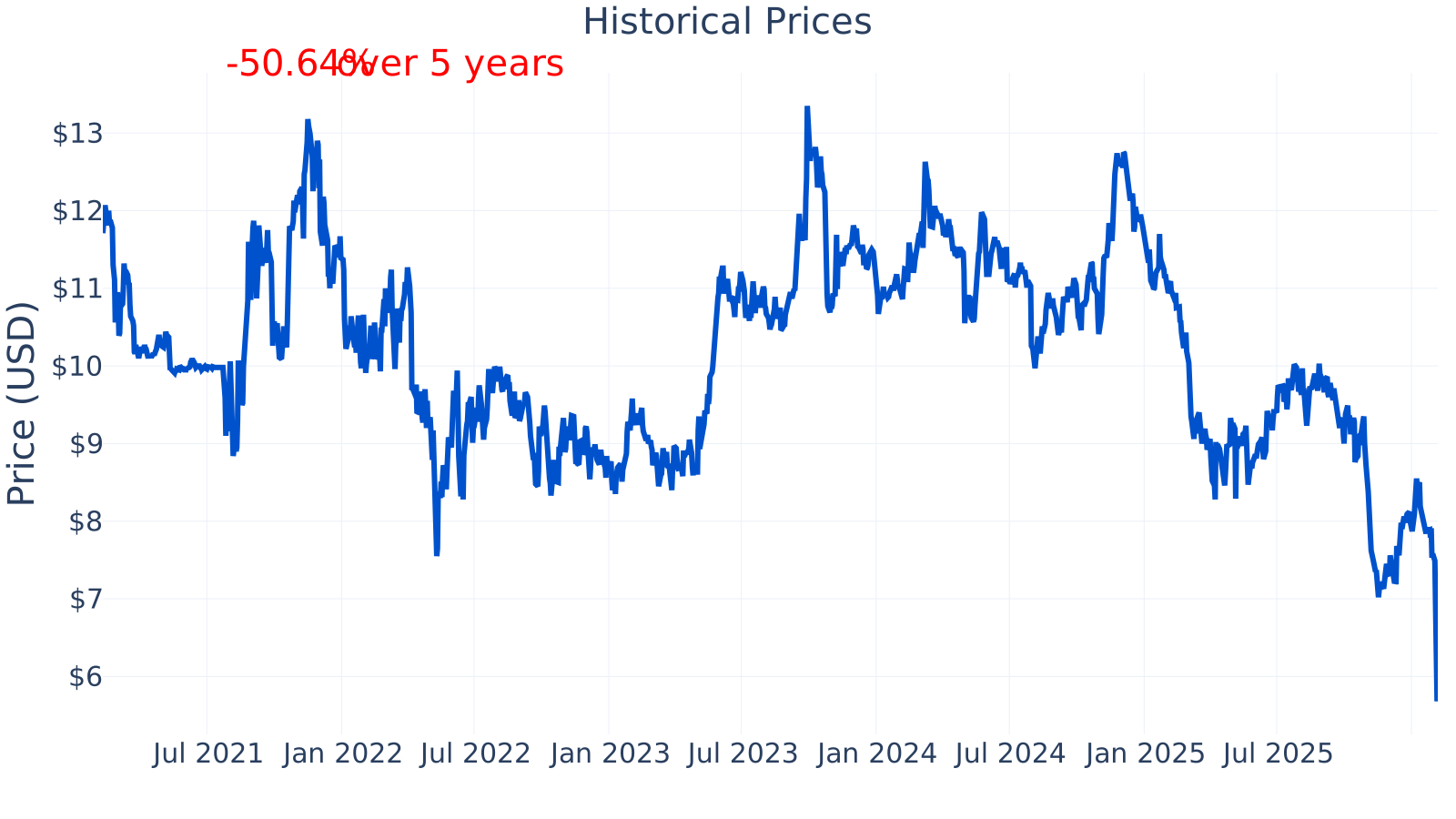
CCC’s market capitalization is about $4.68B, and the stock’s beta (~0.66) suggests it has historically moved less than the broader market on average (though this can change). The company’s profit margin is slightly negative (~-0.28%), below the listed industry median (~6.03%), indicating that recent profitability is close to break-even and not consistently in line with many profitable software peers. Year-over-year revenue growth is about 12%, somewhat below the industry median shown (~15.8%). Debt-to-equity is low at roughly 3.3% versus the industry median shown (~25.2%), and trailing twelve-month free cash flow is about $226.1M.
Growth (Medium)
CCC operates in a part of the software market tied to insurance claims, collision repair, and vehicle lifecycle events. This is not purely discretionary spending for customers: auto accidents and repairs occur through economic cycles, and insurers and repair networks often prioritize tools that improve speed, accuracy, and cost control. Longer-term, increasing vehicle complexity (advanced driver-assistance systems, sensors, materials, and calibration requirements) can raise the need for standardized estimating and repair workflows—areas where CCC sells software and network-enabled solutions.
CCC’s strategy, as described in filings, centers on expanding its platform capabilities, using data and analytics to improve decisions in the claims process, and deepening integration with insurers and repair networks. In software businesses like this, growth can also come from adding adjacent products to existing customers (often called “land-and-expand”), increasing transaction volumes, and improving retention.
The year-over-year growth rate shown is generally around the high single digits to low teens in recent periods, with the latest figure near 12%. That profile can be consistent with a mature-but-expanding platform business, but it is not the fastest growth level compared with many application software companies.
Free cash flow over time trends upward in the period shown (roughly $102.5M to about $234.9M, with the latest around $226.1M). For long-term business durability, this is notable because it suggests the company has been able to generate cash even when accounting earnings have been uneven.
Potential catalysts discussed in company materials often relate to broader adoption of digital claims handling, greater use of automation and analytics, and further integration across the insurer–repair ecosystem. Another possible tailwind is continued growth in insured vehicles and repair costs, which can increase the value of tools that help manage severity and cycle time—though these same trends can also create pricing pressure and customer scrutiny.
Risks (Medium-High)
This article is for informational purposes only and does not constitute financial advice. Some content is AI-generated. See Disclaimer


