Stock Analysis · C3 Ai Inc (AI)
Overview
C3.ai, Inc. (ticker: AI) is a software company focused on helping organizations build, deploy, and run enterprise artificial intelligence applications. In simple terms, it sells tools and ready-to-configure software that can connect to a company’s existing systems and data, then support use cases such as forecasting, equipment maintenance, fraud detection, supply chain optimization, and other business decision tasks. Its products are typically used by large organizations and government entities that need AI solutions with governance, security, and integration into complex IT environments.
Based on the company’s filings, C3.ai generates revenue primarily from software subscriptions (customers paying over time to use its software) and from professional services (implementation, configuration, training, and support services associated with deployments). Revenue mix can shift depending on deal structure and customer adoption patterns, but the business is generally positioned around recurring subscription revenue supported by services work.
Main revenue sources (high-level, as described in filings):
- Subscription revenue (ongoing access to C3.ai software)
- Professional services revenue (implementation and related services)
Over recent fiscal years, the company has also emphasized partner- and alliance-enabled distribution (working with large cloud and services providers) as part of its go-to-market strategy, aiming to expand reach while reducing friction for customers already standardized on major cloud ecosystems.
The operating picture shown above highlights a key theme: revenue has been rising over time (from about $183 million in FY2021 to about $389 million in FY2025), but operating expenses (especially research and development) have remained large, which has kept operating income and net income negative across the period shown.
Key Figures
| Metric | Value | Industry ⓘ |
|---|---|---|
| Date | Mar 02, 2026 | |
| Context | ||
| Sector | Technology | |
| Industry | Software - Infrastructure | |
| Market Cap ⓘ | $1.12B | |
| Beta ⓘ | 2.00 | |
| Fundamental | ||
| P/E Ratio ⓘ | N/A | 24.58 |
| Profit Margin ⓘ | -141.35% | 6.79% |
| Revenue Growth ⓘ | -46.10% | 16.35% |
| Debt to Equity ⓘ | N/A | 26.59% |
| PEG ⓘ | N/A | |
| Free Cash Flow ⓘ | -$127.05M | |
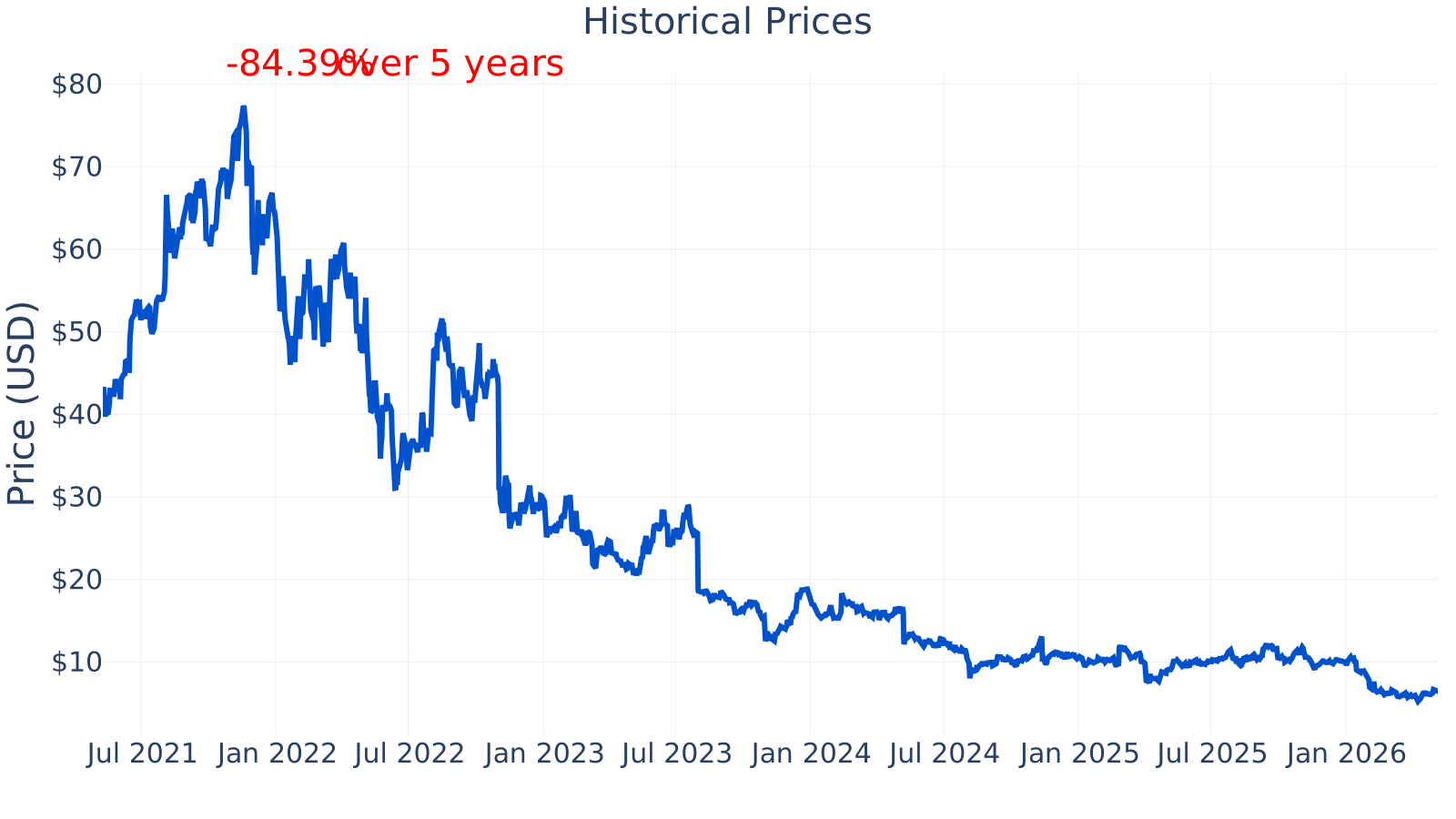
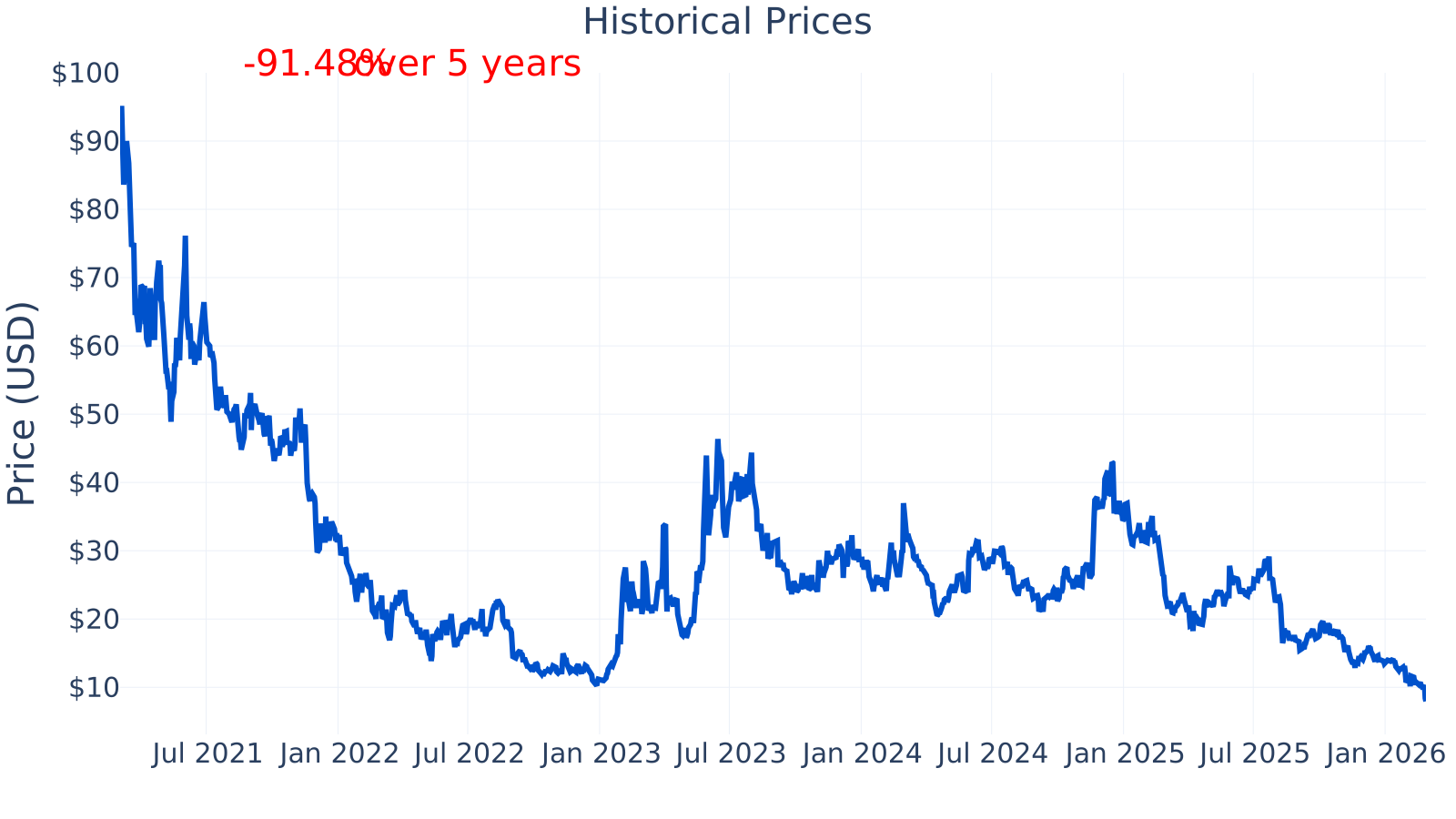
C3.ai’s market capitalization is about $1.12 billion, which places it in the smaller end of the public software universe. The stock’s beta of ~2.0 indicates it has historically moved about twice as much as the broader market on average, which is consistent with higher-volatility growth software stocks.
Profitability stands out as a central issue today: the company’s profit margin is about -141%, versus an industry median around +6.8%. Growth has also recently weakened: the latest year-over-year revenue growth shown is about -46%, while the industry median is about +16%. On cash generation, trailing twelve-month free cash flow is about -$127 million, meaning the business consumed cash over the period rather than producing it.
Growth (Medium)
The company operates in enterprise AI software, an area that is widely expected to remain important as organizations modernize operations and adopt automation and advanced analytics. From a business logic standpoint, the strategy of offering reusable AI applications and a platform approach can make sense because many organizations want faster deployment than building everything from scratch, while still keeping control over security, compliance, and integration.
That said, growth is not only about the size of the industry; it also depends on execution and customer spending cycles. The recent revenue growth pattern shown below suggests that C3.ai has experienced periods of solid expansion followed by a sharp slowdown.
Earlier periods show revenue growth reaching roughly 25%–42% year-over-year, then moderating, and more recently turning negative (down to about -46% at the latest point shown). For long-term business momentum, a key question is whether this reflects short-term deal timing and contract mix changes, or a more persistent demand and competitive challenge. Company filings typically discuss the importance of expanding customer adoption, increasing subscription usage, and growing relationships through partners; those are plausible paths to re-accelerate, but they are not guaranteed.
Another practical indicator of growth quality is whether the company can fund itself through operations over time. Free cash flow has improved at points (for example, narrowing losses around early 2025 in the series shown), but it remains negative in the most recent period.
The cash-flow trend indicates improvement from deeper negative levels in prior years (for example, around -$218 million at one point in the series), then a setback to about -$127 million most recently. A durable growth story typically benefits from either consistent cash generation or a clear trajectory toward it.
Risks (High)
The largest risk is that the company has not yet demonstrated sustained profitability. Persistent net losses can force trade-offs: maintaining high spending to pursue growth versus cutting costs to reduce losses, potentially slowing expansion. In addition, stock-based compensation (common in software companies) can dilute shareholders over time; the magnitude and trend are best monitored in the company’s annual and quarterly filings.
Competitive pressure is another major risk. Enterprise AI and data/analytics software is crowded, with large platform companies and well-funded specialists offering overlapping tools. In practice, many buyers prefer integrated solutions from existing vendors (cloud providers, enterprise software suites, and large data platforms). That environment can make customer acquisition expensive and can compress pricing power.
In terms of competitive advantages, C3.ai emphasizes an enterprise-focused software stack, packaged applications for business use cases, and experience in regulated or complex environments. However, it is not universally viewed as the category leader across enterprise AI overall, largely because the market includes multiple “centers of gravity” (cloud platforms, data platforms, and enterprise application suites). How differentiated C3.ai’s offerings are in real customer outcomes—and whether that translates into repeatable sales efficiency—remains an important point to watch.
Main competitor groups (high-level):
- Large cloud and platform providers that offer AI tooling embedded in their ecosystems
- Enterprise software suites expanding AI features into existing products
- Data and analytics platforms that provide machine learning development and deployment capabilities
- Specialist AI application vendors targeting specific industries or use cases
From a balance-sheet leverage perspective, the company’s debt-to-equity ratio is extremely low in the series shown, which reduces the risk of debt-related financial stress compared with many peers.
Debt-to-equity remains under 1% (roughly 0.3%–0.6%) across the period shown, versus an industry median commonly in the 14%–50% range in the same timeline. This suggests losses have not been primarily financed through heavy borrowing, though it does not remove the underlying profitability risk.
Profit margins illustrate how far the company currently is from typical software-sector profitability. Even though margins improved for a time (moving from roughly -98% toward about -74% during part of the period shown), the most recent value deteriorated substantially.
The latest profit margin shown is about -141%, while the industry median is about +6%–7%. A sustained move toward breakeven would usually require a combination of steadier revenue growth, improved gross margin and/or better operating expense efficiency.
Valuation
Traditional valuation tools like the price-to-earnings (P/E) ratio are not meaningful when a company has negative earnings. That is why the P/E series below shows zeros for the company (it is effectively not applicable over the periods shown), while the industry median remains in a more typical range around the high-20s to low-30s.
In cases like this, market pricing tends to reflect expectations about future revenue growth, future margins, and the timeline to reach sustainable profitability and cash generation. The company’s relatively small market capitalization (about $1.12 billion) and high stock volatility (beta near 2.0) suggest the market’s expectations can change quickly as results and guidance evolve. The recent combination of negative year-over-year revenue growth, negative free cash flow, and very negative profit margin generally makes valuation more sensitive to execution risk than it would be for a profitable software company with steady growth.
Conclusion
C3.ai operates in enterprise AI software, a strategically important area for many organizations. The company’s approach—offering enterprise-ready AI applications and a platform for deployment—fits a real need in complex environments, and its low debt levels reduce one category of financial risk.
At the same time, the long-term picture depends heavily on whether the business can convert industry opportunity into consistent revenue expansion and a clear path toward sustainable profitability and cash generation. The figures shown reflect a business that has grown revenue over multiple years but has also experienced a recent downturn in year-over-year growth, with continued negative margins and negative free cash flow. In addition, competition is intense across enterprise AI, including from much larger vendors that can bundle AI into broader product suites.
For long-term analysis, the most decision-relevant items to monitor in future filings are typically: (1) whether subscription revenue becomes more durable and scales faster than services, (2) whether operating losses narrow through improved efficiency, and (3) whether free cash flow trends toward breakeven in a consistent way.
Sources:
- C3.ai, Inc. — Form 10-K (Annual Report) (business overview, revenue description, risk factors, financial statements)
- C3.ai, Inc. — Form 10-Q (Quarterly Report) (updates on operations, financial performance, and risks)
- SEC EDGAR — C3.ai, Inc. filings index (official filing access and timestamps)
- C3.ai, Inc. Investor Relations — Press Releases (company-provided announcements)
- C3.ai, Inc. Investor Relations — Earnings Call Materials / Transcripts (when company-hosted and publicly available)
- Wikipedia — “C3.ai” (basic corporate background; non-financial context)
This article is for informational purposes only and does not constitute financial advice. Some content is AI-generated. See Disclaimer