Stock Analysis · C3 Ai Inc (AI)
Overview
C3.ai, Inc. is a software company focused on building and running artificial-intelligence applications for businesses and government organizations. In plain terms, it sells tools that help large organizations use AI to improve operations such as forecasting, maintenance, supply chains, and other data-heavy workflows. The company positions its products as “enterprise AI,” meaning they are designed to be deployed across complex organizations where data is spread across many systems.
From a business model perspective, C3.ai primarily earns revenue by providing software and related services. Its filings describe revenue largely in two buckets: subscriptions (recurring access to its software) and professional services (implementation, support, and other services tied to deployments). Percentages by revenue category can vary by fiscal year and contract mix; for long-term analysis, the key takeaway is that subscriptions are typically the intended core engine (recurring), while services tend to support adoption and customer rollouts.
Main revenue sources (typical disclosure categories in filings):
- Subscription revenue (recurring software access)
- Professional services revenue (implementation and other services)
Over the last several fiscal years shown below, total revenue increased overall (for example, from about $183.2M in FY2021 to about $389.1M in FY2025), but profitability has remained negative as the company continues to spend heavily on research and development and other operating costs.
Across FY2021–FY2025, revenue rose meaningfully (about $183.2M to $389.1M), but operating losses remained large (roughly -$60.3M to -$324.4M). A visible pattern is that operating expenses grew faster than gross profit for most of the period, with research and development being a major component of spending.
Key Figures
| Metric | Value | Industry ⓘ |
|---|---|---|
| Date | Feb 08, 2026 | |
| Context | ||
| Sector | Technology | |
| Industry | Software - Infrastructure | |
| Market Cap ⓘ | $1.64B | |
| Beta ⓘ | 2.00 | |
| Fundamental | ||
| P/E Ratio ⓘ | N/A | 25.67 |
| Profit Margin ⓘ | -108.06% | 6.91% |
| Revenue Growth ⓘ | -20.30% | 15.20% |
| Debt to Equity ⓘ | N/A | 19.82% |
| PEG ⓘ | N/A | |
| Free Cash Flow ⓘ | -$93.23M | |
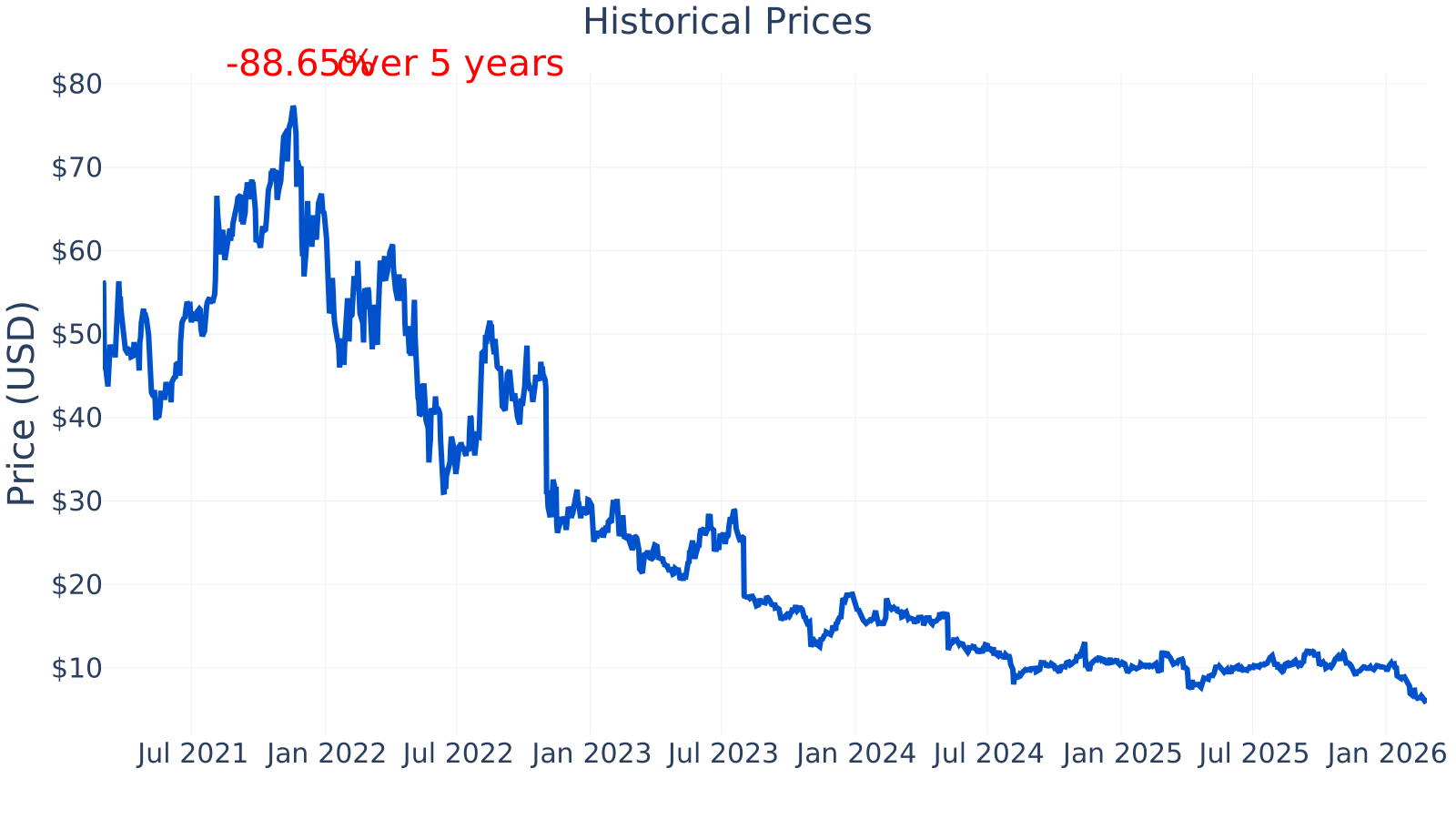
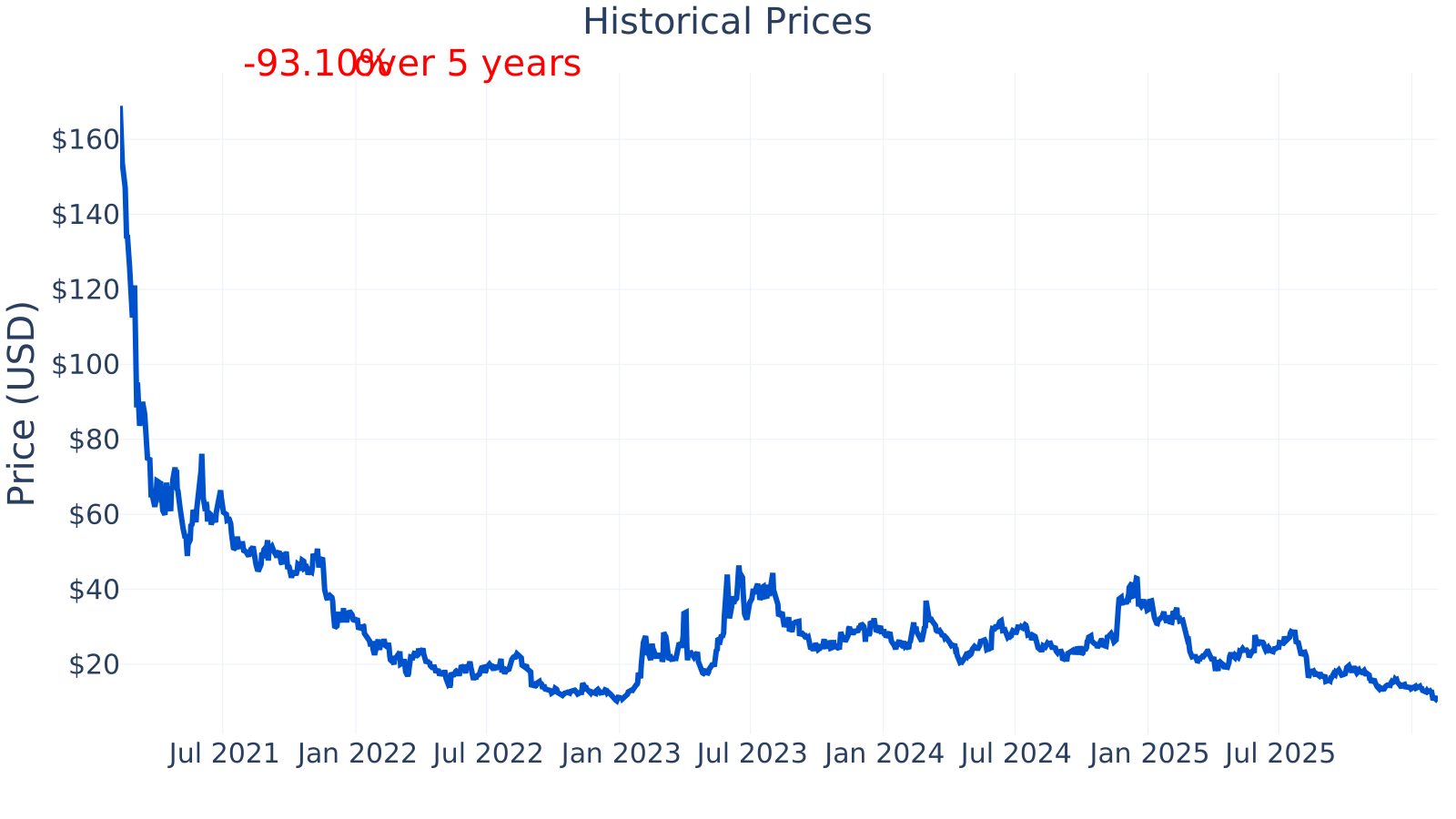
C3.ai’s market capitalization is about $1.64B, which places it in the small-to-mid range for publicly traded software companies. The stock’s beta is ~2.0, which means the share price has historically moved about twice as much as the broader market on average (higher volatility in both directions).
On profitability, the company shows a profit margin around -108%, compared with an industry median near +6.9%. That gap highlights a key current feature of the business: it is still operating well below break-even.
On growth, the most recent year-over-year revenue growth shown is about -20.3%, while the industry median is about +15.2%. This indicates that, at least recently, C3.ai’s top-line performance lagged many peers in its broad industry grouping.
Finally, free cash flow over the last twelve months is about -$93.2M, meaning the company used more cash than it generated from operations and investment over that period.
Growth (Medium)
C3.ai operates in enterprise software, where AI features are increasingly being embedded into business tools. This is a long-term structural trend: organizations want to automate decisions, improve forecasts, and reduce manual analysis. In that sense, the company participates in an industry with clear long-term demand drivers. However, “AI software” is also a crowded space, and many large software vendors offer competing capabilities as part of broader platforms.
Strategically, C3.ai’s future growth depends on turning interest in AI into repeatable deployments that scale across many customers, while keeping implementation effort manageable. In enterprise software, growth often improves when a product becomes easier to adopt and when recurring subscription revenue becomes a larger share of total revenue. A practical way to track whether that is happening is to monitor customer expansion, renewal behavior, and whether revenue growth becomes consistently positive without proportional increases in operating expenses.
Revenue growth has been uneven over time. It was very strong in earlier periods (peaking above 40% year-over-year), moderated into the teens to high-20% range for several quarters, and then turned negative (around -19% to -20%) in the most recent points shown. That pattern suggests execution and/or deal timing has had a meaningful impact on reported growth.
Free cash flow has remained negative, but the magnitude improved from about -$218.3M (TTM ending 2023-01-31) to about -$36.0M (TTM ending 2025-01-31), before the latest metric shown indicates it is around -$93.2M. In simple terms, cash burn improved significantly and then worsened again, so the direction is not yet consistently stable.
Potential catalysts in this type of business are typically tied to product adoption at scale (larger deployments, broader renewals), evidence of improving unit economics (more revenue per dollar of sales/implementation cost), and clearer progress toward sustained positive operating cash flow. These are observable in filings through revenue trajectory, margin trends, and cash flow statements rather than headlines.
Risks (High)
This article is for informational purposes only and does not constitute financial advice. Some content is AI-generated. See Disclaimer