Stock Analysis · Burlington Stores Inc (BURL)
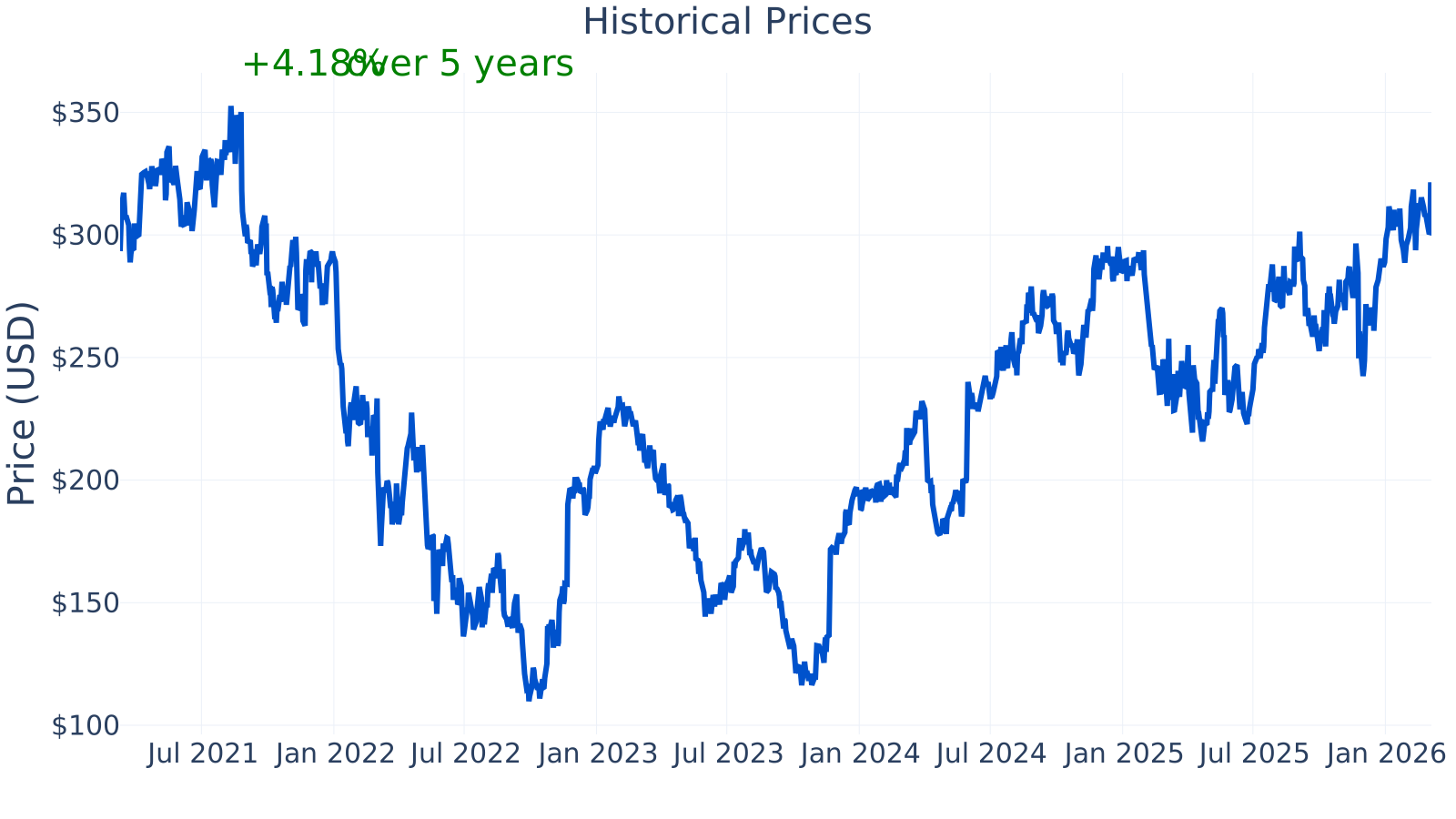
Overview
Burlington Stores Inc. is an off-price retailer in the U.S. that sells apparel, footwear, accessories, beauty products, home goods, and other items at discounted prices. The off-price model typically relies on buying merchandise from brands and vendors (often opportunistically) and selling it in stores with a “treasure-hunt” experience that can encourage frequent visits.
Burlington’s revenue is primarily generated through sales to customers in its Burlington stores and, to a lesser extent, through other channels described in its filings. The company’s results are strongly tied to store traffic, product mix (apparel vs. home, etc.), and the ability to source desirable branded merchandise at compelling costs.
Main sources of revenue (as typically described in filings):
- Net sales from retail stores (core business; generally the vast majority of revenue)
- Other revenues (smaller items as defined in filings)
Over the most recent years shown, total revenue rose from about $9.3B (FY2022) to about $11.6B (FY2026). Operating income and net income also increased over this period, while selling, general, and administrative costs remained one of the largest expense lines—typical for a store-based retailer with significant labor, occupancy, and logistics costs.
Key Figures
| Metric | Value | Industry ⓘ |
|---|---|---|
| Date | Mar 09, 2026 | |
| Context | ||
| Sector | Consumer Cyclical | |
| Industry | Apparel Retail | |
| Market Cap ⓘ | $19.23B | |
| Beta ⓘ | 1.70 | |
| Fundamental | ||
| P/E Ratio ⓘ | 35.09 | 14.87 |
| Profit Margin ⓘ | 5.28% | 8.32% |
| Revenue Growth ⓘ | 11.30% | 8.90% |
| Debt to Equity ⓘ | 154.19% | 92.83% |
| PEG ⓘ | 2.99 | |
| Free Cash Flow ⓘ | $231.75M | |
Burlington’s market capitalization is about $19.2B. The stock’s beta of ~1.70 indicates it has tended to move more than the overall market (higher ups and downs). The company’s P/E ratio is ~35.1, above the industry median ~14.9, suggesting the market is valuing Burlington at a higher multiple than many apparel retail peers. Profitability is positive with a ~5.3% net profit margin, below the industry median ~8.3%. Recent year-over-year revenue growth is ~11.3%, above the industry median ~8.9%. Leverage is higher than peers with debt-to-equity ~154% versus an industry median ~93%. Trailing twelve-month free cash flow is about $232M (cash generated after operating needs and capital spending), and the PEG ratio (~3.0) implies the valuation is high relative to the growth rate assumptions embedded in that metric.
Growth (Medium)
Off-price retail is a long-established segment within apparel retail, and its value proposition can resonate when consumers are price-sensitive. The model can also benefit when brands and suppliers have excess inventory to clear, because off-price retailers may be able to buy in-demand goods at favorable terms. Burlington’s strategy, as described in company materials and filings, has typically emphasized expanding its store base over time, improving merchandise assortment, and driving more efficient operations (including supply chain and inventory management).
The revenue growth pattern shown is uneven—strong in the earlier post-disruption period, negative in parts of 2022, and then returning to positive growth more recently. The latest point is about 11.5% year-over-year, which is higher than the industry median shown, indicating Burlington has recently grown faster than many peers. For a retailer, sustaining growth usually depends on a mix of new stores, comparable-store sales (performance at existing locations), and maintaining a compelling value and product offering.
Free cash flow has been positive in each period shown, but it has fluctuated meaningfully—from about $601M (FY2025) down to about $232M (FY2026). For long-term business compounding, consistent free cash flow can matter because it supports reinvestment (new stores, systems, distribution), balance sheet flexibility, and potential shareholder returns. The variability here highlights that cash generation can swing with inventory levels, capital spending, and operating performance.
Potential catalysts for growth are mostly operational rather than “one-time events”: executing store expansion plans, improving inventory turnover and in-stock levels, strengthening category performance (for example, women’s apparel and home), and maintaining access to attractive branded inventory from vendors.
Risks (High)
Burlington operates in a competitive, price-driven part of retail where consumer demand can change quickly. Sales and profitability are exposed to macro conditions (employment, inflation, consumer confidence), fashion and product missteps, and execution risk in merchandising and inventory management. Because the company is store-heavy, it also faces ongoing exposure to wage pressure, rent/occupancy costs, and supply chain disruptions.
Leverage is a key risk area to monitor. The latest debt-to-equity is ~154%, above the industry median (~93%). While the chart shows a large improvement from very elevated levels in 2021–2024, the company still screens as more leveraged than many peers. Higher leverage can reduce flexibility during weak retail cycles, especially if profitability or cash flow dips.
Profitability has improved steadily in the period shown: net profit margin rose from low single digits in 2022–2023 to about 5.3% most recently. However, it remains below the industry median (~8.3%). In retail, small changes in gross margin, markdowns, or operating costs can have an outsized impact on net margin, so maintaining discipline on pricing, shrink, and expenses is important.
Competitive positioning is another central risk factor. Burlington competes with other off-price leaders and broad-based retailers offering discounts. Major competitors in U.S. off-price include TJX Companies (T.J.Maxx / Marshalls) and Ross Stores, and it also faces competition from department stores, value retailers, and e-commerce platforms. Relative to the largest off-price peers, Burlington is generally smaller, which can be a disadvantage in purchasing scale and brand mindshare, but it may also have room to expand store count and improve productivity if execution remains strong.
Competitive advantages in off-price typically come from scale in buying, strong vendor relationships, fast inventory turn, efficient distribution, and a differentiated store experience that drives traffic. Burlington’s ability to consistently source compelling branded goods at the right price—and keep stores well stocked with appealing assortments—remains a core determinant of results.
Valuation
Burlington’s current P/E ratio (~35) is notably above the industry median (~15) across the time series shown. Historically in the chart, Burlington’s P/E has often remained above the peer median, which can indicate the market has priced in stronger expected performance, greater resilience, or a longer runway for store expansion compared with the average apparel retailer.
At the same time, the valuation context includes trade-offs visible in the fundamentals: Burlington’s profit margin (~5.3%) is below the peer median, and debt-to-equity (~154%) is above the peer median. When a company trades at a higher multiple than peers, the market often expects ongoing execution, continued growth, and stable-to-improving profitability. The PEG ratio (~3.0) is another signal that the valuation is high relative to the growth rate assumptions embedded in that metric, meaning the stock’s multiple may be more sensitive if growth or margins disappoint.
Conclusion
Burlington is a large U.S. off-price retailer with revenue growth that has recently outpaced the industry median and profitability that has improved over time. The business model is straightforward—sell branded goods at discounted prices—and the company’s results show meaningful operating leverage when execution is strong.
The main offsets are that retail is cyclical and highly competitive, Burlington’s leverage remains higher than the peer median even after improvement, and the stock trades at a higher earnings multiple than many industry peers. In practice, the long-term discussion centers on whether Burlington can continue expanding and executing well enough—on merchandising, inventory, and costs—to sustain growth and further improve margins while maintaining balance sheet flexibility.
Sources:
- U.S. Securities and Exchange Commission (SEC) EDGAR — Burlington Stores Inc. filings (Form 10-K, Form 10-Q)
- Burlington Stores Inc. — Investor Relations materials and press releases
- Wikipedia — “Burlington Stores” (basic company background)
This article is for informational purposes only and does not constitute financial advice. Some content is AI-generated. See Disclaimer


