Stock Analysis · Burlington Stores Inc (BURL)
Overview
Burlington Stores Inc. (BURL) is a U.S. off-price retailer. In simple terms, it sells brand-name apparel, footwear, and other products at discounted prices compared with many traditional department stores. The company operates physical stores and focuses on value-oriented shoppers, with merchandising that can change frequently depending on what inventory is available from brands and suppliers.
From a revenue standpoint, Burlington is primarily a retail store business. The company’s sales are generated from merchandise sold to customers in its stores, across major product groupings such as apparel and other categories (for example: home, accessories, and similar items). Public filings typically describe the business mainly as one operating segment, meaning revenue is not usually broken out in detailed percentage splits by product line in the same way some multi-division companies do.
- Net sales from merchandise in stores (primary driver of revenue)
The company’s recent financial profile (shown below) reflects a retail model where profitability depends heavily on buying inventory at favorable costs, managing markdowns, and controlling store operating expenses (like labor, rent, and logistics).
Across recent fiscal years, total revenue increased from about $8.69B (FY2023) to about $10.63B (FY2025). Operating income and net income also improved over that time, which suggests the company expanded sales while regaining efficiency after a weaker FY2023.
Key Figures
| Metric | Value | Industry ⓘ |
|---|---|---|
| Date | Feb 07, 2026 | |
| Context | ||
| Sector | Consumer Cyclical | |
| Industry | Apparel Retail | |
| Market Cap ⓘ | $19.61B | |
| Beta ⓘ | 1.74 | |
| Fundamental | ||
| P/E Ratio ⓘ | 34.74 | 17.99 |
| Profit Margin ⓘ | 5.01% | 8.42% |
| Revenue Growth ⓘ | 7.10% | 7.30% |
| Debt to Equity ⓘ | 389.18% | 104.73% |
| PEG ⓘ | 2.99 | |
| Free Cash Flow ⓘ | $481.42M | |
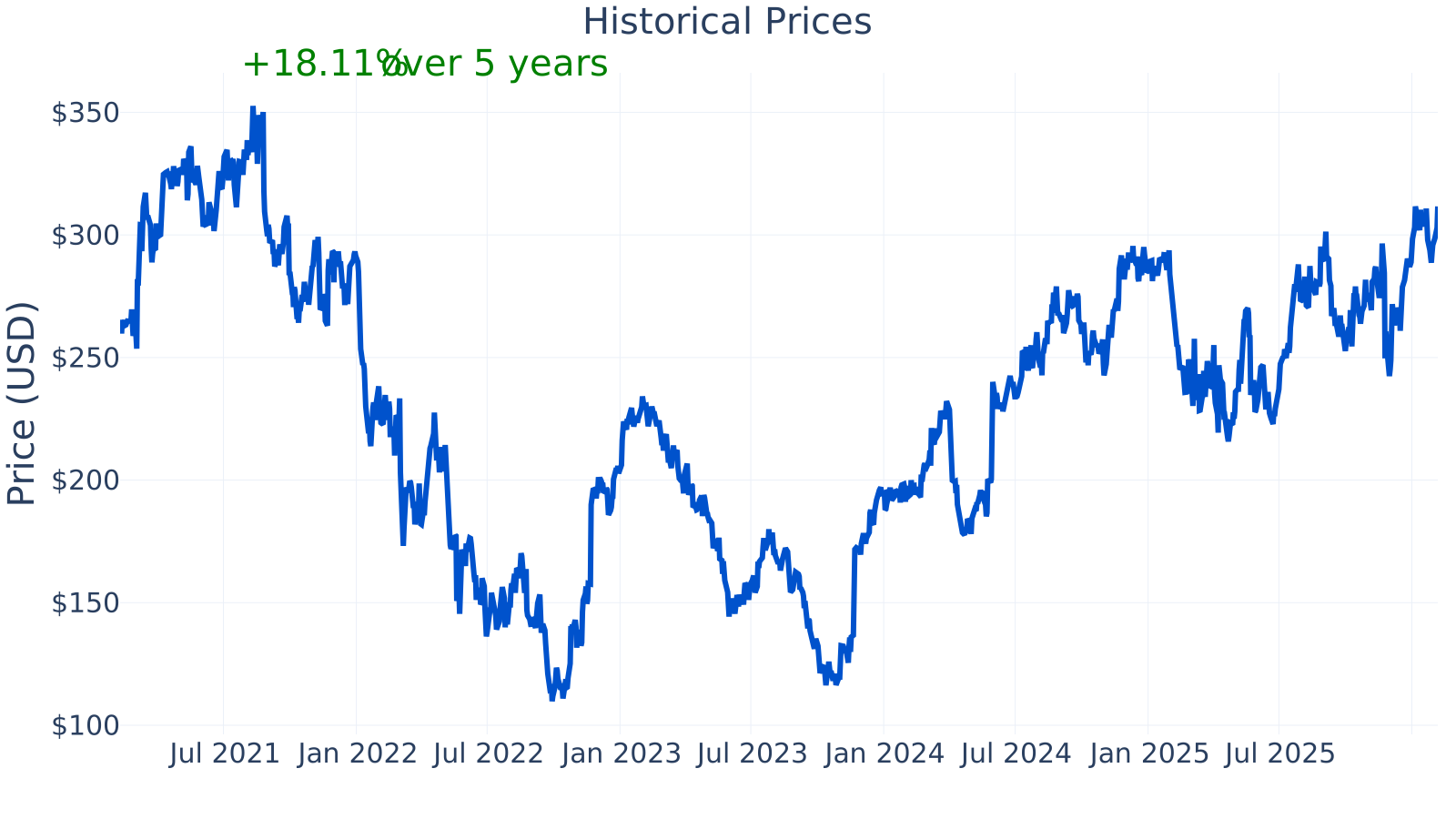
Burlington’s market capitalization is about $19.6B, placing it among the larger specialty/off-price retailers. The stock’s beta of ~1.74 indicates the share price has tended to move more than the broader market, which can matter for long-term holders who prefer steadier price behavior.
On valuation, Burlington shows a P/E ratio of ~34.7, which is meaningfully above the industry median (~18.0) shown here. On profitability, its profit margin is ~5.0%, below the industry median (~8.4%). Growth is broadly in line with peers: year-over-year revenue growth ~7.1% versus an industry median ~7.3%. Leverage is a standout point: debt-to-equity ~389%, well above the industry median ~105%. Free cash flow over the trailing twelve months is about $481M.
Growth (Medium)
Off-price retail is generally positioned around value and “treasure-hunt” shopping (customers browsing changing assortments for deals). That value proposition can remain relevant across economic cycles, especially when consumers become more price-sensitive. However, it is still a mature part of retail overall, so long-term growth tends to come more from gaining market share, opening stores, improving inventory turnover, and running stores more efficiently than from rapid industry expansion.
Burlington’s recent results indicate it has been growing from a revenue base that dipped in FY2023 and then expanded again in FY2024 and FY2025. Over the longer run, a key question is whether Burlington can keep expanding sales while improving operating execution (for example, keeping markdowns controlled and raising productivity per store).
The revenue growth pattern shown above highlights a sharp post-pandemic rebound, followed by a period of negative growth in parts of FY2022, and then a return to steadier positive growth through FY2023–FY2025. The most recent year-over-year reading shown is about 7.1%, roughly in line with the industry median displayed.
Cash generation is an important “fuel” for store expansion, reinvestment, and balance-sheet flexibility. Burlington’s free cash flow has varied but improved meaningfully from FY2023 to FY2025.
Free cash flow was about $145M (FY2023), then increased to about $331M (FY2024) and about $601M (FY2025), with the most recent trailing twelve months shown at about $481M. This illustrates that cash generation can fluctuate in retail (inventory, timing, and investment cycles matter), but the broader trend since FY2023 has been stronger.
Risks (High)
This article is for informational purposes only and does not constitute financial advice. Some content is AI-generated. See Disclaimer


