Stock Analysis · Buckle Inc (BKE)
Overview
Buckle Inc. (BKE) is a U.S. apparel retailer focused on casual clothing, footwear, and accessories. It sells a mix of well-known third-party brands and its own private-label products, mainly to teens and young adults, with a strong emphasis on denim. The company operates physical stores in many states and also sells through its e-commerce site, with stores typically acting as both selling locations and local points of service (for example, returns, customer assistance, and fulfillment support depending on internal practices described in filings).
From a business-model perspective, Buckle’s revenue is primarily driven by merchandise sales, and its performance tends to move with consumer spending, fashion cycles (especially denim), and how well it manages inventory and promotions. In apparel retail, a key operational theme is balancing product freshness and in-stock levels while avoiding excess markdowns that can pressure profits.
Main sources of revenue (typical breakdown described in company filings):
- Net sales from retail stores (largest contributor)
- Net sales from e-commerce (smaller but meaningful contributor)
Because Buckle’s filings generally describe revenue largely as “net sales” rather than detailed product-category splits, precise percentages by product type (denim vs. tops vs. accessories) are not consistently provided in a standardized way. The key takeaway is that the company is a single-segment retailer where store and online sales are the main channels.
Over the last four fiscal years shown, total revenue moved from about $1.35B (FY2023) down to about $1.22B (FY2025). Over the same period, net income declined from about $255M to about $195M, reflecting a tougher demand environment and/or more promotional pressure than earlier periods.
Key Figures
| Metric | Value | Industry ⓘ |
|---|---|---|
| Date | Feb 08, 2026 | |
| Context | ||
| Sector | Consumer Cyclical | |
| Industry | Apparel Retail | |
| Market Cap ⓘ | $2.66B | |
| Beta ⓘ | 1.11 | |
| Fundamental | ||
| P/E Ratio ⓘ | 12.74 | 17.99 |
| Profit Margin ⓘ | 16.13% | 8.42% |
| Revenue Growth ⓘ | 9.30% | 7.30% |
| Debt to Equity ⓘ | 73.40% | 104.73% |
| PEG ⓘ | 48.30 | |
| Free Cash Flow ⓘ | $215.31M | |
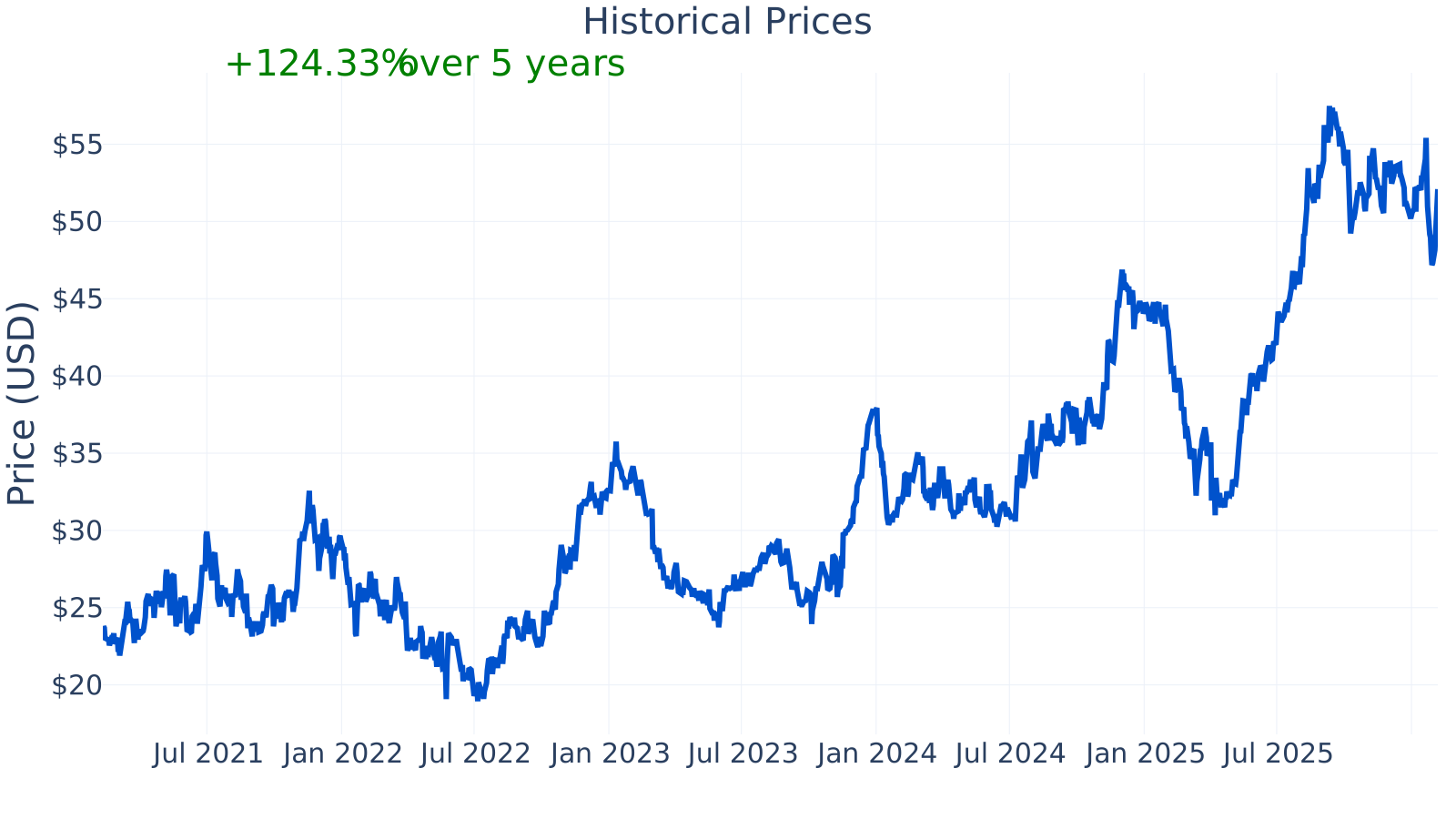
Buckle’s current profile looks like a mid-sized public retailer with a market capitalization of about $2.66B and a beta of about 1.11, which implies the share price has historically moved somewhat more than the overall market. The latest P/E ratio (~12.7) is below the industry median (~18.0), while the company’s profit margin (~16.1%) is notably above the industry median (~8.4%). Revenue growth is modestly positive on the latest reading (~9.3% year-over-year) versus the industry median (~7.3%). Leverage also appears lower than many peers, with debt-to-equity ~73% compared with an industry median near 105%. Free cash flow over the trailing twelve months is about $215M.
Growth (Low to Medium)
Apparel retail is a mature, highly competitive industry rather than a structurally high-growth one. Demand is influenced by employment conditions, wage growth, inflation in household essentials, and changing fashion trends. Over long periods, many apparel retailers grow mainly through store expansion, gaining market share, or improving e-commerce penetration—while also trying to protect margins through disciplined buying and inventory control.
The year-over-year revenue pattern shown is uneven: very strong growth earlier in the period (off a lower base) shifted into several quarters of declines, followed by a return to positive year-over-year growth more recently (ending around ~9%). For a retailer, this type of swing is common and often reflects comparisons getting easier or harder, changes in promotions, and how well product assortments match what customers want at a given time.
Free cash flow has remained meaningful over time, ranging from about $293M (FY2022) to about $200M (FY2025), with the latest trailing figure around $215M. In simple terms, this suggests the core business has continued to generate cash after operating needs and investments, even as profitability eased versus earlier years.
Potential catalysts for improved growth typically come from execution rather than a single “industry wave”: better merchandising (right products at the right time), improved inventory management (fewer markdowns), steady customer demand for Buckle’s core categories (especially denim), and continued development of online sales alongside stores. However, these catalysts are inherently operational and can be difficult to forecast with confidence.
Risks (Medium to High)
This article is for informational purposes only and does not constitute financial advice. Some content is AI-generated. See Disclaimer