Stock Analysis · Broadcom Inc (AVGO)
Overview
Broadcom Inc. is a large technology company that designs and supplies semiconductor products and also sells infrastructure software. In simple terms, it makes critical “building blocks” that help data move through networks (like inside data centers and telecom equipment), connect devices (such as Wi‑Fi/Bluetooth components), store data, and secure systems. Alongside chips, it owns software used by large organizations to run and manage parts of their IT infrastructure.
Broadcom reports its business in two main segments:
- Semiconductor Solutions (chips and related products used in networking, broadband, wireless connectivity, storage, industrial, and other markets)
- Infrastructure Software (enterprise software focused on infrastructure and operations)
Main revenue sources are typically discussed at the segment level in company filings. Broadcom’s filings describe these two segments as the primary revenue streams; exact percentages can vary by fiscal year and are detailed in annual reports.
Over recent fiscal years shown, total revenue increased substantially (from about $27.45B in FY2021 to about $63.89B in FY2025). At the same time, research and development spending also rose (roughly $4.85B to $10.98B), reflecting continued investment in new products and platforms. Net income is more variable year to year in the company’s financial statements, which can be influenced by integration costs, financing costs, accounting items (including amortization), and tax-related items.
Key Figures
| Metric | Value | Industry ⓘ |
|---|---|---|
| Date | Mar 09, 2026 | |
| Context | ||
| Sector | Technology | |
| Industry | Semiconductors | |
| Market Cap ⓘ | $1.57T | |
| Beta ⓘ | 1.26 | |
| Fundamental | ||
| P/E Ratio ⓘ | 69.42 | 40.44 |
| Profit Margin ⓘ | 36.57% | 10.84% |
| Revenue Growth ⓘ | 16.40% | 16.00% |
| Debt to Equity ⓘ | 82.70% | 25.70% |
| PEG ⓘ | 0.75 | |
| Free Cash Flow ⓘ | $28.91B | |
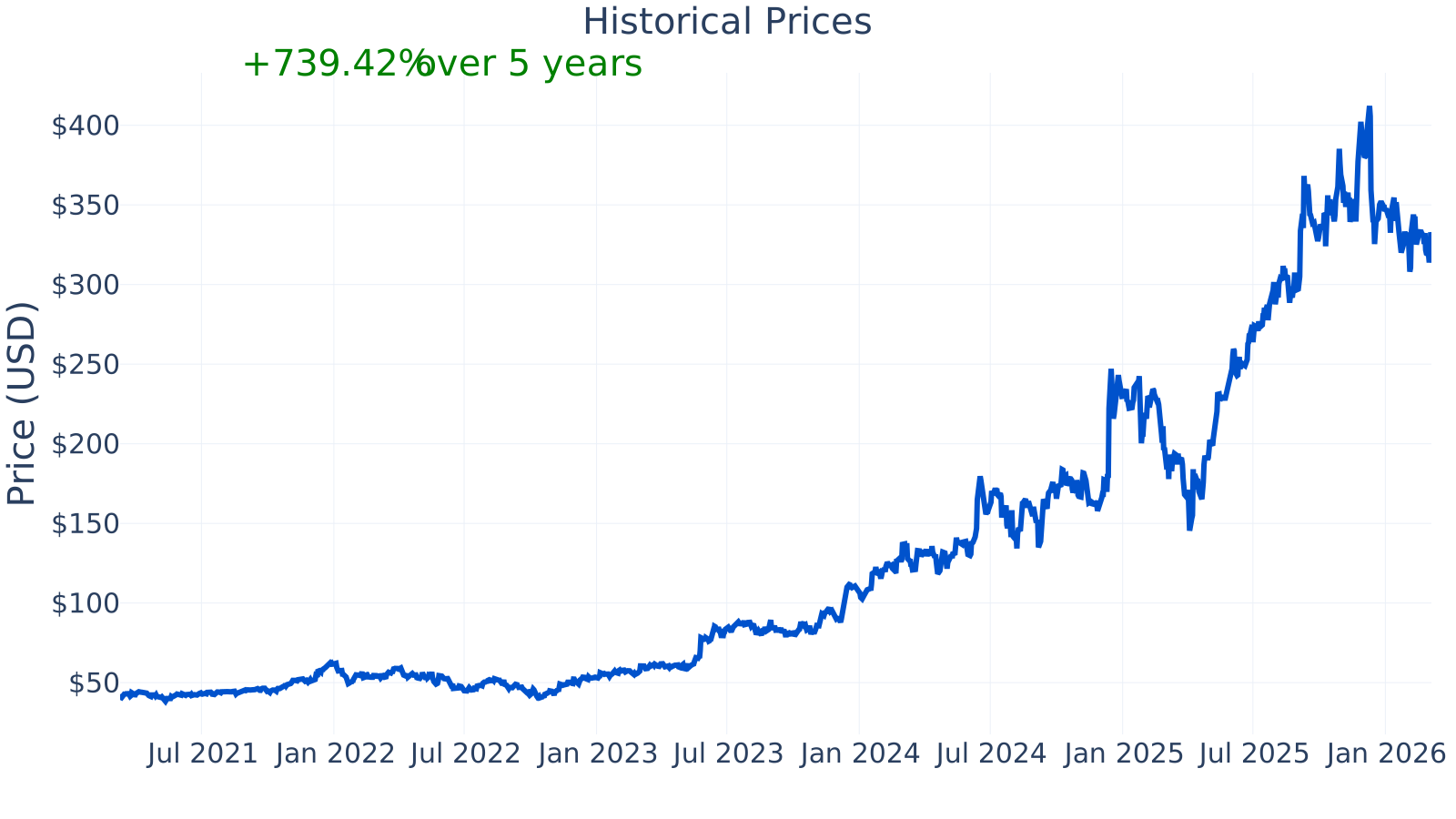
Broadcom’s equity market value is about $1.57T, placing it among the largest publicly traded technology companies. The stock’s beta of ~1.26 indicates it has tended to move more than the broader market (up or down) over time.
On profitability, the latest profit margin is ~36.6%, notably above the listed industry median of ~10.8%, which suggests strong earnings generation relative to revenue (while still being sensitive to accounting effects that can differ across companies). Recent year-over-year revenue growth is ~16.4%, roughly in line with the industry median shown (~16.0%).
Leverage is higher than the industry median: debt-to-equity is ~82.7% versus an industry median of ~25.7%. Broadcom also shows substantial cash generation, with trailing twelve-month free cash flow of about $28.9B.
Growth (medium)
Broadcom operates in markets that are closely tied to long-term demand for data: cloud computing, data centers, networking equipment, broadband access, and enterprise IT. These areas have historically expanded as more software and services move online, more devices connect to networks, and organizations invest in performance, security, and reliability.
Its strategy combines two growth engines. First, semiconductor products that are designed into large platforms (for example, networking and connectivity solutions used across many devices and systems). Second, infrastructure software aimed at large customers that tend to value stability and long product lifecycles. This mix can create a blend of cyclical exposure (chips) and more recurring-style revenue characteristics (software), though both can be affected by enterprise spending cycles.
Revenue growth has been positive across the period shown, with a noticeable acceleration in parts of 2024–2026 (several quarters in the ~20% to ~50% range year-over-year). That pattern is consistent with periods where Broadcom’s scale changes (for example, via major acquisitions) and with stronger demand cycles in certain end markets.
Free cash flow has trended upward from about $13.7B (early 2022) to about $28.9B (early 2026). For long-term business durability, rising free cash flow can matter because it is the cash a company has available after operating needs and capital spending—often used for debt service, reinvestment, and shareholder returns (the mix depends on management priorities).
Risks (medium-high)
Broadcom’s business faces several key risks that are common for large semiconductor and enterprise software companies. A major one is cyclicality: parts of chip demand can rise and fall with consumer electronics, enterprise hardware refresh cycles, and telecom spending. Another is customer concentration risk in certain product areas—some semiconductor categories can depend heavily on a small number of very large buyers, which can increase volatility if orders change.
Acquisition integration and execution risk is also relevant. Broadcom has a history of large transactions, and the benefits depend on successfully combining products, retaining talent and customers, and meeting cost and revenue expectations over time. In addition, the company operates in areas affected by regulation and geopolitics, including export controls and supply chain constraints that can affect semiconductor companies.
Leverage has declined meaningfully from earlier levels (well above 100% in prior years) to about 82.7% most recently, but it remains above the industry median shown. Higher leverage can amplify outcomes: it may enhance returns in strong periods but can reduce flexibility during downturns or when interest costs rise.
Profit margin has generally been above the industry median across the period shown, reaching about 36.6% most recently versus an industry median around 10.8%. The chart also shows periods of margin compression (notably around parts of 2024), which highlights that profitability can swing due to mix changes, acquisition-related impacts, amortization, financing costs, and other items reported in financial statements.
In terms of competitive positioning, Broadcom competes in multiple categories rather than one single product. Competitors vary by domain: large semiconductor companies (for example, those focused on networking silicon, connectivity, server/storage components, and custom silicon) and large enterprise software vendors in infrastructure and operations. Broadcom’s competitive advantages described in company materials generally center on scale, deep customer relationships, long product lifecycles in infrastructure markets, and the ability to invest heavily in R&D. Still, many of its markets are highly competitive, with pricing pressure and rapid innovation cycles.
Valuation
Valuation is often discussed using multiples like the price-to-earnings (P/E) ratio, while keeping in mind that earnings for acquisitive companies can be affected by accounting items (for example, amortization of acquired intangibles) and that investors may also look at cash flow metrics.
Broadcom’s latest P/E ratio is about 69.4 versus an industry median of about 40.4. The history shown indicates the multiple has expanded meaningfully since 2023 and has remained above the industry median for most of the displayed period, with especially high readings in parts of 2024–2025. A higher-than-industry P/E commonly implies the market is assigning a premium based on expectations for growth, durability of cash flows, strategic positioning, or a combination of these factors; it can also increase sensitivity to disappointment if results or outlook fall short of expectations.
The latest PEG ratio of ~0.75 (a metric that relates P/E to growth assumptions) is one way some investors contextualize the P/E, but PEG is highly dependent on the growth rate used and can change quickly as forecasts and business conditions shift.
Conclusion
Broadcom is a scaled technology company spanning semiconductors and infrastructure software, with business exposure to long-term data and connectivity needs. Financially, it shows a combination of strong profitability (profit margin well above the industry median in the figures shown), meaningful revenue growth, and rising free cash flow over time.
At the same time, the company carries higher leverage than the industry median and operates in competitive, fast-moving markets where demand can be cyclical and large customers can influence results. On valuation, the P/E ratio shown is above the industry median and higher than its own levels in earlier years on the chart, which indicates more demanding expectations embedded in the current multiple.
Sources:
- SEC EDGAR — Broadcom Inc. Form 10-K (Annual Report) (segment reporting, risk factors, financial statements)
- SEC EDGAR — Broadcom Inc. Form 10-Q (Quarterly Reports) (updates to operations, financial statements)
- Broadcom Investor Relations — Annual Report materials and SEC filing links
- Wikipedia — “Broadcom Inc.” (basic company background and history)
This article is for informational purposes only and does not constitute financial advice. Some content is AI-generated. See Disclaimer


