Stock Analysis · Broadridge Financial Solutions Inc (BR)
Overview
Broadridge Financial Solutions Inc is a technology-enabled services company that provides critical “behind-the-scenes” infrastructure for the financial industry. Its work is closely tied to how banks, broker-dealers, asset managers, and corporate issuers communicate with investors, process securities transactions, and meet regulatory requirements.
In practical terms, Broadridge helps financial institutions run high-volume, highly regulated workflows where accuracy, security, and uptime matter—such as sending shareholder communications, supporting proxy voting, and operating technology platforms used in post-trade processing and related functions.
In its SEC filings, the company reports two main operating segments that represent its core revenue streams (with many client relationships structured as recurring service contracts):
- Investor Communication Solutions (communications and related processing for issuers, banks and brokers, mutual funds and other intermediaries, including proxy-related services)
- Global Technology and Operations (technology platforms and operations that support trading, post-trade processing, data and analytics, and other back-office functions)
Percentages by revenue source can vary by fiscal year and reporting format; for a precise breakdown, the segment revenue table in the company’s most recent Form 10-K is the most reliable reference.
Across the period shown, total revenue increased from about $5.0B (FY2021) to about $6.9B (FY2025), while operating income rose from about $679M to about $1.19B. This suggests that, over time, the company expanded revenue and also increased operating profit dollars, even as major expense lines (cost of revenue and operating expenses) grew as the business scaled.
Key Figures
| Metric | Value | Industry ⓘ |
|---|---|---|
| Date | Feb 07, 2026 | |
| Context | ||
| Sector | Technology | |
| Industry | Information Technology Services | |
| Market Cap ⓘ | $21.24B | |
| Beta ⓘ | 0.98 | |
| Fundamental | ||
| P/E Ratio ⓘ | 20.12 | 21.13 |
| Profit Margin ⓘ | 14.86% | 4.91% |
| Revenue Growth ⓘ | 7.80% | 6.15% |
| Debt to Equity ⓘ | 122.05% | 54.49% |
| PEG ⓘ | 1.47 | |
| Free Cash Flow ⓘ | $1.36B | |
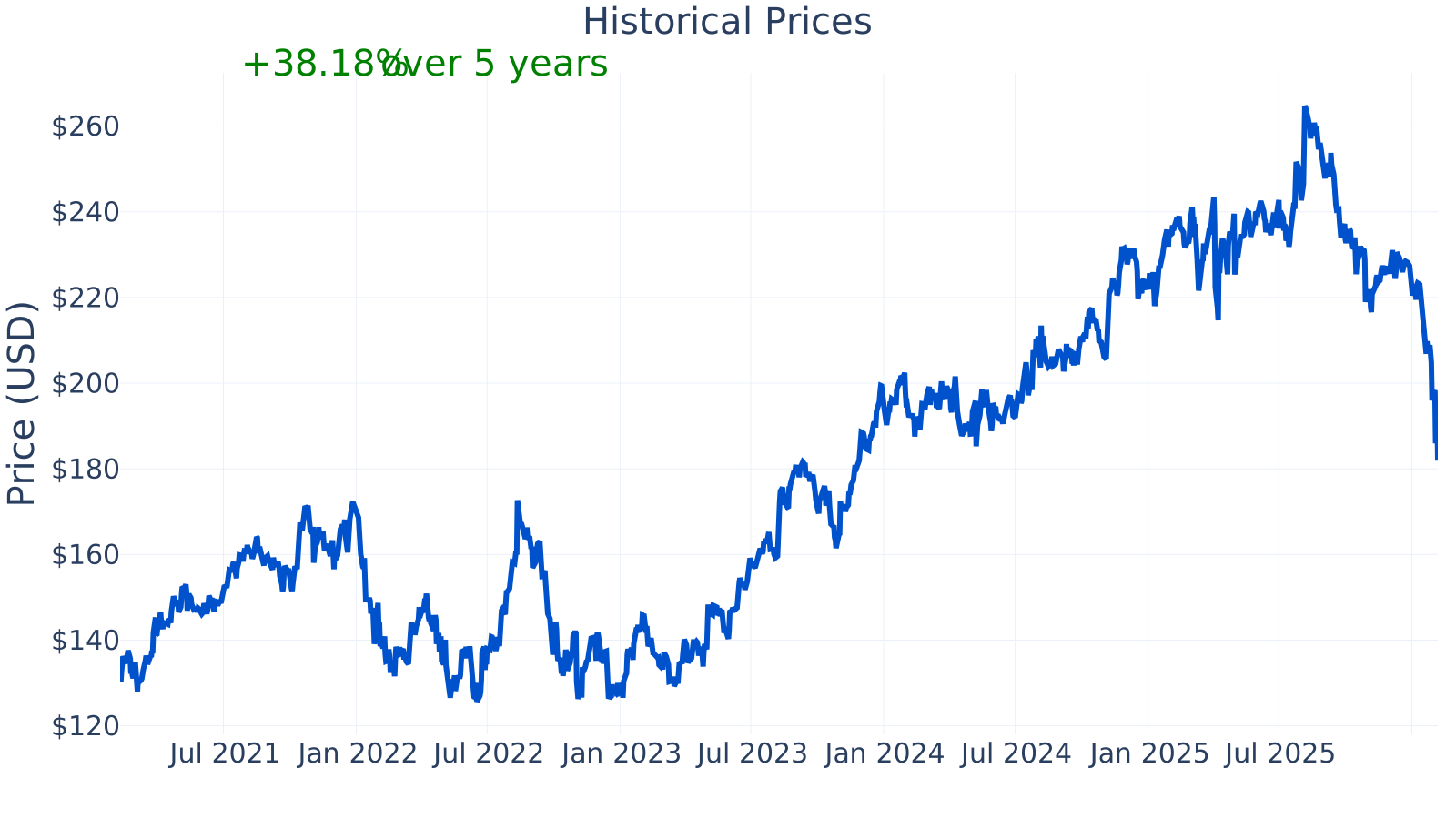
At the latest point shown, Broadridge’s market capitalization is about $21.2B, and its beta is ~0.98, which indicates price movements that have been roughly similar to the broader market over time (though beta can change depending on the period measured).
Profitability stands out versus the industry median in the table: Broadridge’s profit margin is ~14.9% compared with an industry median near 4.9%. Recent year-over-year revenue growth is ~7.8% versus an industry median near 6.2%, suggesting growth that is modestly above the median in its peer set.
Leverage is a key differentiator: debt-to-equity is ~122% versus an industry median near 54%. Free cash flow (TTM) is shown at about $1.36B, which is a meaningful cash generation level relative to the company’s size.
Growth (Medium)
Broadridge operates in parts of the financial services ecosystem that tend to be shaped by long-term, structural needs: regulatory reporting and compliance, large-scale investor communications, and ongoing modernization of back-office technology. These activities generally do not depend on a single product cycle; instead, they are supported by persistent demand for secure processing, data handling, and auditability in capital markets.
A key element of Broadridge’s growth logic is that financial firms often prefer trusted, specialized providers for high-volume, mission-critical workflows—especially when systems must integrate with many counterparties and comply with complex rules. This can support recurring revenue and long client relationships, although the pace of growth can still vary with market activity and client spending cycles.
The year-over-year revenue growth trend shown is mostly positive, generally in the mid-single digits to low-double digits, with one slightly negative quarter in the period displayed. The latest value shown is about 7.8%, consistent with steady (rather than rapid) expansion.
Free cash flow over the trailing twelve months increased notably from about $536M (2021) to about $1.13B (2025), indicating improving cash generation over time in the period shown. For long-term business durability, free cash flow matters because it can help fund technology investment, acquisitions, debt service, and shareholder returns (the specific mix depends on management’s capital allocation choices as described in filings).
Risks (Medium)
This article is for informational purposes only and does not constitute financial advice. Some content is AI-generated. See Disclaimer